AI Appraisal Estimate

AI-generated estimates · not official valuations

From the user

What was submitted

Photo and notes provided by the user — not generated by AI

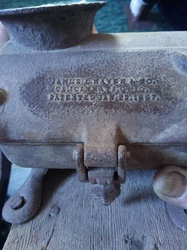
Submitted item photo
Submitted photo · June 15, 2026

User's notes

McIntosh

AI analysis below

AI appraisal

AI analysis & estimate

AI-Generated · Verify before acting

Everything below is generated by AI for informational purposes only. AI can make mistakes — the AI may misidentify items or misattribute them (artist, maker, brand, designer, origin, era). This is not an official valuation and should not be used for insurance, sale, tax, estate, legal, or lending purposes — or any decision requiring a certified appraisal. It is not an authoritative claim about any person, brand, or rights holder — do not share or rely on it as a factual statement about a third party. Always consult qualified professionals before making financial decisions.

Note

This analysis also relies on unverified notes provided by the user, which may be incomplete or inaccurate and could affect the result.

Read the full disclaimer

AI Identification

·Not independently authenticated·Verify before acting

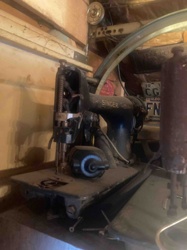
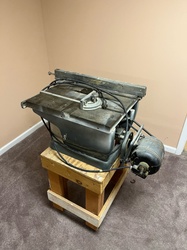
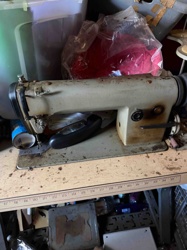
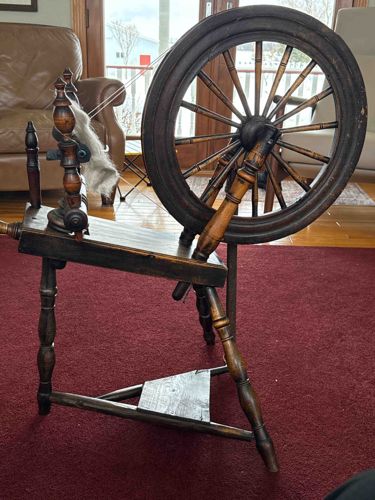
Antique McIntosh Style Flax Spinning Wheel

Antique Textile Tools & Machinery

AI Estimated Value

·Not an official valuation·Verify before acting

$450 - $650

As of June 15, 2026

AI Item Analysis

·AI can make mistakes·Verify before acting
This is a classic horizontal-bench style spinning wheel, often attributed to the McIntosh style of craftsmanship, likely dating from the 19th century. The piece is constructed primarily from a dark-toned hardwood, possibly walnut or stained maple, featuring a large drive wheel with fourteen intricately turned spokes. The drive wheel is mounted on two slanted uprights anchored to a solid, rectangular bench. To the left, the mother-of-all holds the flyer assembly and bobbin, which currently retains a small amount of light-colored fiber. The legs are elegantly turned in a ring-and-vase pattern, a hallmark of mid-to-late 19th-century utilitarian folk furniture. The wood displays a rich, darkened patina with varied tonal wear consistent with age and manual operation. Notable features include the decorative finials on the distaff and mother-of-all, suggesting high-quality artisanal production rather than basic home manufacture. Condition-wise, the wheel shows visible surface abrasions, minor nicks on the rim of the drive wheel, and some fading of the finish on higher-contact areas like the treadle and legs. No obvious structural repairs are visible, but the drive band appears to be a modern replacement for functionality. The construction utilizes pegged joinery, indicating traditional woodworking techniques. Its sturdy tripod base provides stability, while the overall silhouette exemplifies the functional elegance of pre-industrial textile machinery.
AI Appraisal Report

·AI can make mistakes·Verify before acting
I have completed a visual assessment of the 19th-century McIntosh-style flax spinning wheel. The piece displays hallmarks of high-quality mid-to-late 19th-century craftsmanship, specifically the distinct ring-and-vase turnings and the sophisticated fourteen-spoke drive wheel. The dark patina suggests an original finish on walnut or stained maple, and the presence of pegged joinery confirms traditional pre-industrial assembly methods. The mother-of-all and flyer assembly appear intact, which is critical for value, as these components are frequently lost or damaged. The current market for antique textile equipment remains stable among folk art collectors and historical reenactors. While functional wheels often command a premium, the minor surface abrasions and replaced drive band are considered standard for utilitarian items of this age. Similar McIntosh-style wheels have recently realized auction prices in the $400 to $700 range depending on the wood species and the complexity of the turnings. This specimen’s decorative finials elevate it above more common 'country' examples. However, digital examination has limitations; I cannot definitively verify structural integrity, the absence of old insect damage, or whether the flyers have been subtly repaired with modern adhesives. A full authentication would require an in-person inspection of the tensioning screw threads and the bearing surfaces. Documentation of provenance or a maker's mark—often hidden on the underside of the bench—would be necessary to confirm a specific maker beyond the 'McIntosh' style attribution.

Get your items appraised

Instant estimates of your treasures with AI-powered appraisals

Browse More Appraisals