Paleolithic Chert Hand Axe Scraper
Archaeological Artifacts / Prehistoric Stone Tools

Paleolithic Chert Hand Axe Scraper

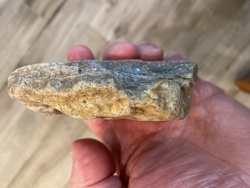
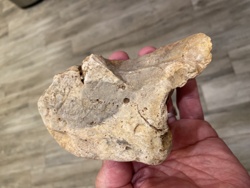
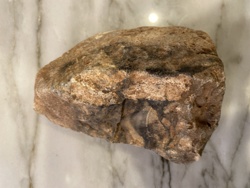
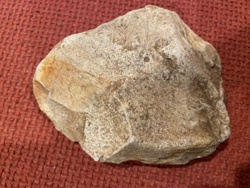
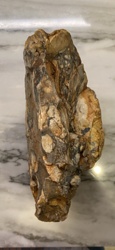
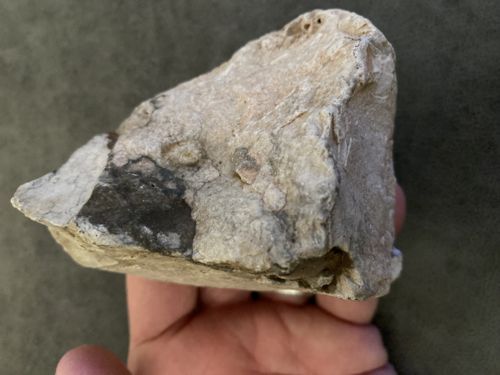
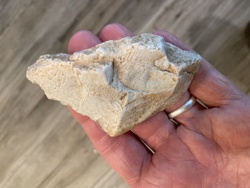
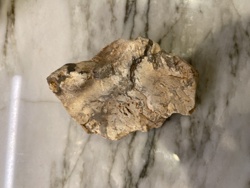
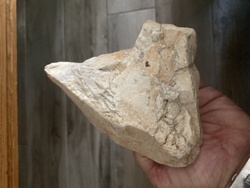
A prehistoric utilitarian stone tool measuring approximately 4 inches by 3 inches, identified as a hand axe or scraper. The item is fashionedจาก chert, presenting a variegated color palette that includes creamy off-white, buff, and significant areas of dark grey to black mineral staining or cortex. This specimen exhibits characteristic lithic reduction through conchoidal fracturing; however, much of the surface appears heavily weathered with a thick, dull patina and rounded edges, suggesting substantial age and potential water tumbling or long-term soil exposure. The object features a robust, thick base designed to fit comfortably in the palm, tapering toward a more refined edge used for cutting or scraping. There is visible step-fracturing and irregular percussion scarring consistent with Paleolithic manufacture techniques rather than natural erosion. Its condition is ancient and worn, with heavy mineral deposit buildup and a lack of fresh luster, indicating it has not been recently knapped. While no maker's marks exist on such an artifact, the deliberate shape and ergonomic grip points are evidence of human craftsmanship. From an appraisal standpoint, the provenance of Guthrie, Oklahoma, suggests it originates from the Great Plains lithic traditions of North America.
Estimated Value

$45–$85

Basic Information

Category

Archaeological Artifacts / Prehistoric Stone Tools

Appraised On

February 20, 2026

Estimated Value

$45–$85

Additional Details Provided By Owner

User Provided Information

Paleolithic chert Hand axe scraper tool found in Guthrie Ok measuring 4" x 3"

Item Description

A prehistoric utilitarian stone tool measuring approximately 4 inches by 3 inches, identified as a hand axe or scraper. The item is fashionedจาก chert, presenting a variegated color palette that includes creamy off-white, buff, and significant areas of dark grey to black mineral staining or cortex. This specimen exhibits characteristic lithic reduction through conchoidal fracturing; however, much of the surface appears heavily weathered with a thick, dull patina and rounded edges, suggesting substantial age and potential water tumbling or long-term soil exposure. The object features a robust, thick base designed to fit comfortably in the palm, tapering toward a more refined edge used for cutting or scraping. There is visible step-fracturing and irregular percussion scarring consistent with Paleolithic manufacture techniques rather than natural erosion. Its condition is ancient and worn, with heavy mineral deposit buildup and a lack of fresh luster, indicating it has not been recently knapped. While no maker's marks exist on such an artifact, the deliberate shape and ergonomic grip points are evidence of human craftsmanship. From an appraisal standpoint, the provenance of Guthrie, Oklahoma, suggests it originates from the Great Plains lithic traditions of North America.
Get Your Items Appraised

Instant estimates of your treasures with AI-powered instant appraisals

Browse More Appraisals