Cranberry Glass Goblet with Clear Stem
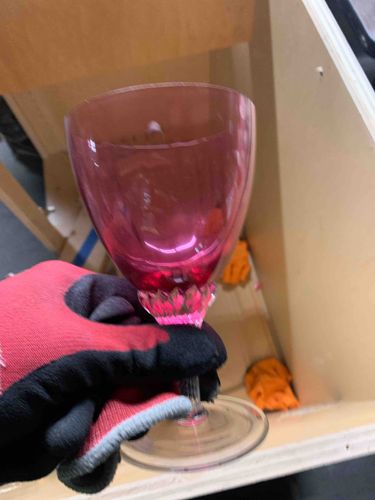
This item is a two-toned glass goblet, featuring a bowl crafted from cranberry-colored glass and a clear crystal stem and base. The bowl exhibits a rich fuchsia-to-pink saturation typical of cranberry glass, which is traditionally achieved by adding gold chloride to molten glass. The bowl transitions into a clear, multi-faceted collar with a series of vertical, petal-like cuts at the junction where the bowl meets the stem, a design element often seen in Mid-Century or late Victorian revival glassware. The stem appears to be vertically ribbed or faceted, leading down to a wide, flat circular base. In terms of condition, the glass shows a high level of transparency and luster with no visible chips or cracks from this angle, though fine surface scratches consistent with use may be present upon closer tactile inspection. The craftsmanship suggests a pressed or blow-molded glass technique, likely dating from the mid-20th century, approximately 1940s-1970s. The piece lacks visible maker's marks, which is common for glassware of this type from American manufacturers like Fenton or European makers like Val Saint Lambert, requiring further inspection of the base for acid-etched signatures.

AI-Generated Appraisal Disclaimer
Estimated Value
$45 - $65
Basic Information
Category
Glassware & Barware
Appraised On
January 24, 2026
Estimated Value
$45 - $65
Item Description
This item is a two-toned glass goblet, featuring a bowl crafted from cranberry-colored glass and a clear crystal stem and base. The bowl exhibits a rich fuchsia-to-pink saturation typical of cranberry glass, which is traditionally achieved by adding gold chloride to molten glass. The bowl transitions into a clear, multi-faceted collar with a series of vertical, petal-like cuts at the junction where the bowl meets the stem, a design element often seen in Mid-Century or late Victorian revival glassware. The stem appears to be vertically ribbed or faceted, leading down to a wide, flat circular base. In terms of condition, the glass shows a high level of transparency and luster with no visible chips or cracks from this angle, though fine surface scratches consistent with use may be present upon closer tactile inspection. The craftsmanship suggests a pressed or blow-molded glass technique, likely dating from the mid-20th century, approximately 1940s-1970s. The piece lacks visible maker's marks, which is common for glassware of this type from American manufacturers like Fenton or European makers like Val Saint Lambert, requiring further inspection of the base for acid-etched signatures.
Get Your Items Appraised
Instant estimates of your treasures with AI-powered instant appraisals