Paleolithic Bifacial Chert Hand Axe/Scraper
Prehistoric Artifacts / Lithic Tools

Paleolithic Bifacial Chert Hand Axe/Scraper

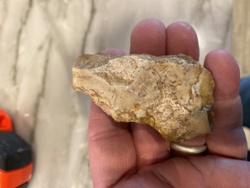
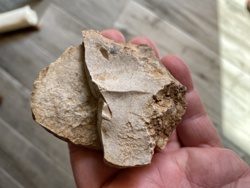
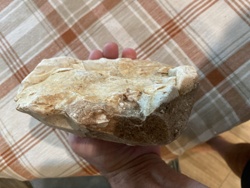
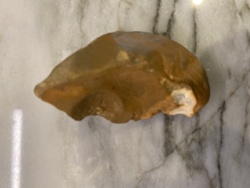
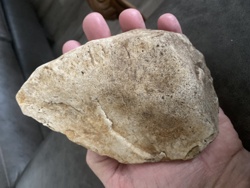
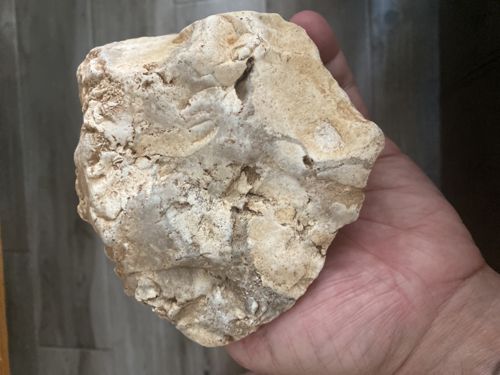
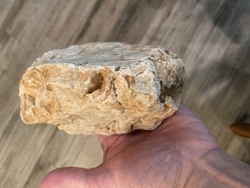
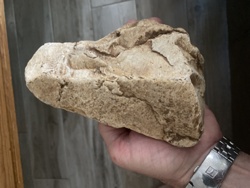
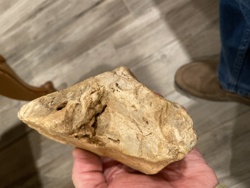
This is a large, bifacially worked lithic tool, measuring approximately 5 inches by 4.75 inches, crafted from a light-colored chert material. Traditionally categorized as a hand axe or heavy-duty scraper, the item exhibits significant primary flaking across its surface to achieve a workable edge and a semi-triangular, ergonomic palm-fit shape. The material features a range of warm buff, cream, and tan hues with visible mineral inclusions and a heavy, naturally aged patina. The construction shows evidence of percussion flaking, resulting in a rugged, textured surface with several deep flake scars and hinge fractures. Notable features include a thickened, blunted base intended for a handheld grip and a tapered, thinning edge meant for cutting or scraping tasks. Regarding condition, the tool displays significant surface wear consistent with an ancient lithic artifact, including micro-chipping along the utilitarian edges and a layer of calcified sediment or mineral encrustation in the recesses. There are no modern maker's marks, as this is a prehistoric artifact. The craftsmanship represents a utilitarian Paleolithic style, where the focus was on functional durability rather than aesthetic symmetry. The item’s provenance from Guthrie, Oklahoma, situates it within a significant geographic region for North American lithic studies.
Estimated Value

$150 - $250

Basic Information

Category

Prehistoric Artifacts / Lithic Tools

Appraised On

February 19, 2026

Estimated Value

$150 - $250

Additional Details Provided By Owner

User Provided Information

Paleolithic chert Bi face hand axe scraper tool found in Guthrie OK measuring 5" x 4.75"

Item Description

This is a large, bifacially worked lithic tool, measuring approximately 5 inches by 4.75 inches, crafted from a light-colored chert material. Traditionally categorized as a hand axe or heavy-duty scraper, the item exhibits significant primary flaking across its surface to achieve a workable edge and a semi-triangular, ergonomic palm-fit shape. The material features a range of warm buff, cream, and tan hues with visible mineral inclusions and a heavy, naturally aged patina. The construction shows evidence of percussion flaking, resulting in a rugged, textured surface with several deep flake scars and hinge fractures. Notable features include a thickened, blunted base intended for a handheld grip and a tapered, thinning edge meant for cutting or scraping tasks. Regarding condition, the tool displays significant surface wear consistent with an ancient lithic artifact, including micro-chipping along the utilitarian edges and a layer of calcified sediment or mineral encrustation in the recesses. There are no modern maker's marks, as this is a prehistoric artifact. The craftsmanship represents a utilitarian Paleolithic style, where the focus was on functional durability rather than aesthetic symmetry. The item’s provenance from Guthrie, Oklahoma, situates it within a significant geographic region for North American lithic studies.
Get Your Items Appraised

Instant estimates of your treasures with AI-powered instant appraisals

Browse More Appraisals