AI estimate as of August 17, 2025 · verify with a professional before acting
AI-Generated · Verify before acting
Everything on this page is generated by AI for informational purposes only. AI can make mistakes — the AI may misidentify items or misattribute them (artist, maker, brand, designer, origin, era). This is not an official valuation and should not be used for insurance, sale, tax, estate, legal, or lending purposes — or any decision requiring a certified appraisal. It is not an authoritative claim about any person, brand, or rights holder — do not share or rely on it as a factual statement about a third party. Always consult qualified professionals before making financial decisions.
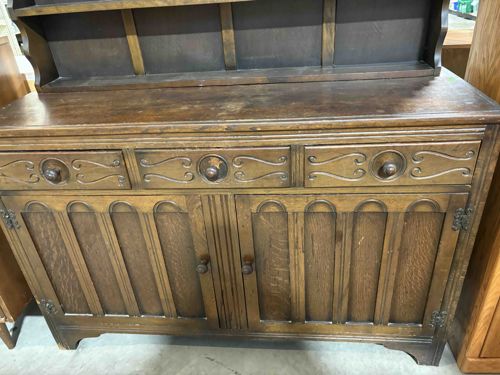
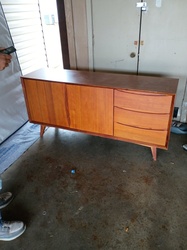
This is an antique or vintage oak hutch or dresser with an open hutch top, likely dating from the early to mid-20th century, possibly in the Arts and Crafts or Mission style due to its robust construction and emphasis on natural wood grain. The piece is constructed from what appears to be solid oak, exhibiting a medium-to-dark brown finish with visible wood grain, characteristic of quarter-sawn oak, which was popular during the Arts and Crafts period. The top section features an open back with a single shelf supported by vertical stiles, suggesting it was designed for displaying dishes or decorative items. The lower section comprises three drawers across the top, each fitted with turn-knob pulls. The two outer drawers feature carved or incised decorative elements on their fronts, resembling stylized f-holes or scrollwork flanking a central circular motif. The central drawer front appears to have a similar design, though less clearly visible. Below the drawers are two cabinet doors that open to presumably provide enclosed storage. These doors are ornately paneled with vertical raised panels featuring arched tops, and appear to have some form of decorative iron or brass hardware for hinges and pulls, contributing to its rustic or period aesthetic. The overall condition shows signs of age and use, including wear to the finish on the top surface, suggesting watermarks or discoloration, and minor scuffs and scratches throughout the wooden surfaces. There are no obvious signs of significant damage like cracks or major breaks, but the patina indicates original use and age. The craftsmanship appears sturdy, with attention to joinery and detailing in the carved elements. The visible hardware on the cabinet doors also adds to the aesthetic appeal and suggests quality construction.
AI Appraisal Report
This oak hutch/dresser presents as a charming example of early to mid-20th century craftsmanship, likely influenced by the Arts and Crafts or Mission style due to its robust oak construction and emphasis on natural wood grain. The open hutch top and lower cabinet/drawer configuration suggest a versatile piece. The visible quarter-sawn oak, decorative carving on the drawers, and period-appropriate hardware on the cabinet doors are all positive attributes contributing to its aesthetic and historical appeal.
Condition-wise, I observe expected signs of age and use, including wear to the finish, particularly on the top surface with what appears to be watermarking or discoloration, and minor scuffs/scratches throughout. These are consistent with a utilitarian piece of this vintage and do not detract significantly from its overall appeal, but rather contribute to its authentic patina. The absence of obvious major structural damage like large cracks or breaks is a strong point. The ornate door paneling and hardware enhance its visual interest and suggest attention to detail in its original construction.
In terms of market conditions, there is a consistent but not overwhelming demand for well-preserved, functional antique and vintage oak furniture, especially pieces with storage capabilities like hutches and dressers. The Arts and Crafts aesthetic continues to appeal to a niche market. This piece is not exceptionally rare, but its condition and decorative elements make it more desirable than a plain counterpart. Factors impacting value positively include its solid oak construction, decorative elements, and functional design. Negative factors are solely related to the expected wear consistent with its age, which is generally acceptable for antique furniture.
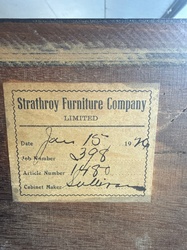
My primary limitation in this appraisal is the lack of physical examination. While the images are clear, I cannot definitively confirm wood species beyond visual identification (though it strongly appears to be oak), assess joinery integrity, or examine the interior condition of the drawers and cabinets. Authentication of the period is based on style and apparent construction methods. To fully authenticate its age and materials, an in-person examination would be needed to inspect construction techniques (e.g., dovetail joints, type of nails/screws), wood grain more closely, and hardware attachment. Provenance documentation (e.g., original sales receipts or family history) would further enhance authentication and value, but is rarely available for such pieces.