Lower Paleolithic Biface Chert Hand Axe / Scraper
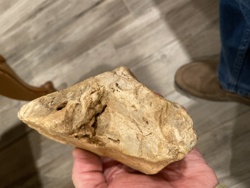
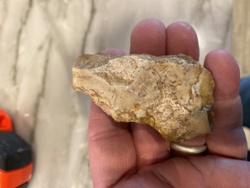
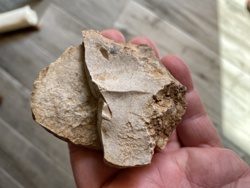
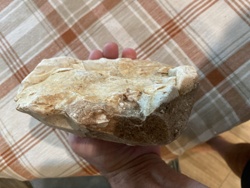
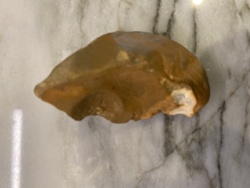
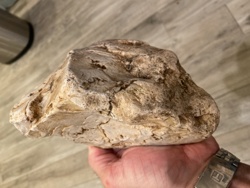
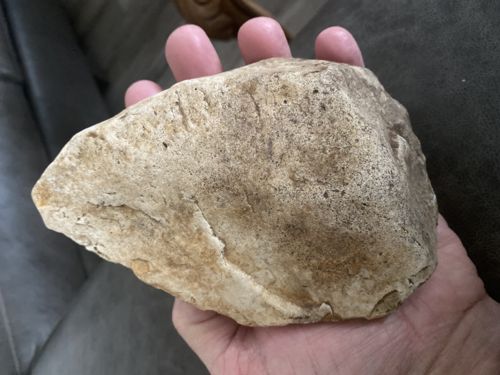
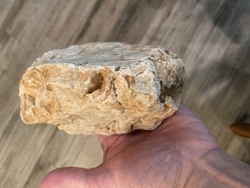
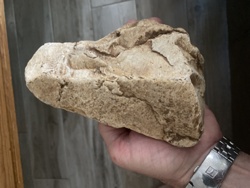
This is a substantial prehistoric stone tool, identified as a biface hand axe and scraper, measuring approximately 9 inches in length by 4.25 inches in width. The item is crafted from a light-colored chert or flint material, exhibiting a predominant cream-to-tan coloration with subtle earthy discolorations and a textured, matte surface consistent with long-term environmental exposure. The tool features classic Lower Paleolithic construction, likely of the Acheulean tradition style, characterized by its almond or pear-shaped morphology. It was formed through percussion flaking, evidenced by the visible flake scars and a distinct ridge running along the center of the face. The edges show signs of intentional secondary retouching to create a sharp, functional perimeter for cutting or scraping. Physically, the item exhibits a heavy patina and calcified mineral deposits consistent with its discovery in Guthrie, OK. There is minor edge wear and small chips across the peripheries, which are typical for lithic artifacts of this age rather than modern damage. The craftsmanship demonstrates a high level of skill in lithic reduction, with a balanced heft designed for hand-held use without a handle. The lack of modern grinding marks and the presence of deep weathered pitting confirm its ancient origin.
AI-Generated Appraisal Disclaimer
Estimated Value
$450 - $700
Basic Information
Category
Prehistoric Artifacts / Lithic Tools
Appraised On
February 19, 2026
Estimated Value
$450 - $700
Additional Details Provided By Owner
User Provided Information
lower Paleolithic chert bi face hand axe scraper tool found in Guthrie OK measuring 9" x 4.25"
Item Description
This is a substantial prehistoric stone tool, identified as a biface hand axe and scraper, measuring approximately 9 inches in length by 4.25 inches in width. The item is crafted from a light-colored chert or flint material, exhibiting a predominant cream-to-tan coloration with subtle earthy discolorations and a textured, matte surface consistent with long-term environmental exposure. The tool features classic Lower Paleolithic construction, likely of the Acheulean tradition style, characterized by its almond or pear-shaped morphology. It was formed through percussion flaking, evidenced by the visible flake scars and a distinct ridge running along the center of the face. The edges show signs of intentional secondary retouching to create a sharp, functional perimeter for cutting or scraping. Physically, the item exhibits a heavy patina and calcified mineral deposits consistent with its discovery in Guthrie, OK. There is minor edge wear and small chips across the peripheries, which are typical for lithic artifacts of this age rather than modern damage. The craftsmanship demonstrates a high level of skill in lithic reduction, with a balanced heft designed for hand-held use without a handle. The lack of modern grinding marks and the presence of deep weathered pitting confirm its ancient origin.
Get Your Items Appraised
Instant estimates of your treasures with AI-powered instant appraisals