Bronze Laughing Buddha (Budai) Figurine
Religious Art and Statuary

Bronze Laughing Buddha (Budai) Figurine

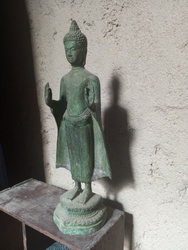
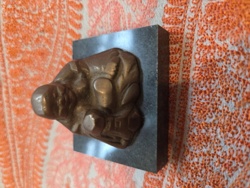
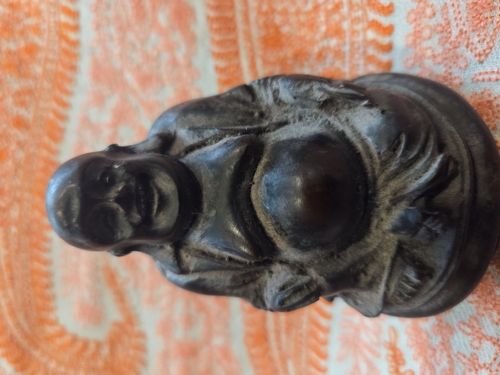
This is a heavy, cast metal figurine depicting the Laughing Buddha, also known as Budai or Hotei, traditionally seated in a posture of relaxation. The item is reported to be made in Thailand and exhibits a dark, almost black, patinated bronze or brass finish with a matte texture. Physically, the piece features a rounded, jolly face with a wide grin, elongated earlobes signifying wisdom, and a prominent protuberant belly which is often rubbed for good luck. The carving or casting detail on the robes shows flowing drapery and textured folds. Given the context of its weight and Thai origin, it is likely a mid-to-late 20th-century decorative cast. The surface shows a significant amount of white or greyish dust accumulation in the crevices, indicating long-term display without deep cleaning, but the underlying structure appears solid without visible cracks. The craftsmanship is typical of high-quality souvenir or home temple market pieces from Thailand, where lost-wax casting is a common manufacturing method. The patina is evenly applied, though some high points like the belly and nose show slight polishing from handling. This piece serves as both a religious icon and a decorative object representing prosperity and contentment.

Estimated Value

$150 - $250

Basic Information

Category

Religious Art and Statuary

Appraised On

February 20, 2026

Estimated Value

$150 - $250

Additional Details Provided By Owner

User Provided Information

Heavy, made in Thailand

Item Description

This is a heavy, cast metal figurine depicting the Laughing Buddha, also known as Budai or Hotei, traditionally seated in a posture of relaxation. The item is reported to be made in Thailand and exhibits a dark, almost black, patinated bronze or brass finish with a matte texture. Physically, the piece features a rounded, jolly face with a wide grin, elongated earlobes signifying wisdom, and a prominent protuberant belly which is often rubbed for good luck. The carving or casting detail on the robes shows flowing drapery and textured folds. Given the context of its weight and Thai origin, it is likely a mid-to-late 20th-century decorative cast. The surface shows a significant amount of white or greyish dust accumulation in the crevices, indicating long-term display without deep cleaning, but the underlying structure appears solid without visible cracks. The craftsmanship is typical of high-quality souvenir or home temple market pieces from Thailand, where lost-wax casting is a common manufacturing method. The patina is evenly applied, though some high points like the belly and nose show slight polishing from handling. This piece serves as both a religious icon and a decorative object representing prosperity and contentment.
Get Your Items Appraised

Instant estimates of your treasures with AI-powered instant appraisals

Browse More Appraisals