AI Appraisal Estimate

AI-generated estimates · not official valuations

From the user

What was submitted

Photo and notes provided by the user — not generated by AI

Submitted item photo
Submitted photo · June 13, 2026

User's notes

No additional notes provided.

AI analysis below

AI appraisal

AI analysis & estimate

AI-Generated · Verify before acting

Everything below is generated by AI for informational purposes only. AI can make mistakes — the AI may misidentify items or misattribute them (artist, maker, brand, designer, origin, era). This is not an official valuation and should not be used for insurance, sale, tax, estate, legal, or lending purposes — or any decision requiring a certified appraisal. It is not an authoritative claim about any person, brand, or rights holder — do not share or rely on it as a factual statement about a third party. Always consult qualified professionals before making financial decisions.

Read the full disclaimer

AI Identification

·Not independently authenticated·Verify before acting

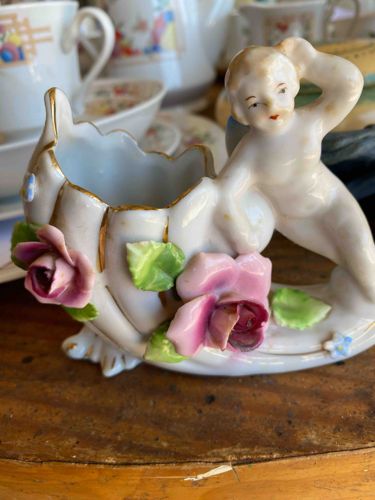
Vintage Porcelain Cherub and Floral Cornucopia Posy Vase

Antique and Vintage Ceramics / Decorative Collectibles

AI Estimated Value

·Not an official valuation·Verify before acting

$15 - $25

As of June 13, 2026

AI Item Analysis

·AI can make mistakes·Verify before acting
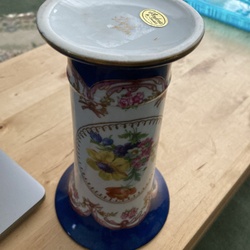
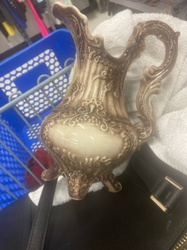
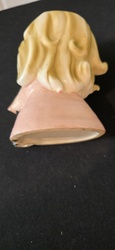
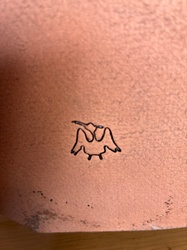
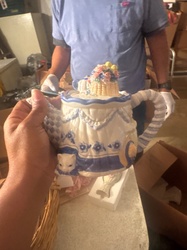
A decorative porcelain miniature vase featuring a neoclassical cherub or putti leaning against a textured, horn-shaped cornucopia vessel. The piece is constructed from slip-cast white porcelain with a high-gloss glaze finish. Physically, it is adorned with hand-applied (applied-work) three-dimensional porcelain roses in shades of pink and magenta, accompanied by green-washed leaves and tiny blue florets. The rim of the cornucopia and the base of the figure's foot feature hand-painted gold gilt accents, which show significant rubbing and loss consistent with mid-20th-century age. The cherub's facial features—including the eyes, eyebrows, and lips—are hand-painted with delicate brushwork. In terms of condition, there are visible 'flea bites' and small chips on the delicate edges of the rose petals, which is common for this type of fragile applied porcelain. The overall style is reminiscent of Dresden or German Meissen-style decorative arts, likely dating from the 1940s to 1960s, a period when such 'florals and figures' giftware was popular in Japan and occupied Germany. No maker's mark is visible on the upper surface, though such pieces often originally bore gold foil stickers or stamped marks on the underside of the base. The quality is indicative of mass-produced mid-century decorative collectibles rather than studio fine art.
AI Appraisal Report

·AI can make mistakes·Verify before acting
Upon examining the provided imagery of this porcelain cherub cornucopia vase, I have determined it to be a decorative collectible likely produced in the mid-20th century (circa 1940s-1960s). The piece exhibits the classic hallmarks of 'Dresden-style' export ware, frequently manufactured in Occupied Japan or post-war Germany for the American giftware market. The slip-cast construction and the quality of the hand-painted facial features suggest mass production rather than high-end artisan craftsmanship. While charming, the condition is a limiting factor; I noted significant rubbing to the gold gilt accents along the rim and base, as well as the 'flea bites' and minor chipping on the fragile applied porcelain roses, which is extremely common but detracts from the value. The market for these specific mid-century floral figurines has softened considerably as collector tastes have shifted toward mid-century modern or contemporary minimalism. Currently, these are readily available in secondary markets like eBay or Etsy, often grouped in lots. Without a prestigious maker's mark (such as Meissen or true Dresden factories) or a foil sticker to confirm origin, the value relies strictly on its decorative appeal. To fully authenticate a specific manufacturer, an in-person inspection of the underside bisque for impressed mold numbers or faint ink stamps would be required. However, given the visible quality and commonality of the mold, expensive scientific testing or provenance research would exceed the item's intrinsic worth. It remains a sweet vintage example, valued primarily for its nostalgic aesthetic.

Get your items appraised

Instant estimates of your treasures with AI-powered appraisals

Browse More Appraisals