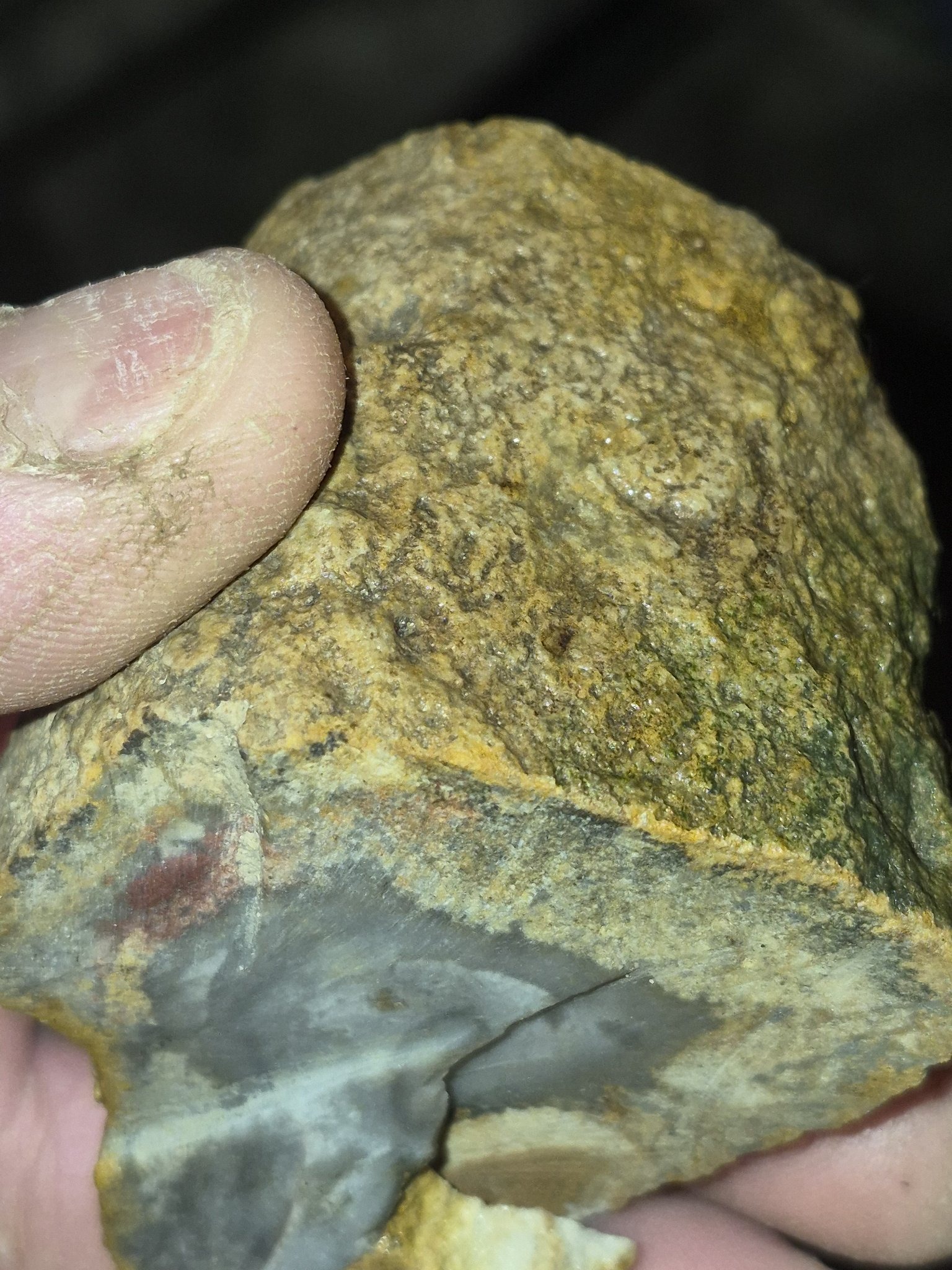
Chert or Flint Nodule with Weathered Cortex
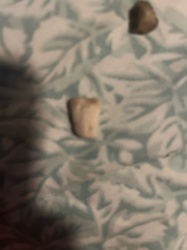
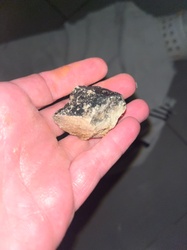
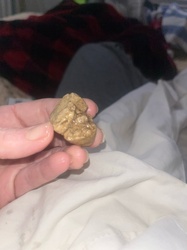
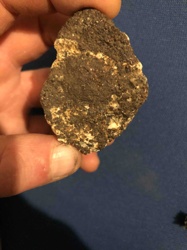
This item is a raw, naturally formed mineral specimen, likely a variety of chert or flint. The specimen features a pronounced, thick outer layer known as a 'cortex,' which displays a rough, granular, and weathered texture. The coloration of this exterior is primarily an earthy mustard yellow to tan hue, with subtle patches of greenish-gray mineral staining or potential organic microgrowth and dark iron or manganese spotting. A fresh break or intentional chip at the base reveals the internal material, which is a waxy, cryptocrystalline silicate. This interior core exhibits a smooth, conchoidal fracture pattern and is colored in variations of cool slate gray and blue-grey, with a distinctive reddish-brown iron inclusion toward the left edge. The contrast between the dull, porous exterior and the glass-like interior is a classic indicator of high-silica sedimentary rocks. There are no man-made markings, signatures, or alterations beyond the fracture surface. This specimen appears to be of ancient geological origin, formed millions of years ago, and is in a raw, unpolished state. Its quality is characterized by the density and purity of the internal core, though the external surface shows natural environmental wear and geological pitting typical of field-collected stones.
AI-Generated Appraisal Disclaimer
Estimated Value
$15.00 - $35.00
Basic Information
Category
Mineral Specimens and Geological Samples
Appraised On
May 11, 2026
Estimated Value
$15.00 - $35.00
Item Description
This item is a raw, naturally formed mineral specimen, likely a variety of chert or flint. The specimen features a pronounced, thick outer layer known as a 'cortex,' which displays a rough, granular, and weathered texture. The coloration of this exterior is primarily an earthy mustard yellow to tan hue, with subtle patches of greenish-gray mineral staining or potential organic microgrowth and dark iron or manganese spotting. A fresh break or intentional chip at the base reveals the internal material, which is a waxy, cryptocrystalline silicate. This interior core exhibits a smooth, conchoidal fracture pattern and is colored in variations of cool slate gray and blue-grey, with a distinctive reddish-brown iron inclusion toward the left edge. The contrast between the dull, porous exterior and the glass-like interior is a classic indicator of high-silica sedimentary rocks. There are no man-made markings, signatures, or alterations beyond the fracture surface. This specimen appears to be of ancient geological origin, formed millions of years ago, and is in a raw, unpolished state. Its quality is characterized by the density and purity of the internal core, though the external surface shows natural environmental wear and geological pitting typical of field-collected stones.
Related Tags
Get Your Items Appraised
Instant estimates of your treasures with AI-powered instant appraisals