Natural Calcareous Oyster Pearl
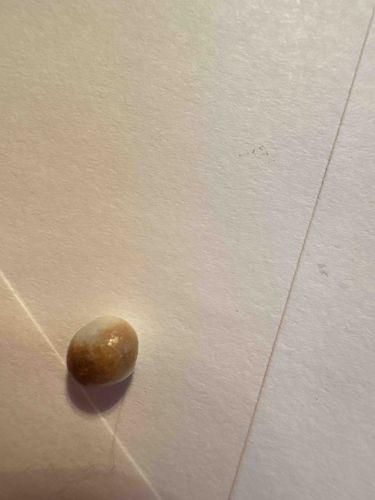
This is a natural calcareous pearl likely originating from an edible oyster (Ostreidae family). Unlike the nacreous pearls found in Pinctada species, this specimen exhibits a non-nacreous, porcelain-like appearance. It possesses a sub-oval to baroque shape with a distinct two-toned coloration: one hemisphere is a milky opaque white, while the other transitions into a saturated tan or golden-brown hue. The surface exhibits a subdued luster, typical of non-gem-grade natural occurrences in wild oysters. Physically, the pearl appears small, likely measuring between 4mm and 7mm in diameter. There are visible surface irregularities and a slight graininess, which are common traits of wild calcareous concretions. The transition between the white and brown sections is somewhat feathered, suggesting varied mineral deposition during its growth within the mollusk. No artificial treatments, drill holes, or jewelry mountings are evident, indicating it is in its raw, harvested state. Such pearls are considered biological rarities found by chance during consumption or commercial harvesting of oysters. While lacking the orient of fine saltwater pearls, it serves as a scientifically interesting specimen of natural calcium carbonate formation.
AI-Generated Appraisal Disclaimer
Estimated Value
$150-$300
Basic Information
Category
Loose Gemstones / Natural Oddities
Appraised On
December 19, 2025
Estimated Value
$150-$300
Additional Details Provided By Owner
User Provided Information
Oyster pearl
Item Description
This is a natural calcareous pearl likely originating from an edible oyster (Ostreidae family). Unlike the nacreous pearls found in Pinctada species, this specimen exhibits a non-nacreous, porcelain-like appearance. It possesses a sub-oval to baroque shape with a distinct two-toned coloration: one hemisphere is a milky opaque white, while the other transitions into a saturated tan or golden-brown hue. The surface exhibits a subdued luster, typical of non-gem-grade natural occurrences in wild oysters. Physically, the pearl appears small, likely measuring between 4mm and 7mm in diameter. There are visible surface irregularities and a slight graininess, which are common traits of wild calcareous concretions. The transition between the white and brown sections is somewhat feathered, suggesting varied mineral deposition during its growth within the mollusk. No artificial treatments, drill holes, or jewelry mountings are evident, indicating it is in its raw, harvested state. Such pearls are considered biological rarities found by chance during consumption or commercial harvesting of oysters. While lacking the orient of fine saltwater pearls, it serves as a scientifically interesting specimen of natural calcium carbonate formation.
Get Your Items Appraised
Instant estimates of your treasures with AI-powered instant appraisals