AI identification & appraisal estimate

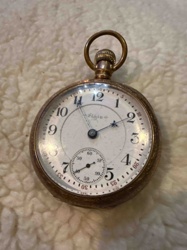
Hamilton Antique Railroad Grade Pocket Watch

This name is the AI's identification of the item — it may be incorrect.

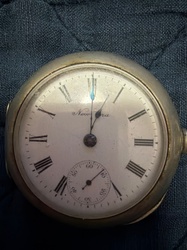
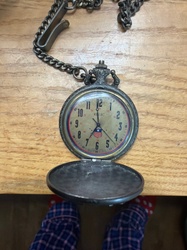
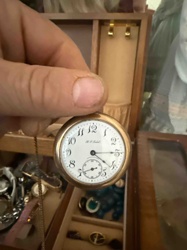
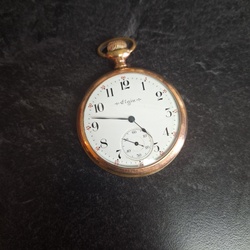
Submitted photo of Hamilton Antique Railroad Grade Pocket Watch
Photo submitted by the user — not generated by AI

User's notes

Hamilton

These notes were written by the person who submitted this item. Appraiser.AI has not verified them, and the AI's identification and estimate may rely on them.

AI Estimated Value

Not an official valuation

$450 - $700

AI estimate as of March 15, 2026 · verify with a professional before acting

AI-Generated · Verify before acting

Everything on this page is generated by AI for informational purposes only. AI can make mistakes — the AI may misidentify items or misattribute them (artist, maker, brand, designer, origin, era). This is not an official valuation and should not be used for insurance, sale, tax, estate, legal, or lending purposes — or any decision requiring a certified appraisal. It is not an authoritative claim about any person, brand, or rights holder — do not share or rely on it as a factual statement about a third party. Always consult qualified professionals before making financial decisions.

This analysis also relies on unverified notes provided by the user, which may be incomplete or inaccurate and could affect the result.

Read the full disclaimer

AI Item Analysis

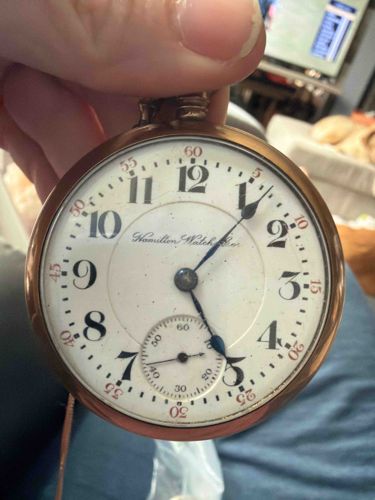
This is a vintage Hamilton open-face pocket watch, likely a railroad grade model dating from the early 20th century (circa 1900-1925). The timepiece features a classic white enamel or porcelain Montgomery-style dial with prominent black Arabic numerals for the hours and a secondary outer track with red-colored Arabic numerals marking the minutes in 5-minute increments. The dial is signed 'Hamilton Watch Co.' in an elegant cursive script. It includes a recessed small seconds sub-dial at the six o'clock position. The hands are crafted from blued steel, including a spade-tipped hour hand and a slender minute hand. The case appears to be made of gold-filled brass or a similar yellow-toned metal, showing a polished finish with moderate superficial scratching. Notable condition issues include several fine hairline fractures (crazing) on the enamel surface of the dial, particularly visible near the 12 and 1 o'clock positions, and some minor debris or pitting under the crystal. The crown and bow at the 12 o'clock position show signs of use and honest patina. This watch represents the height of American industrial horology, known for extreme precision and high-quality mechanical movements designed to meet strict railroad safety standards.
AI Appraisal Report

Upon examination of this Hamilton railroad-grade pocket watch, I find it to be an authentic example of early 20th-century American horology, likely housing a 992 or 950 movement given the Montgomery dial and case style. The Montgomery dial—noted by the '60' in the sixth-minute position—is highly desirable among collectors. However, the condition of the enamel dial is a critical valuation factor. The hairline fractures and 'crazing' noted near the 12 and 1 o'clock positions significantly impact the value; a mint-condition porcelain dial can fetch a 30-50% premium over one with visible cracks. The case shows honest wear consistent with railroad service, though the 'gold-filled' status must be verified to ensure no significant 'brassiness' is occurring at the edges. The market for American railroad watches remains stable, with Hamilton being the 'gold standard' for reliability. Recent auction comparables for Hamilton 992s with similar dial damage range from $400 to $600, while pristine examples exceed $850. The 'cursive' signature suggests an earlier production run, which adds historical interest. Limitations of this appraisal include the inability to inspect the movement serial number to verify the exact production year and jewel count, or to check for 'timing' accuracy and mainspring tension. A full physical inspection is required to confirm the movement is 'original to the case' (matching serial ranges) and that no teeth are broken on the gears. To finalize authentication, the case back must be removed to document the movement caliber and ensure no mismatched parts from inferior models were swapped in over the decades.

Keep exploring

More horology - antique pocket watches appraisals

Get your items appraised

Instant AI-powered appraisal estimates from a photo

Browse More Appraisals