Russian Khokhloma Hand-Painted Wooden Spoon
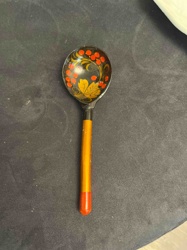
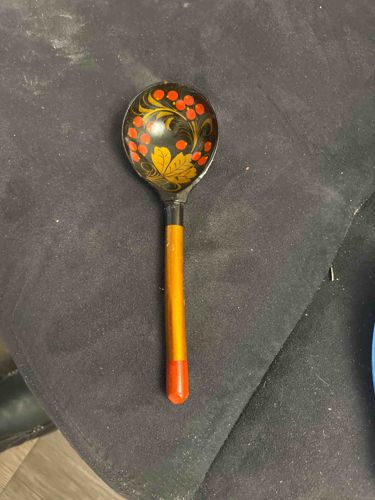
This is a traditional Russian Khokhloma folk-art wooden spoon, characterized by its distinctive black, gold, and red color palette. The item is carved from wood, likely linden or birch, and finished with a lacquer that provides its signature metallic luster. The bowl of the spoon features a hand-painted floral motif, showcasing red 'yagoda' (berries) and golden-yellow leaves with delicate black vine stippling, typical of the 17th-century peasant craft origin. The handle is divided into three sections: a sleek black neck near the bowl, a long golden-metallic shaft, and a solid red rounded terminal tip. The construction is solid and one-piece. Regarding condition, there is visible minor chipping and surface wear at the junction between the black neck and the golden handle, along with small abrasions on the red tip and the rim of the bowl. The lacquer appears slightly dulled in high-contact areas, indicating it was likely a used domestic object or a well-handled souvenir piece. This style of lacquerware is traditionally produced in the Nizhny Novgorod region. The overall craftsmanship reflects authentic folk techniques, specifically the 'background' painting style where the design is outlined and the surrounding area is filled with black pigment. Based on the wear and aesthetic, it likely dates from the late 20th century.
AI-Generated Appraisal Disclaimer
Estimated Value
$15 - $25
Basic Information
Category
Russian Folk Art / Kitchenware
Appraised On
January 19, 2026
Estimated Value
$15 - $25
Item Description
This is a traditional Russian Khokhloma folk-art wooden spoon, characterized by its distinctive black, gold, and red color palette. The item is carved from wood, likely linden or birch, and finished with a lacquer that provides its signature metallic luster. The bowl of the spoon features a hand-painted floral motif, showcasing red 'yagoda' (berries) and golden-yellow leaves with delicate black vine stippling, typical of the 17th-century peasant craft origin. The handle is divided into three sections: a sleek black neck near the bowl, a long golden-metallic shaft, and a solid red rounded terminal tip. The construction is solid and one-piece. Regarding condition, there is visible minor chipping and surface wear at the junction between the black neck and the golden handle, along with small abrasions on the red tip and the rim of the bowl. The lacquer appears slightly dulled in high-contact areas, indicating it was likely a used domestic object or a well-handled souvenir piece. This style of lacquerware is traditionally produced in the Nizhny Novgorod region. The overall craftsmanship reflects authentic folk techniques, specifically the 'background' painting style where the design is outlined and the surrounding area is filled with black pigment. Based on the wear and aesthetic, it likely dates from the late 20th century.
Get Your Items Appraised
Instant estimates of your treasures with AI-powered instant appraisals