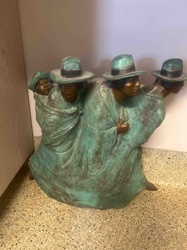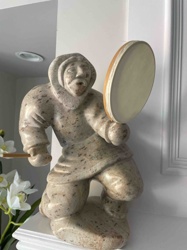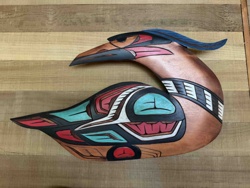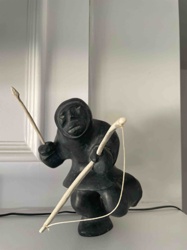
AI identification & appraisal estimate

Inuit Soapstone Seal Carving

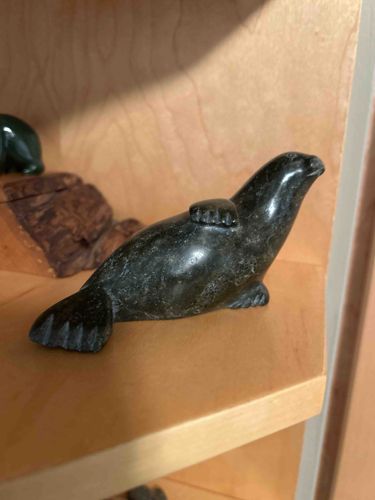
Submitted photo of Inuit Soapstone Seal Carving
Photo submitted by the user — not generated by AI

AI Estimated Value

Not an official valuation

$150 - $250

AI estimate as of February 10, 2026 · verify with a professional before acting

AI-Generated · Verify before acting

Everything on this page is generated by AI for informational purposes only. AI can make mistakes — the AI may misidentify items or misattribute them (artist, maker, brand, designer, origin, era). This is not an official valuation and should not be used for insurance, sale, tax, estate, legal, or lending purposes — or any decision requiring a certified appraisal. It is not an authoritative claim about any person, brand, or rights holder — do not share or rely on it as a factual statement about a third party. Always consult qualified professionals before making financial decisions.

Read the full disclaimer

AI Item Analysis

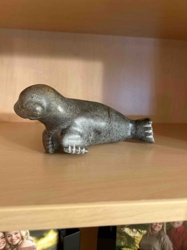
This item is a hand-carved soapstone sculpture of a seal, likely of Inuit or Arctic First Nations origin. The piece is crafted from a dark, variegated green-and-black soapstone (steatite), featuring a polished finish that highlights the natural stone grain. Its physical form depicts a reclining seal with its head tilted upward and a single flipper resting against its side. The sculpture measures approximately 4 to 6 inches in length. Detailed incised lines are visible on the flippers and tail to simulate the animal's digits, demonstrating careful attention to anatomical detail. The surface exhibits a soft patina consistent with age, along with minor surface abrasions and light scratches typical of soft stone carvings. No prominent maker's marks or signatures are visible in the current view, but it reflects a mid-to-late 20th-century style of Canadian indigenous art. The craftsmanship is characterized by smooth, flowing rounded contours and a solid, weighty feel, indicating high-quality hand-finishing and artistic intent common in traditional soapstone decorative works.
AI Appraisal Report

Upon visual examination of this soapstone carving, I find it to be a representative example of mid-to-late 20th-century Inuit or Arctic First Nations craftsmanship. The dark green variegated steatite displays a characteristic luster, and the fluid, rounded aesthetic is consistent with the classic sculptural styles popularized by various Canadian cooperatives between the 1960s and 1980s. The surface exhibits a natural patina and authentic micro-abrasions consistent with its age and the soft Mohs hardness of the medium. The current market for Inuit carvings is highly sensitive to provenance and artist identity. While the level of detail in the incised flippers indicates skilled craftsmanship, the absence of a visible 'Igloo tag,' syllabic signature, or disc number places this piece in the 'anonymous' category, which limits its ceiling at auction. Comparables for unsigned seal sculptures of this size (4-6 inches) typically realize prices in the low-to-mid hundred dollar range. High-demand pieces by recognized masters like Pauta Saila or Osuitok Ipeelee would fetch significantly more, but those require definitive markers. Critically, this appraisal is based on image analysis and cannot confirm the absence of repair or the presence of hidden signatures on the underside. For definitive authentication and a higher valuation, an in-person inspection is required to check for 'disc numbers' (E-numbers) using raking light. Documentation of provenance—specifically original purchase receipts or gallery certificates—would significantly bolster its marketability. Without physical verification, this remains a decorative specimen of indigenous art whose value is primarily determined by its aesthetic appeal and typical secondary market turnover for unsigned Arctic stone works.

Keep exploring

More fine art / indigenous sculpture appraisals

Get your items appraised

Instant AI-powered appraisal estimates from a photo

Browse More Appraisals