Victorian Style Silver Grape Shears
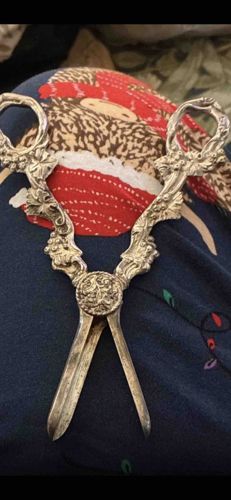
This is a pair of ornate dining shears, specifically designed for cutting grape clusters at the table. The item is crafted from what appears to be silver or silver-plated metal, displaying a highly decorative Victorian aesthetic. The handles are the most prominent feature, shaped into organic, winding grapevines complete with clusters of grapes and intricately detailed leaves. The finger loops at the top continue this botanical motif. The central pivot point includes a decorative circular medallion, likely covering the screw hinge. Below the pivot, the blades are relatively short and straight with rounded tips, a safety feature common for these specialized dining utensils. In terms of condition, there is a visible aged patina and some tarnishing in the recessed areas of the casting, which highlights the depth of the floral pattern. The blades show some light surface scratching and wear consistent with age and use. There are no immediate maker's marks visible in the photograph, though they would typically be found near the hinge or along the inner blades. The craftsmanship suggests a high-quality production from the late 19th to early 20th century, a period when specialized service pieces were essential for formal dining.
AI-Generated Appraisal Disclaimer
Estimated Value
$150 - $450
Basic Information
Category
Antique Silverware / Dining Accessories
Appraised On
February 4, 2026
Estimated Value
$150 - $450
Item Description
This is a pair of ornate dining shears, specifically designed for cutting grape clusters at the table. The item is crafted from what appears to be silver or silver-plated metal, displaying a highly decorative Victorian aesthetic. The handles are the most prominent feature, shaped into organic, winding grapevines complete with clusters of grapes and intricately detailed leaves. The finger loops at the top continue this botanical motif. The central pivot point includes a decorative circular medallion, likely covering the screw hinge. Below the pivot, the blades are relatively short and straight with rounded tips, a safety feature common for these specialized dining utensils. In terms of condition, there is a visible aged patina and some tarnishing in the recessed areas of the casting, which highlights the depth of the floral pattern. The blades show some light surface scratching and wear consistent with age and use. There are no immediate maker's marks visible in the photograph, though they would typically be found near the hinge or along the inner blades. The craftsmanship suggests a high-quality production from the late 19th to early 20th century, a period when specialized service pieces were essential for formal dining.
Get Your Items Appraised
Instant estimates of your treasures with AI-powered instant appraisals