Prehistoric Bifacial Lithic Core / Scraper Tool
Prehistoric Artifacts & Lithics

Prehistoric Bifacial Lithic Core / Scraper Tool

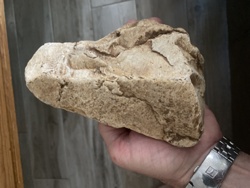
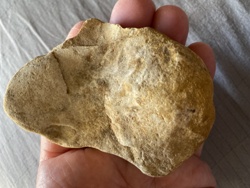
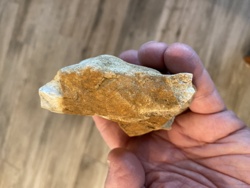
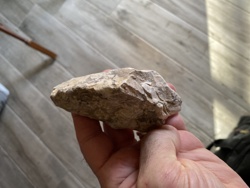
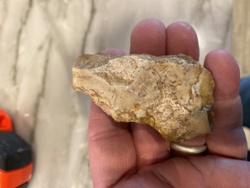
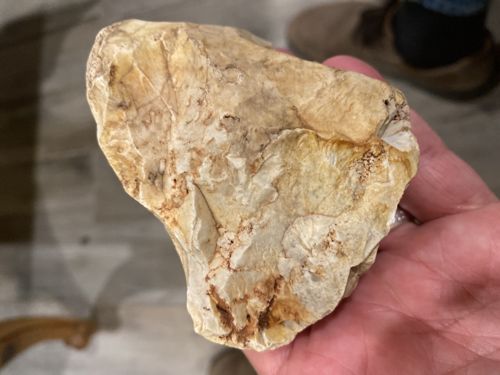
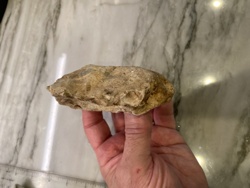
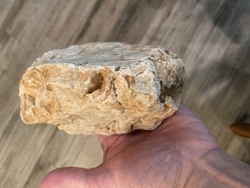
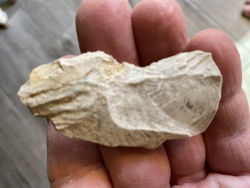
This item is a prehistoric lithic artifact, specifically a bifacial core or hand tool such as a scraper, measuring approximately 3 inches by 2.5 inches. It is constructed from a high-silica stone, likely a variety of chert or flint common to the Oklahoma region. The color palette consists of variegated tan, light cream, and ochre hues, with significant iron-oxide staining (patina) visible in the crevices and along the edges, suggesting long-term burial in reddish soil typical of the Guthrie area. The construction shows evidence of percussion flaking, with clear conchoidal fractures where flakes were removed to create a functional edge. One side appears more heart-shaped or triangular, tapering to a rounded point. The surface exhibits a waxy luster and significant weathering, rounding the sharpest edges of the flake scars over millennia. There are no modern maker's marks, as this is a handcrafted tool from a prehistoric period. The condition is consistent with an archaeological find; it shows natural grinding from soil movement and some minor modern edge-nicking that exposes a brighter interior stone compared to the weathered exterior. The craftsmanship suggests a utilitarian tool used for hide scraping or as a multi-purpose cutting implement, likely dating from the Archaic to Woodland periods based on the lithic reduction strategy.
Estimated Value

$45 - $85

Basic Information

Category

Prehistoric Artifacts & Lithics

Appraised On

February 18, 2026

Estimated Value

$45 - $85

Additional Details Provided By Owner

User Provided Information

Prehistoric core Bi face hand axe scraper tool found in Guthrie OK measuring 3" x 2.5"

Item Description

This item is a prehistoric lithic artifact, specifically a bifacial core or hand tool such as a scraper, measuring approximately 3 inches by 2.5 inches. It is constructed from a high-silica stone, likely a variety of chert or flint common to the Oklahoma region. The color palette consists of variegated tan, light cream, and ochre hues, with significant iron-oxide staining (patina) visible in the crevices and along the edges, suggesting long-term burial in reddish soil typical of the Guthrie area. The construction shows evidence of percussion flaking, with clear conchoidal fractures where flakes were removed to create a functional edge. One side appears more heart-shaped or triangular, tapering to a rounded point. The surface exhibits a waxy luster and significant weathering, rounding the sharpest edges of the flake scars over millennia. There are no modern maker's marks, as this is a handcrafted tool from a prehistoric period. The condition is consistent with an archaeological find; it shows natural grinding from soil movement and some minor modern edge-nicking that exposes a brighter interior stone compared to the weathered exterior. The craftsmanship suggests a utilitarian tool used for hide scraping or as a multi-purpose cutting implement, likely dating from the Archaic to Woodland periods based on the lithic reduction strategy.
Get Your Items Appraised

Instant estimates of your treasures with AI-powered instant appraisals

Browse More Appraisals