AI Appraisal Estimate

AI-generated estimates · not official valuations

From the user

What was submitted

Photo and notes provided by the user — not generated by AI

Submitted item photo
Submitted photo · May 27, 2026

User's notes

I’m in in

AI analysis below

AI appraisal

AI analysis & estimate

AI-Generated · Verify before acting

Everything below is generated by AI for informational purposes only. AI can make mistakes — the AI may misidentify items or misattribute them (artist, maker, brand, designer, origin, era). This is not an official valuation and should not be used for insurance, sale, tax, estate, legal, or lending purposes — or any decision requiring a certified appraisal. It is not an authoritative claim about any person, brand, or rights holder — do not share or rely on it as a factual statement about a third party. Always consult qualified professionals before making financial decisions.

Note

This analysis also relies on unverified notes provided by the user, which may be incomplete or inaccurate and could affect the result.

Read the full disclaimer

AI Identification

·Not independently authenticated·Verify before acting

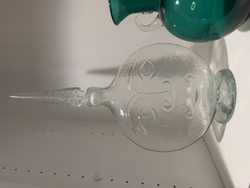
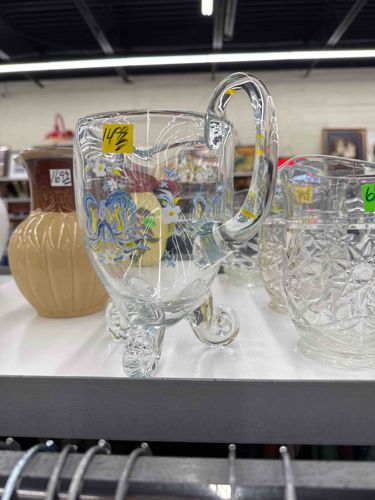
Hand-Blown Glass Tripod Pitcher with Hand-Painted Polychrome Enamel Accents

Vintage Glassware / Art Glass

AI Estimated Value

·Not an official valuation·Verify before acting

$45.00 - $65.00

As of May 27, 2026

AI Item Analysis

·AI can make mistakes·Verify before acting
This is a hand-blown clear glass tripod-footed pitcher, likely dating from the mid-20th century, approximately 1940s-1960s. The vessel features a globular body supported by three scrolled, applied glass legs. A distinctive high-arched glass handle is attached to the rim and shoulder, showing characteristic tool marks at the points of fusion. The exterior is decorated with folk-art style hand-painted enamel designs, including blue bow-like scrolls, yellow accents, and small white daisy floral motifs. The glass clarity is good, though common internal seed bubbles and striations from the blowing process are present. The painting exhibits a naive, charming aesthetic often found in European or American art glass from the mid-century period. Condition-wise, it appears intact without major visible cracks or chips, though there is a yellow price label adhered directly to the surface which may leave residue. The enamel shows minor thinning in areas consistent with age and gentle handling. The craftsmanship reflects a semi-skilled artisan approach, combining traditional glass-forming techniques with decorative surface treatment.

AI Appraisal Report

·AI can make mistakes·Verify before acting
Based on my examination of this hand-blown vessel, I have identified it as a mid-20th-century decorative pitcher, likely produced in a regional European or American glasshouse. The tripod-footed form with scrolled feet and an applied high-arched handle indicates traditional hand-tooling techniques. The glass exhibits characteristic 'seeds' (small air bubbles) and cooling striations consistent with artisan production rather than high-volume industrial glass. The polychrome enamel decoration, featuring folk-style florals and bows, is applied with a naive hand. The condition appears stable with no visible structural cracks; however, the presence of an adhesive price tag poses a minor risk of residue or enamel loss if removed incorrectly. The market for mid-century art glass of this specific 'folk' style is currently stable but niche. This piece lacks a pontil mark signature or maker's mark, which identifies it as a decorative 'boutique' item rather than a high-end collectible from a renowned house like Murano or Blenko, thereby limiting its ceiling value. Comparable sales for unsigned, enameled mid-century pitchers of this size typically fall within the $40 to $70 range. Please note: This appraisal is based on photographic evidence. A definitive valuation would require an in-person inspection to verify the absence of 'flea bites' on the feet, check for internal mineral staining, and perform a UV light test to determine if the glass contains manganese or uranium, which can impact collectibility. Provenance regarding the specific region of manufacture would also strengthen its market position.

Get your items appraised

Instant estimates of your treasures with AI-powered appraisals

Browse More Appraisals