AI estimate as of November 28, 2025 · verify with a professional before acting
AI-Generated · Verify before acting
Everything on this page is generated by AI for informational purposes only. AI can make mistakes — the AI may misidentify items or misattribute them (artist, maker, brand, designer, origin, era). This is not an official valuation and should not be used for insurance, sale, tax, estate, legal, or lending purposes — or any decision requiring a certified appraisal. It is not an authoritative claim about any person, brand, or rights holder — do not share or rely on it as a factual statement about a third party. Always consult qualified professionals before making financial decisions.
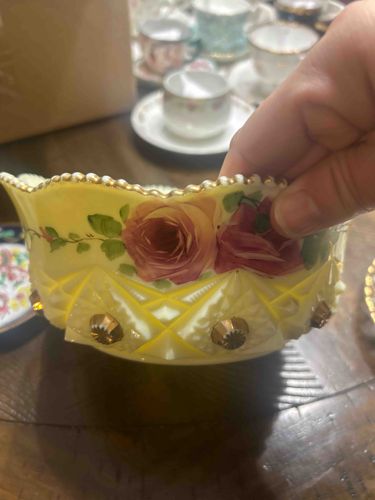
This exquisite item is a hand-painted opalescent glass pedestal bowl, likely dating from the late 19th to early 20th century, possibly in the EAPG (Early American Pattern Glass) style or a similar Victorian/Edwardian aesthetic. The bowl features a vibrant yellow opalescent glass body, which shows a milky, luminous quality when light passes through it, particularly noticeable at the edges and raised patterns. The upper rim of the bowl is intricately adorned with a beaded or 'berry' edge, finished in what appears to be gold gilt, adding a touch of elegance. Below this rim, the exterior surface is meticulously hand-painted with lush, multi-petaled roses in shades of deep red and soft pinks, interspersed with green leaves and stems. The painting exhibits a naturalistic style with visible brushstrokes, indicating careful artistry. Further down, the bowl's body transitions into a molded, diamond-faceted or quilted pattern. At the intersection of these raised facets, small, round, amber or brown-colored cabochon jewels or glass beads are strategically placed, enhancing its decorative appeal and providing textural contrast. The overall construction suggests a delicate yet robust piece of ornamental glassware. There are no obvious signs of significant damage like chips or cracks visible in the image, but a thorough inspection would be required to confirm its pristine condition. The gold gilt on the rim may show some wear commensurate with age, but this cannot be confirmed from the provided view. The craftsmanship points to a high-quality decorative art piece, potentially for use as a candy dish, trinket holder, or simply a display item.
AI Appraisal Report
Based on my visual examination of the provided image, this hand-painted opalescent glass pedestal bowl presents as a charming example of late 19th to early 20th-century decorative glassware. The vibrant yellow opalescence, particularly at the edges, is characteristic of the period and suggests quality glass production. The hand-painted roses, while detailed, align with common decorative motifs of the Victorian/Edwardian era. The gilded berry rim, molded diamond-faceted body, and applied cabochon 'jewels' all contribute to an aesthetically pleasing, albeit somewhat busy, design typical of items intended for parlor display or functional use such as a candy dish.
From the image, the condition appears good, with no obvious chips or cracks. However, a thorough in-person inspection would be crucial to confirm this. I would specifically look for wear to the gold gilt on the rim, which is a common age-related issue, and any chips or nicks around the delicate berry edge or pedestal base. The longevity and integrity of the applied 'jewels' would also need close scrutiny.
Authenticity, based solely on an image, is difficult to definitively confirm. While the style suggests the stated period, reproductions or later decorative pieces can mimic these aesthetics closely. An in-hand examination would allow for inspection of glass quality, painting technique (under magnification), and construction methods (e.g., seams, pontil mark if applicable) to better assign a precise manufacturing period and origin.
Market conditions for this type of decorative EAPG or Victorian art glass are generally stable but not experiencing significant surges. Comparable items, even those with intricate painting and opalescence, typically fall within a modest range unless associated with celebrated manufacturers. The unique combination of opalescence, hand-painting, gilding, and applied jewels enhances its appeal, but the overall decorative nature keeps it within the collectible rather than investment-grade category. Demand is consistent among collectors of antique glassware and decorative arts, but it's not considered rare. Factors impacting value positively include the excellent apparent condition and the intricate, multi-faceted decoration. Negative impacts would be any significant damage, extensive gilt loss, or if it were later determined to be a reproduction of lesser quality. Without physical inspection, provenance documentation, or scientific analysis of the glass composition, I cannot definitively authenticate its precise age or manufacturer beyond what is suggested by its style and assumed construction.