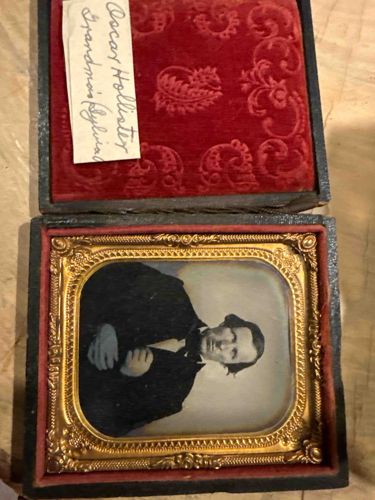
Mid-19th Century Cased Daguerreotype of Oscar Hollister
This is a mid-19th-century cased portrait, likely a daguerreotype or ambrotype, featuring a seated gentleman identified by an enclosed handwritten note as 'Oscar Hollister, Grandma's Brother'. The image is housed in a standard ninth-plate or sixth-plate sized leatherette-covered wooden case. The interior lid features a vibrant red embossed velvet or plush pad with a floral/scrollwork pattern. The photograph itself is framed by an ornate, sand-textured gold-toned brass mat and a decorative pinchbeck foil rim. The subject is a young man with dark, swept-back hair, wearing a high-collared white shirt, a dark cravat or bowtie, and a heavy dark frock coat. The craftsmanship of the mat indicates a production date roughly between 1845 and 1860. Notable condition issues include split hinges on the case—a common age-related failure—and some minor edge wear to the leatherette. The image display shows minor oxidation or solarization around the edges, typical of mirrored silver plates. The handwritten paper note adds significant provenance value, identifying the sitter and providing a genealogical link. The overall quality suggests a professional studio portrait from the Victorian era.
AI-Generated Appraisal Disclaimer
Estimated Value
$40 - $75
Basic Information
Category
Antique Civil War Era Photography
Appraised On
February 20, 2026
Estimated Value
$40 - $75
Item Description
This is a mid-19th-century cased portrait, likely a daguerreotype or ambrotype, featuring a seated gentleman identified by an enclosed handwritten note as 'Oscar Hollister, Grandma's Brother'. The image is housed in a standard ninth-plate or sixth-plate sized leatherette-covered wooden case. The interior lid features a vibrant red embossed velvet or plush pad with a floral/scrollwork pattern. The photograph itself is framed by an ornate, sand-textured gold-toned brass mat and a decorative pinchbeck foil rim. The subject is a young man with dark, swept-back hair, wearing a high-collared white shirt, a dark cravat or bowtie, and a heavy dark frock coat. The craftsmanship of the mat indicates a production date roughly between 1845 and 1860. Notable condition issues include split hinges on the case—a common age-related failure—and some minor edge wear to the leatherette. The image display shows minor oxidation or solarization around the edges, typical of mirrored silver plates. The handwritten paper note adds significant provenance value, identifying the sitter and providing a genealogical link. The overall quality suggests a professional studio portrait from the Victorian era.
Related Tags
Get Your Items Appraised
Instant estimates of your treasures with AI-powered instant appraisals