Sacagawea Dollar Coin
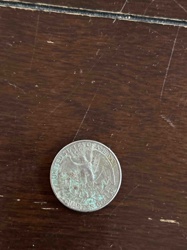
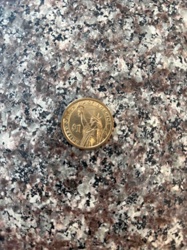
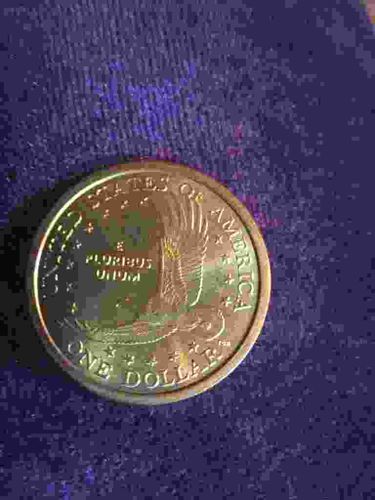
This is a United States Sacagawea Dollar coin, typically produced starting in the year 2000. This specific image shows the reverse (tails) side of the coin. The design features a soaring bald eagle surrounded by 17 stars, representing the number of states in the Union at the time of the Lewis and Clark expedition. The text 'UNITED STATES OF AMERICA', 'E PLURIBUS UNUM', and 'ONE DOLLAR' is clearly embossed. The coin is composed of a copper core clad with a manganese brass coating, which gives it its signature golden or 'brass' appearance. Measuring 26.5mm in diameter with a plain, smooth edge, this specimen shows moderate signs of circulation and age. There is visible surface wear on the high points of the eagle's wings and some light scratching or bag marks on the field of the coin. A significant amount of tarnishing or 'toning' is present, with shifts toward darker copper and brownish hues, particularly along the bottom rim and near the eagle's tail. This patina suggests the coin has been exposed to the environment rather than being stored in a mint-state protective casing. The overall strike quality appears standard for business strikes intended for general circulation.
AI-Generated Appraisal Disclaimer
Estimated Value
$1.00 - $1.25
Basic Information
Category
Numismatics / Currency
Appraised On
February 11, 2026
Estimated Value
$1.00 - $1.25
Item Description
This is a United States Sacagawea Dollar coin, typically produced starting in the year 2000. This specific image shows the reverse (tails) side of the coin. The design features a soaring bald eagle surrounded by 17 stars, representing the number of states in the Union at the time of the Lewis and Clark expedition. The text 'UNITED STATES OF AMERICA', 'E PLURIBUS UNUM', and 'ONE DOLLAR' is clearly embossed. The coin is composed of a copper core clad with a manganese brass coating, which gives it its signature golden or 'brass' appearance. Measuring 26.5mm in diameter with a plain, smooth edge, this specimen shows moderate signs of circulation and age. There is visible surface wear on the high points of the eagle's wings and some light scratching or bag marks on the field of the coin. A significant amount of tarnishing or 'toning' is present, with shifts toward darker copper and brownish hues, particularly along the bottom rim and near the eagle's tail. This patina suggests the coin has been exposed to the environment rather than being stored in a mint-state protective casing. The overall strike quality appears standard for business strikes intended for general circulation.
Related Tags
Get Your Items Appraised
Instant estimates of your treasures with AI-powered instant appraisals