AI Appraisal Estimate

AI-generated estimates · not official valuations

From the user

What was submitted

Photo and notes provided by the user — not generated by AI

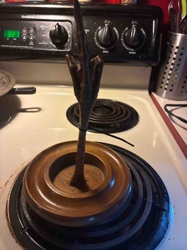
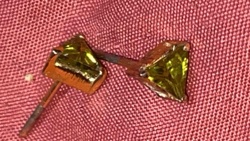
Submitted item photo
Submitted photo · June 6, 2026

User's notes

No additional notes provided.

AI analysis below

AI appraisal

AI analysis & estimate

AI-Generated · Verify before acting

Everything below is generated by AI for informational purposes only. AI can make mistakes — the AI may misidentify items or misattribute them (artist, maker, brand, designer, origin, era). This is not an official valuation and should not be used for insurance, sale, tax, estate, legal, or lending purposes — or any decision requiring a certified appraisal. It is not an authoritative claim about any person, brand, or rights holder — do not share or rely on it as a factual statement about a third party. Always consult qualified professionals before making financial decisions.

Read the full disclaimer

AI Identification

·Not independently authenticated·Verify before acting

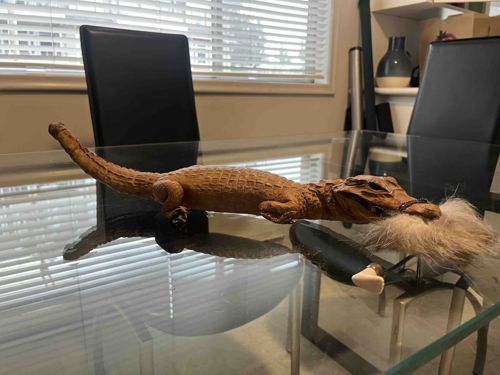
Taxidermied Alligator Novelty with Glasses and Fur Beard

Decorative Object / Novelty Item

AI Estimated Value

·Not an official valuation·Verify before acting

$150-250

As of June 6, 2026

AI Item Analysis

·AI can make mistakes·Verify before acting
This item is a taxidermied or preserved juvenile alligator or caiman, presented as an unusual decorative piece. Its overall length appears to be approximately 1.5 to 2 feet, judging by its placement on a dining table with chairs. The material is the actual dried skin and body of the reptile, displaying a natural, light brown to tan color with visible scales and textured skin typical of an alligator. The characteristic scutes along its back are well-defined. The construction appears to be a full-body preservation, with the limbs and tail articulated in a natural, resting pose. Notably, the alligator's head has been adorned with small, wire-rimmed spectacles perched on its snout and a large, bushy, light-colored faux fur 'beard' or 'mustache' attached beneath its chin, giving it a whimsical, anthropomorphic appearance. These additions suggest it functions more as a novelty or curiosity rather than a purely scientific specimen. There are no obvious signs of significant damage such as tears or large cracks in the skin, however, typical drying and shrinking is apparent. The eyes appear to be artificial glass inserts. No visible maker's marks or signatures are discernible. This type of item was particularly popular as a souvenir or 'Florida novelty' from the mid-20th century onwards, indicating an estimated age from the 1950s to the 1980s. The quality of preservation appears to be fair, maintaining the form of the animal. The addition of the glasses and fur makes it a unique and eccentric piece of folk art or tourist memorabilia.
AI Appraisal Report

·AI can make mistakes·Verify before acting
I have examined the provided image of this taxidermied alligator novelty. Based on visual cues, this appears to be a legitimate preserved juvenile alligator or caiman, likely originating as a 'Florida novelty' from the mid to late 20th century (1950s-1980s). The visible scales, scutes, and overall form are consistent with real reptilian taxidermy. The applied wire-rimmed glasses and faux fur beard are typical whimsical additions for such souvenir items, enhancing its kitsch appeal. The condition appears fair; the skin shows natural drying and shrinkage, but no major tears or cracks are evident. The eyes are clearly artificial inserts. Authenticity of the alligator as a true specimen is high given its appearance, but I cannot definitively rule out highly realistic replicas without physical inspection. Market conditions for such novelty taxidermy are niche. Comparables are found in online sales venues, antique shops, and specialty curio markets. These items are generally driven by a demand for eccentric decorative pieces or Americana. Rarity is moderate; while not mass-produced, many were made. Factors impacting value include its good preservation, the charming anthropomorphic additions, and its size. Its primary appeal is as a decorative novelty or conversation piece rather than a serious natural history specimen. Limitations: Without a physical examination, I cannot confirm the integrity of the internal structure, detect internal damage, or precisely date the specimen through material analysis. Provenance documentation (e.g., original sales receipts or family history) would further authenticate its age and origin. Scientific testing could verify species if necessary.

Get your items appraised

Instant estimates of your treasures with AI-powered appraisals

Browse More Appraisals