Chinese Millefleur (Wan Hua Bu Lou) Porcelain Plate
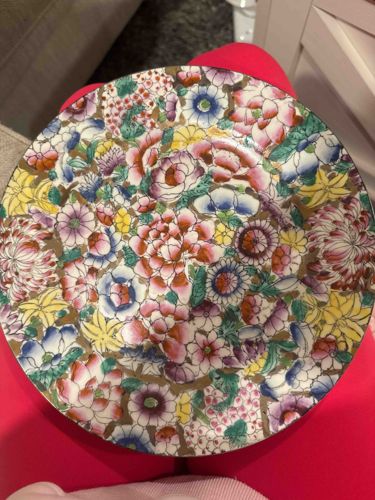
This is a circular porcelain plate featuring the dense 'Millefleur' (Thousand Flowers) pattern, often referred to in Chinese as 'Wan Hua Bu Lou' (Ten Thousand Flowers Meadow). The design is characterized by a lack of visible white background, completely covered in a meticulously hand-painted botanical arrangement of peonies, chrysanthemums, lilies, and lotuses. The palette is a vibrant example of the Famille Rose style, utilizing overglaze enamels in varying shades of pink, yellow, blue, green, and iron red. Gold or gilt tracing is visible separating the floral blooms, adding a luxurious texture to the piece. The craftsmanship indicates a high level of hand-enameling, where colors are layered to create depth in the petals. Regarding condition, the plate appears structurally sound with no large visible cracks or chips on the front face, although some minor glaze imperfections and slight wear to the gilt edges are consistent with vintage or early 20th-century production. This pattern gained significant popularity during the Qianlong period and continued to be reproduced through the late Qing Dynasty and Republic period. The overall quality suggests a high-end decorative piece intended for export or display, requiring a view of the underside for specific maker's marks or reign stamps to confirm the exact period of manufacture.
AI-Generated Appraisal Disclaimer
Estimated Value
$1,200 - $1,800
Basic Information
Category
Asian Antiques / Chinese Ceramics
Appraised On
February 14, 2026
Estimated Value
$1,200 - $1,800
Item Description
This is a circular porcelain plate featuring the dense 'Millefleur' (Thousand Flowers) pattern, often referred to in Chinese as 'Wan Hua Bu Lou' (Ten Thousand Flowers Meadow). The design is characterized by a lack of visible white background, completely covered in a meticulously hand-painted botanical arrangement of peonies, chrysanthemums, lilies, and lotuses. The palette is a vibrant example of the Famille Rose style, utilizing overglaze enamels in varying shades of pink, yellow, blue, green, and iron red. Gold or gilt tracing is visible separating the floral blooms, adding a luxurious texture to the piece. The craftsmanship indicates a high level of hand-enameling, where colors are layered to create depth in the petals. Regarding condition, the plate appears structurally sound with no large visible cracks or chips on the front face, although some minor glaze imperfections and slight wear to the gilt edges are consistent with vintage or early 20th-century production. This pattern gained significant popularity during the Qianlong period and continued to be reproduced through the late Qing Dynasty and Republic period. The overall quality suggests a high-end decorative piece intended for export or display, requiring a view of the underside for specific maker's marks or reign stamps to confirm the exact period of manufacture.
Get Your Items Appraised
Instant estimates of your treasures with AI-powered instant appraisals