AI Appraisal Estimate

AI-generated estimates · not official valuations

From the user

What was submitted

Photo and notes provided by the user — not generated by AI

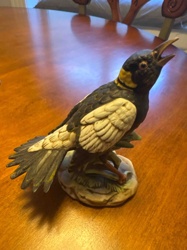
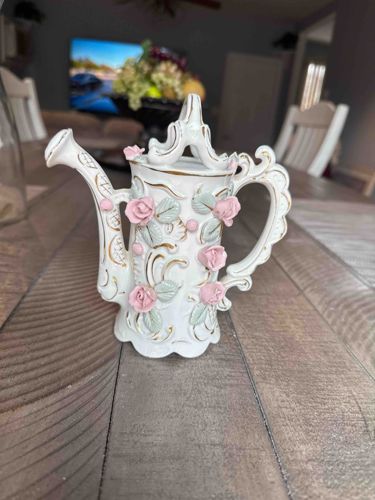
Submitted item photo
Submitted photo · June 18, 2026

User's notes

No additional notes provided.

AI analysis below

AI appraisal

AI analysis & estimate

AI-Generated · Verify before acting

Everything below is generated by AI for informational purposes only. AI can make mistakes — the AI may misidentify items or misattribute them (artist, maker, brand, designer, origin, era). This is not an official valuation and should not be used for insurance, sale, tax, estate, legal, or lending purposes — or any decision requiring a certified appraisal. It is not an authoritative claim about any person, brand, or rights holder — do not share or rely on it as a factual statement about a third party. Always consult qualified professionals before making financial decisions.

Read the full disclaimer

AI Identification

·Not independently authenticated·Verify before acting

Capodimonte-style Decorative Porcelain Watering Can

Decorative Collectibles / Ceramics

AI Estimated Value

·Not an official valuation·Verify before acting

$45.00 - $75.00

As of June 18, 2026

AI Item Analysis

·AI can make mistakes·Verify before acting
This item is a decorative porcelain miniature shaped like a tall watering can, featuring a Rococo-revival aesthetic. It is constructed from white glazed ceramic, likely earthenware or fine porcelain, and stands on a scalloped pedestal base. The body is heavily adorned with high-relief, hand-applied floral appliqués, specifically clusters of pale pink roses and light green leaves. Gold gilt accents highlight the spout, the ornate C-scroll handle, the scalloped rim, and the embossed scrollwork on the main body. The spout is non-functional and wide, while the top handle is purely decorative with a pierced, crown-like design. Its overall style is evocative of mid-20th-century Italian Capodimonte porcelain or similar Victorian-style giftware trends of the 1960s-1980s. The craftsmanship shows intricate molding, though the application of the roses and the gold trim suggests a mass-produced decorative piece rather than a unique artist-signed work. Regarding its condition, the piece appears to be in relatively good shape, though hand-applied floral elements are prone to minor chips on petal edges, and some fading or wear of the gold gilding on high-touch areas like the handle is often present upon close inspection. The glossy white glaze remains intact with no visible large cracks or structural repairs.
AI Appraisal Report

·AI can make mistakes·Verify before acting
I have examined this Capodimonte-style porcelain miniature via provided visual documentation. The item is a rococo-revival floral watering can, representative of the decorative giftware popular in the mid-to-late 20th century. My visual inspection indicates that while the mold-work is detailed, the piece lacks the specific hallmarks of 18th-century Royal Manufactory porcelain, conforming instead to the commercial production standards of Italian export houses from the 1960s through the 1980s. The condition appears fair to good. I observe typical minor wear on the gold gilding along the handle and spout. The hand-applied floral appliqués, which are the most vulnerable parts of this design, show no obvious catastrophic losses in the images, though high-magnification often reveals micro-chipping on petal edges. The market for mid-century Italian porcelain remains saturated. These items were produced in high volumes and are widely available on the secondary market. Current demand is driven primarily by interior decorators and vintage enthusiasts rather than high-end fine art collectors. This high supply and niche demand keep the valuation modest. Limitations: My assessment is based solely on digital images. A definitive valuation requires physical inspection to verify maker’s marks on the underside (such as the 'N' under a crown) and to check for hidden structural repairs or hairline fractures. Verification of the clay body—whether it is soft-paste/hard-paste porcelain or a lower-fired earthenware—would require tactile examination and potentially a UV light test to identify non-original adhesives or restorations. Provenance documentation would be necessary to elevate this above a general vintage decorative classification.

Get your items appraised

Instant estimates of your treasures with AI-powered appraisals

Browse More Appraisals