AI Appraisal Estimate

AI-generated estimates · not official valuations

From the user

What was submitted

Photo and notes provided by the user — not generated by AI

Submitted item photo
Submitted photo · May 27, 2026

User's notes

Antique

AI analysis below

AI appraisal

AI analysis & estimate

AI-Generated · Verify before acting

Everything below is generated by AI for informational purposes only. AI can make mistakes — the AI may misidentify items or misattribute them (artist, maker, brand, designer, origin, era). This is not an official valuation and should not be used for insurance, sale, tax, estate, legal, or lending purposes — or any decision requiring a certified appraisal. It is not an authoritative claim about any person, brand, or rights holder — do not share or rely on it as a factual statement about a third party. Always consult qualified professionals before making financial decisions.

Note

This analysis also relies on unverified notes provided by the user, which may be incomplete or inaccurate and could affect the result.

Read the full disclaimer

AI Identification

·Not independently authenticated·Verify before acting

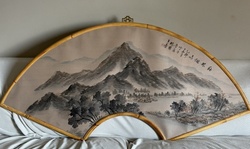
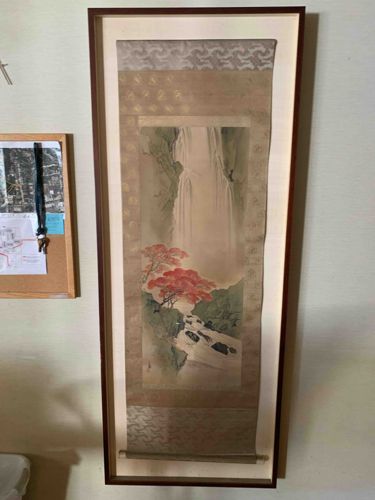
Framed Antique Japanese Kakejiku (Hanging Scroll) featuring a Waterfall Landscape

Fine Art - Asian Antiques

AI Estimated Value

·Not an official valuation·Verify before acting

$400 - $800

As of May 27, 2026

AI Item Analysis

·AI can make mistakes·Verify before acting
This is an antique Japanese hanging scroll (kakejiku) that has been professionally mounted in a modern wooden shadow-box frame. The artwork is a vertical landscape painting (sansui) executed in ink and light colors on silk or high-quality paper. The central theme features a dramatic, ethereal waterfall plunging behind vibrant autumn maple trees in shades of orange and red, with rocky outcrops and smaller cascades in the foreground. The painting is surround by traditional silk brocade mountings (hyogu) consisting of a gold-toned inner border and decorative top and bottom panels (ichimonji/chu-mawashi) featuring classic wave or cloud patterns. Based on the style and execution, this piece likely dates to the late Edo to Meiji periods (19th century). The bottom roller (jiku-gi) remains intact and visible within the frame. The overall condition shows some age-related toning (foxing) and subtle horizontal creasing commensurate with being kept as a rolled scroll for many years. The colors of the autumn foliage remain surprisingly vivid, contrasting against the muted, misty tones of the waterfall, demonstrating high-level brushwork and atmospheric perspective typical of the Nihonga school or earlier Kano-influenced traditions.
AI Appraisal Report

·AI can make mistakes·Verify before acting
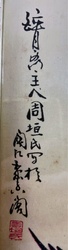
I have examined photographs of this antique Japanese Kakejiku (hanging scroll), likely dating to the late 19th or early 20th century (Meiji to Taisho period). The artwork depicts a classic 'sansui' waterfall landscape with vibrant autumn maple foliage, executed in ink and color on silk. The brushwork demonstrates competency within the Nihonga tradition, showcasing effective atmospheric perspective essential to the genre. The piece has unfortunately been mounted inside a permanent shadow-box frame; while this protects the work from handling, it often negatively impacts value for serious collectors who prefer scrolls in their original portable state. Condition-wise, there is visible foxing (age spots) and horizontal creasing (ore) consistent with the item having been rolled and unrolled over decades. The colors of the foliage remain strong, which helps the visual appeal. However, the inability to inspect the roller ends (jiku) or the back paper (ura-zaiku) limits my ability to fully verify the specific artist or school without physical handling. Market demand for decorative Japanese scrolls is steady but selective. Unsigned or unattributed landscape scrolls generally fall into a decorative price tier rather than an investment tier. The framing increases its immediate usability as Western decor but limits its appeal to purists. Similar hanging scrolls of moderate quality and condition typically sell between $300 and $600 at auction, though retail settings may command slightly higher prices due to the added value of the custom framing. To achieve a higher valuation, physical inspection would be required to identify artist seals (which appear faint or obscured in the images) and to confirm the specific weave of the silk support.

Get your items appraised

Instant estimates of your treasures with AI-powered appraisals

Browse More Appraisals