AI Appraisal Estimate

AI-generated estimates · not official valuations

From the user

What was submitted

Photo and notes provided by the user — not generated by AI

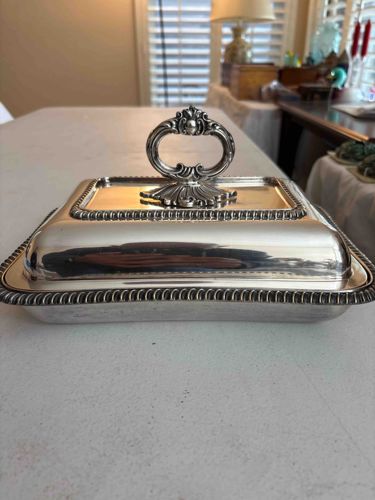
Submitted item photo
Submitted photo · June 20, 2026

User's notes

No additional notes provided.

AI analysis below

AI appraisal

AI analysis & estimate

AI-Generated · Verify before acting

Everything below is generated by AI for informational purposes only. AI can make mistakes — the AI may misidentify items or misattribute them (artist, maker, brand, designer, origin, era). This is not an official valuation and should not be used for insurance, sale, tax, estate, legal, or lending purposes — or any decision requiring a certified appraisal. It is not an authoritative claim about any person, brand, or rights holder — do not share or rely on it as a factual statement about a third party. Always consult qualified professionals before making financial decisions.

Read the full disclaimer

AI Identification

·Not independently authenticated·Verify before acting

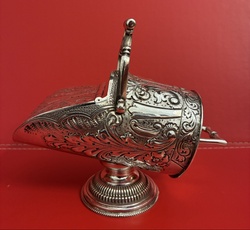
Silver-Plated Rectangular Entrée Dish with Removable Handle

Antique Silver & Silverplate Hollowware

AI Estimated Value

·Not an official valuation·Verify before acting

$150 - $250

As of June 20, 2026

AI Item Analysis

·AI can make mistakes·Verify before acting
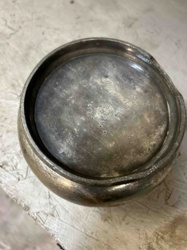
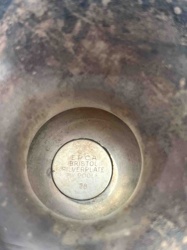
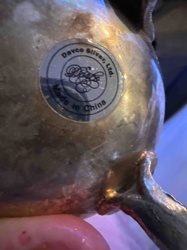
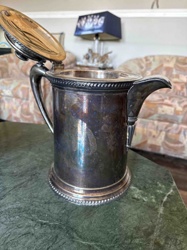
This is a classic rectangular entrée or vegetable dish, likely silver-plated, featuring a traditional gadroon border along both the base rim and the lid’s elevated terrace. The item consists of two main parts: a shallow rectangular serving basin and a high-domed lid. A significant feature is the ornate, cast-metal decorative handle, which appears to be detachable—a common design in Victorian and Edwardian era serving pieces to allow the lid to be inverted and used as a second serving dish. The handle is modeled with scroll motifs and acanthus leaf details on the base. The construction shows high-polish surfaces with prominent reflections, suggesting it is either silver-on-copper or silver-on-nickel silver. In terms of condition, the piece shows a moderate level of surface patina and fine scratches consistent with age and cleaning. There is visible dark oxidation in the crevices of the gadrooning and the handle's intricate relief work. No major dents or deep gouges are immediately apparent from the exterior view. The style is Neo-classical as revived in the late 19th to early 20th century. While specific maker's marks are not visible in this orientation, they would typically be stamped on the underside of the base or inside the lid. This type of hollowware was a staple of formal dining services, prized for its ability to retain heat and its elegant presentation on the table.
AI Appraisal Report

·AI can make mistakes·Verify before acting
I have carefully examined the electronic images of this silver-plated rectangular entrée dish. The piece exhibits characteristic Neo-classical design elements common in the late 19th to early 20th centuries, specifically the gadroon borders and the removable acanthus-scroll handle. My visual inspection indicates the item is likely silver-on-copper or EPNS (Electroplated Nickel Silver). The condition appears consistent with regular domestic use; while the structural integrity remains intact without major denting, there is evident oxidation in the recessed areas and surface micro-scratching. The versatility of the removable handle, allowing the lid to function as a secondary vessel, adds to its utility. In the current secondary market, silver-plated hollowware of this type is abundant. While aesthetically pleasing, it does not command the high premiums associated with solid sterling silver. Comparable examples from makers like Sheffield or Mappin & Webb regularly sell within the $150 to $250 range at auction. Factors limiting the value include the lack of a visible maker's mark and the general decline in demand for high-maintenance formal tableware. Please note that this appraisal is based solely on visual evidence. A full authentication would require an in-person inspection to verify the base metal, check for 'bleeding' (where copper shows through the silver), and locate hidden stamps. Any provenance documentation or original sales records would further refine this valuation. Without physical testing (such as a streak test or weighing), I cannot definitively rule out lower-grade alloys or assess the thickness of the silver plating.

Get your items appraised

Instant estimates of your treasures with AI-powered appraisals

Browse More Appraisals