AI Appraisal Estimate

AI-generated estimates · not official valuations

From the user

What was submitted

Photo and notes provided by the user — not generated by AI

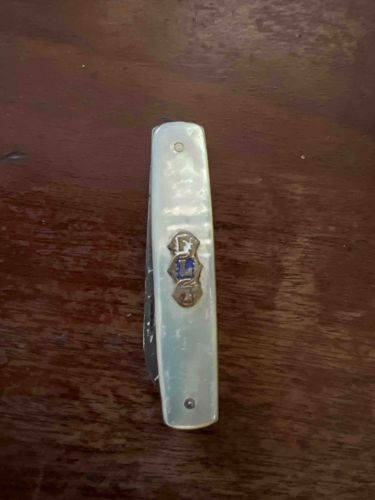
Submitted item photo
Submitted photo · June 20, 2026

User's notes

No additional notes provided.

AI analysis below

AI appraisal

AI analysis & estimate

AI-Generated · Verify before acting

Everything below is generated by AI for informational purposes only. AI can make mistakes — the AI may misidentify items or misattribute them (artist, maker, brand, designer, origin, era). This is not an official valuation and should not be used for insurance, sale, tax, estate, legal, or lending purposes — or any decision requiring a certified appraisal. It is not an authoritative claim about any person, brand, or rights holder — do not share or rely on it as a factual statement about a third party. Always consult qualified professionals before making financial decisions.

Read the full disclaimer

AI Identification

·Not independently authenticated·Verify before acting

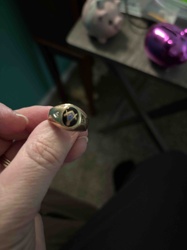
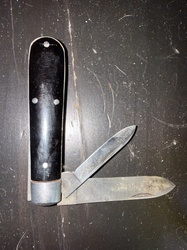
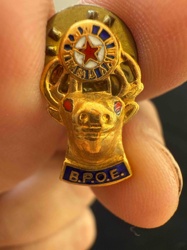
Vintage Mother-of-Pearl Folding Pocket Knife with Fraternity or Masonic Inlay

Antique Knives and Fraternal Memorabilia

AI Estimated Value

·Not an official valuation·Verify before acting

$125 - $225

As of June 20, 2026

AI Item Analysis

·AI can make mistakes·Verify before acting
This is a vintage multi-blade folding pocket knife, likely a pen knife or tuxedo-style gentleman's knife. The handle scales are crafted from genuine iridescent mother-of-pearl (Nacre), displaying characteristic white, cream, and faint pastel overtones with a high-luster finish. Central to the scale is an ornate, three-tiered metallic shield inlay featuring blue enamel and potential Greek or fraternal lettering, suggesting it may be a membership or commemorative piece for an organization like the IOOF (Odd Fellows) or a similar fraternity. The knife features two visible pins securing the scales to the internal brass or steel liners. The metal bolster area is absent, featuring a clean 'slab-sided' construction common in early-to-mid 20th-century decorative cutlery. One partially visible blade shows signs of oxidation and surface wear, consistent with an estimated age from the 1920s to 1950s. The mother-of-pearl appears to have some minor edge chipping and surface scratches but remains intact without major cracks. Small visible gaps between the mother-of-pearl and the metal liners indicate natural shrinkage over time. No maker's mark is visible in the closed position, but such pieces were often produced by premium manufacturers like Case, Remington, or Sheffield makers for fraternal jewelry catalogs.
AI Appraisal Report

·AI can make mistakes·Verify before acting
I have conducted a visual examination of this vintage mother-of-pearl multi-blade folding knife. The construction and materials are consistent with early-to-mid 20th-century craftsmanship (circa 1920-1950). The use of genuine iridescent nacre and the intricate three-tiered enameled shield inlay suggest this was a high-quality 'gentleman's knife,' likely produced for a fraternal organization's catalog. The blue enamel specifically points toward the Independent Order of Odd Fellows (IOOF) or a collegiate fraternity. Condition is the primary driver of value here. While the mother-of-pearl retains a strong luster, the visible edge chipping, surface scratches, and natural shrinkage gaps between the scales and liners indicate fair to good utility condition rather than 'mint' collector grade. The oxidation on the blade suggests that use and environmental exposure have occurred. Pieces from premium makers like Case XX or Sheffield marques command higher premiums; however, without a visible tang stamp, the maker remains unidentified, which necessitates a more conservative valuation. The market for fraternal memorabilia remains steady, particularly for items that cross-collect with pocket knife enthusiasts. This item’s appeal lies in its dual-collectibility. To provide a definitive authentication, I would require an in-person physical inspection to view the tang stamps on the blade bases, check for 'snap' in the spring tension, and examine the inlay under 10x magnification to confirm the enamel type. Scientific testing on the metallic composition of the liners and a physical check for hidden cracks under the bolsters would be necessary for a full 'Certified' appraisal.

Get your items appraised

Instant estimates of your treasures with AI-powered appraisals

Browse More Appraisals