AI Appraisal Estimate

AI-generated estimates · not official valuations

From the user

What was submitted

Photo and notes provided by the user — not generated by AI

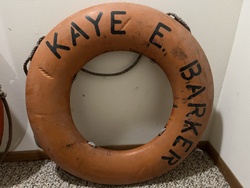
Submitted item photo
Submitted photo · May 24, 2026

User's notes

No additional notes provided.

AI analysis below

AI appraisal

AI analysis & estimate

AI-Generated · Verify before acting

Everything below is generated by AI for informational purposes only. AI can make mistakes — the AI may misidentify items or misattribute them (artist, maker, brand, designer, origin, era). This is not an official valuation and should not be used for insurance, sale, tax, estate, legal, or lending purposes — or any decision requiring a certified appraisal. It is not an authoritative claim about any person, brand, or rights holder — do not share or rely on it as a factual statement about a third party. Always consult qualified professionals before making financial decisions.

Read the full disclaimer

AI Identification

·Not independently authenticated·Verify before acting

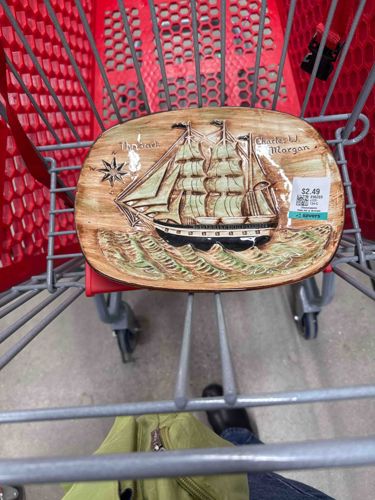
Vintage Charles W. Morgan Whaling Ship Ceramic Tray

Decorative Collectibles / Nautical Memorabilia

AI Estimated Value

·Not an official valuation·Verify before acting

$45 - $65

As of May 24, 2026

AI Item Analysis

·AI can make mistakes·Verify before acting
This rectangular ceramic tray features a high-relief, bas-relief design of the Charles W. Morgan, the last surviving wooden whaling ship from the 19th-century American fleet. The tray is crafted from a glazed earthenware or pottery material, characterized by its warm earthy tones including shades of ochre, tan, and cream, with black and white accents highlighting the ship’s hull and sails. The central motif depicts the ship under full sail on stylized cresting waves, flanked by a compass rose on the upper left and the ship's name, 'Charles W. Morgan', prominently scripted on the upper right. Additionally, 'The Bark' is inscribed near the top left, referring to the ship’s rig. The background is finished with a wood-grain textured glaze that provides a rustic, nautical aesthetic. In terms of condition, the tray appears structurally intact with no large chips or cracks visible; however, there is a prominent retail price sticker and barcode on the right side which may leave residue upon removal. The piece likely dates to the mid-to-late 20th century, produced as a souvenir or maritime decor item. The craftsmanship is typical of commercial decorative ceramics of that era, utilizing a mold-pressed technique followed by hand-tinted glazing to accentuate the three-dimensional nautical scene.
AI Appraisal Report

·AI can make mistakes·Verify before acting
Based on my visual examination of the featured ceramic tray, it is a well-preserved piece of maritime-themed decorative arts, likely produced in the 1960s or 1970s. The bas-relief depicts the Charles W. Morgan, the historic National Historic Landmark whaling bark. The mold-pressed earthenware exhibits a faux-bois (wood-grain) glaze finish typical of the mid-20th-century souvenir market, aimed at collectors of nautical Americana. The condition is excellent; I observe consistent glazing with no visible crazing, chips, or hairline fractures. The presence of a modern retail barcode sticker on the front is a cosmetic distraction, though it likely suggests the piece has recently cycled through a secondary market or thrift outlet. From a market perspective, this is a mass-produced decorative item rather than a unique folk-art piece or 19th-century artifact. Demand is steady among nautical enthusiasts and Mystic Seaport collectors, but high supply limits rarity. Comparables for similar relief trays from manufacturers like Royal Cornwall or regional New England potteries typically fall within the $40 to $70 range. It is important to note that without a physical inspection, I cannot verify the manufacturer’s mark on the reverse, which would dictate a more precise valuation. Verification of the clay body's origin and an assessment for 'flea bites' or hidden repairs along the rim would require an in-person examination. For a definitive authentication of age, one would need to inspect the foot ring for wear patterns consistent with 50+ years of use. This appraisal assumes the tray is free of structural restorations hidden by the glaze.

Get your items appraised

Instant estimates of your treasures with AI-powered appraisals

Browse More Appraisals