AI Appraisal Estimate

AI-generated estimates · not official valuations

From the user

What was submitted

Photo and notes provided by the user — not generated by AI

Submitted item photo
Submitted photo · June 23, 2026

User's notes

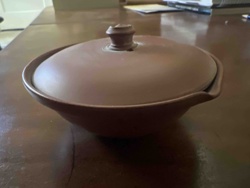
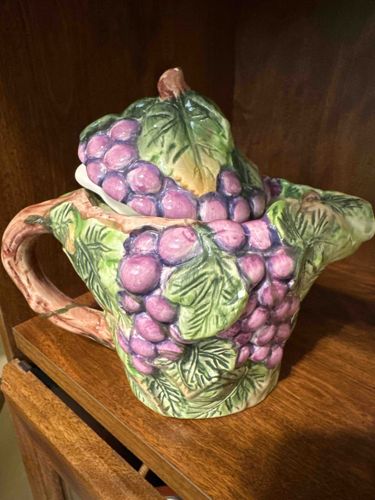
Ceramic container with grape design for pouring with matching lid. Nick on top of lid

AI analysis below

AI appraisal

AI analysis & estimate

AI-Generated · Verify before acting

Everything below is generated by AI for informational purposes only. AI can make mistakes — the AI may misidentify items or misattribute them (artist, maker, brand, designer, origin, era). This is not an official valuation and should not be used for insurance, sale, tax, estate, legal, or lending purposes — or any decision requiring a certified appraisal. It is not an authoritative claim about any person, brand, or rights holder — do not share or rely on it as a factual statement about a third party. Always consult qualified professionals before making financial decisions.

Note

This analysis also relies on unverified notes provided by the user, which may be incomplete or inaccurate and could affect the result.

Read the full disclaimer

AI Identification

·Not independently authenticated·Verify before acting

Majolica-Style Relief Molded Grapes Teapot

Decorative Ceramics & Teaware

AI Estimated Value

·Not an official valuation·Verify before acting

$45 - $65

As of June 23, 2026

AI Item Analysis

·AI can make mistakes·Verify before acting
This is a decorative ceramic teapot or server featuring a heavy relief-molded design of purple grapes and green leaves, accompanied by a matching figural lid. The vessel is constructed of glazed earthenware or stoneware, showcasing a textured aesthetic inspired by classic Victorian majolica. The color palette is dominated by vibrant purples for the grape clusters, deep forest greens for the broad leaves, and variegated brown tones for the branch-like handle. The craftsmanship employs a high-relief mold, giving the piece a tactile, sculptural quality where the fruit and foliage appear to wrap around the organic body of the pot. Notable features include a handle shaped like a gnarled grapevine and a lid finial that likely represents a stem or small grape cluster. Regarding its condition, there is a visible nick or small chip on the top edge of the lid finial as noted in the user description, which exposes the lighter ceramic body underneath the glaze. The glaze appears bright and reflective with some typical crazing possible upon closer inspection. The style is synonymous with late 20th-century decorative kitchenware, likely produced between the 1970s and 1990s as part of a rustic or orchard-themed collection. While no maker's mark is visible from this angle, the overall mass-produced quality suggests a manufacturer such as Fitz and Floyd or Otagiri, or a similar novelty ceramic producer.
AI Appraisal Report

·AI can make mistakes·Verify before acting
Upon my virtual inspection of this Majolica-style relief-molded teapot, I find it to be a charming example of late 20th-century decorative earthenware. The piece successfully mimics the Victorian Majolica aesthetic with its high-relief grape clusters and gnarled grapevine handle. The coloration is vibrant, though the glaze application and molding suggest a commercial production rather than a 19th-century artisan piece (such as those by George Jones or Minton). The condition is fair to good; however, the visible chip on the lid finial significantly impacts the value, as ceramic collectors prioritize 'mint' condition for mass-marketed novelty items. The market for mid-to-late 20th-century ceramics (likely 1970s–1990s) is currently stable but saturated with similar decorative kitchenware from manufacturers like Fitz and Floyd or Otagiri. This piece lacks a visible maker's mark in the provided images, which often distinguishes a collectible brand from a generic import. Comparables for unbranded grape-themed teapots with minor damage typically fall within the $40 to $70 range in online auction environments. High-quality Majolica revivals can command more, but the noted damage acts as a ceiling for potential growth. Limitations of this appraisal include the inability to inspect for 'ping' (resonance indicating internal cracks), underside markings, or glaze crazing not visible in photographs. A full authentication would require an in-person examination to assess the weight and clay body type, as well as a search for impressed date codes or stamps on the base that could identify a specific prestigious manufacturer.

Get your items appraised

Instant estimates of your treasures with AI-powered appraisals

Browse More Appraisals