Chinese Carved Cinnabar Lacquer Snuff Bottle
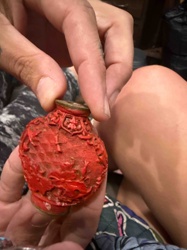
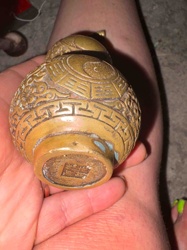
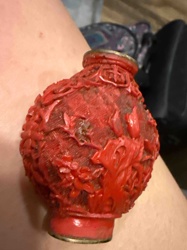
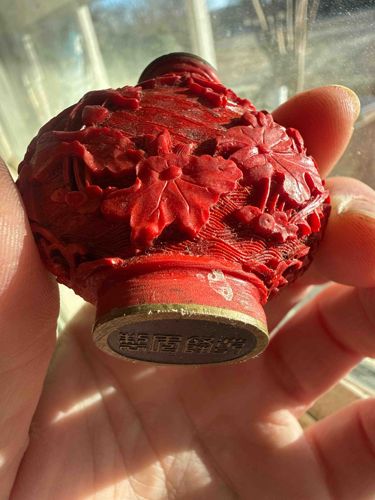
This is a traditional Chinese snuff bottle made of carved red cinnabar lacquer over what appears to be a metal (likely brass or bronze) substrate. The flask-shaped vessel features intricate high-relief carving of floral and foliate motifs, specifically chrysanthemum or maple-like leaves, set against a classic diaper-patterned background consisting of fine geometric lines representing water or earth. The cinnabar exhibits the characteristic deep vermilion hue associated with mercury sulfide pigment. The construction involves building up numerous thin layers of lacquer before hand-carving the design. The base is finished with a brass rim and features an inset seal mark with embossed Chinese characters, likely a reign mark or a maker's hallmark. In terms of condition, the item shows visible signs of age and wear including several small chips and abrasions on the lower foot rim and the body of the carving, revealing the lighter material underneath. There is a general accumulation of dust in the deep recesses of the carving, creating a natural patina. The item likely dates to the late 19th or early 20th century (Late Qing Dynasty or Republic period). The craftsmanship shows a high degree of detail, particularly in the veining of the leaves and the consistent spacing of the background pattern.
AI-Generated Appraisal Disclaimer
Estimated Value
$450 - $650
Basic Information
Category
Asian Antiques - Chinese Snuff Bottles
Appraised On
February 13, 2026
Estimated Value
$450 - $650
Item Description
This is a traditional Chinese snuff bottle made of carved red cinnabar lacquer over what appears to be a metal (likely brass or bronze) substrate. The flask-shaped vessel features intricate high-relief carving of floral and foliate motifs, specifically chrysanthemum or maple-like leaves, set against a classic diaper-patterned background consisting of fine geometric lines representing water or earth. The cinnabar exhibits the characteristic deep vermilion hue associated with mercury sulfide pigment. The construction involves building up numerous thin layers of lacquer before hand-carving the design. The base is finished with a brass rim and features an inset seal mark with embossed Chinese characters, likely a reign mark or a maker's hallmark. In terms of condition, the item shows visible signs of age and wear including several small chips and abrasions on the lower foot rim and the body of the carving, revealing the lighter material underneath. There is a general accumulation of dust in the deep recesses of the carving, creating a natural patina. The item likely dates to the late 19th or early 20th century (Late Qing Dynasty or Republic period). The craftsmanship shows a high degree of detail, particularly in the veining of the leaves and the consistent spacing of the background pattern.
Get Your Items Appraised
Instant estimates of your treasures with AI-powered instant appraisals