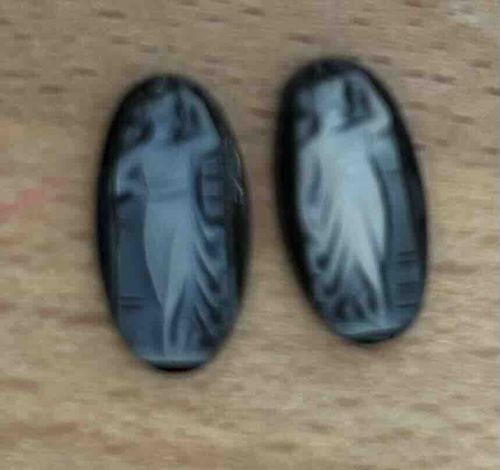
Pair of Intaglio Carved Onyx Glass Cameos
This item consists of a pair of matching oval cameos, likely carved from banded onyx or, more probably, molded and hand-finished glass (often referred to as 'glass paste' or 'French jet'). Each piece measures approximately 20-25mm in height and features a classical figure, likely a Roman or Greek goddess or muse, depicted in a standing pose with flowing drapery. The material shows a distinct dual-tone effect where the base is a deep charcoal black and the raised relief appears in a translucent misty grey-white, a characteristic of 'nicolo' style stones or layered glass. The figures are rendered with moderate detail in the folds of the garments and the positioning of the arms, suggesting early 20th-century production, possibly Art Deco or Late Victorian revival. The surface displays a soft, matte patina with minor incidental scuffs consistent with age and previous mounting in jewelry. There are no visible maker's marks, which is common for these components, but the uniformity suggests they were intended for use as a matching set of earrings or cufflinks. The level of craftsmanship indicates high-quality commercial production from the 1900-1930 period.
AI-Generated Appraisal Disclaimer
Estimated Value
$150-$250
Basic Information
Category
Antique Jewelry Components
Appraised On
February 2, 2026
Estimated Value
$150-$250
Item Description
This item consists of a pair of matching oval cameos, likely carved from banded onyx or, more probably, molded and hand-finished glass (often referred to as 'glass paste' or 'French jet'). Each piece measures approximately 20-25mm in height and features a classical figure, likely a Roman or Greek goddess or muse, depicted in a standing pose with flowing drapery. The material shows a distinct dual-tone effect where the base is a deep charcoal black and the raised relief appears in a translucent misty grey-white, a characteristic of 'nicolo' style stones or layered glass. The figures are rendered with moderate detail in the folds of the garments and the positioning of the arms, suggesting early 20th-century production, possibly Art Deco or Late Victorian revival. The surface displays a soft, matte patina with minor incidental scuffs consistent with age and previous mounting in jewelry. There are no visible maker's marks, which is common for these components, but the uniformity suggests they were intended for use as a matching set of earrings or cufflinks. The level of craftsmanship indicates high-quality commercial production from the 1900-1930 period.
Get Your Items Appraised
Instant estimates of your treasures with AI-powered instant appraisals