AI Appraisal Estimate

AI-generated estimates · not official valuations

From the user

What was submitted

Photo and notes provided by the user — not generated by AI

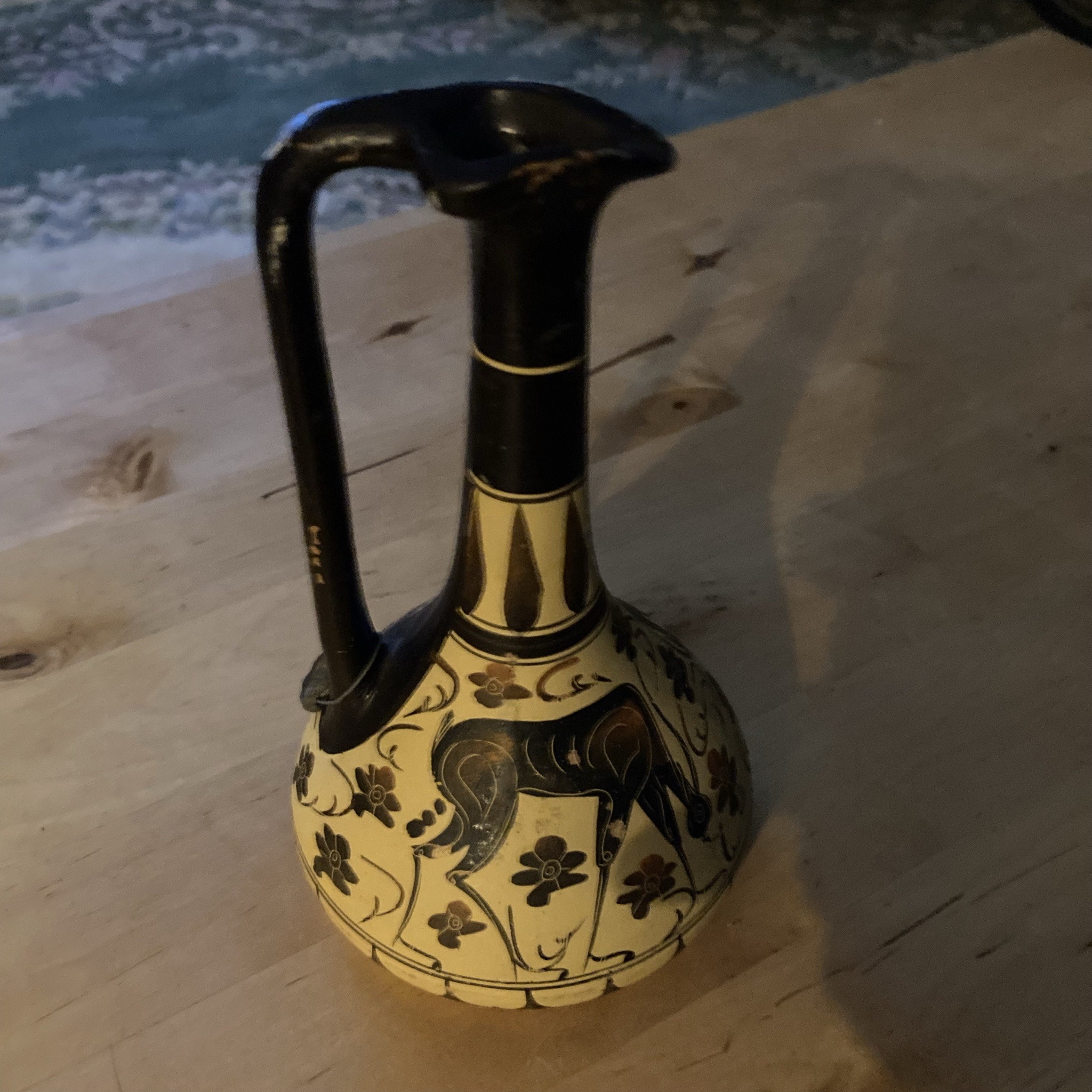
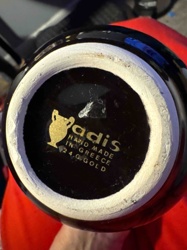
Submitted item photo
Submitted photo · June 20, 2026

User's notes

Bottom reads Vopy Corinthian Period 550 BC No 141 Also in pen Bill Jeeters? 1982

AI analysis below

AI appraisal

AI analysis & estimate

AI-Generated · Verify before acting

Everything below is generated by AI for informational purposes only. AI can make mistakes — the AI may misidentify items or misattribute them (artist, maker, brand, designer, origin, era). This is not an official valuation and should not be used for insurance, sale, tax, estate, legal, or lending purposes — or any decision requiring a certified appraisal. It is not an authoritative claim about any person, brand, or rights holder — do not share or rely on it as a factual statement about a third party. Always consult qualified professionals before making financial decisions.

Note

This analysis also relies on unverified notes provided by the user, which may be incomplete or inaccurate and could affect the result.

Read the full disclaimer

AI Identification

·Not independently authenticated·Verify before acting

Modern Reproduction of a Corinthian Black-Figure Olpe

Decorative Ceramic / Greek Pottery Reproduction

AI Estimated Value

·Not an official valuation·Verify before acting

$45 - $75

As of June 20, 2026

AI Item Analysis

·AI can make mistakes·Verify before acting
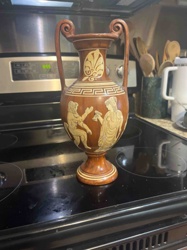
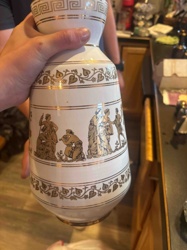
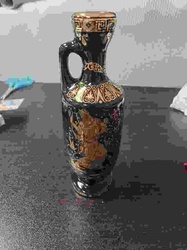
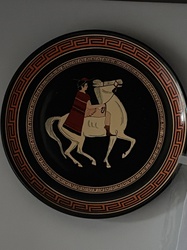
This item is a 20th-century ceramic reproduction of an ancient Greek wine jug, known as an olpe, in the Corinthian style. It features a bulbous body, a slender neck, a flaring spout, and a high-arching strap handle. The decoration mimics the black-figure technique of the Corinthian period (circa 550 BC), utilizing a light cream or buff slip base with black and reddish-brown pigments for the imagery. A central frieze depicts a stylized quadruped, likely a goat or panther, surrounded by traditional rosette floral motifs typical of the Orientalizing influence. The neck is adorned with geometric ray patterns. Physically, the piece appears to be made of kilned clay with a matte to semi-gloss finish. Its condition shows some minor surface wear and small abrasions along the rim and handle, consistent with its 1982 dating. Notable markings on the bottom indicate its status as a copy (item #141) and suggest it was acquired or gifted in 1982, possibly associated with the name 'Bill Jeeters'. While it captures the aesthetic of antiquity, the crispness of the markings and the specific under-glaze signatures confirm it is a modern decorative homage rather than an original artifact.
AI Appraisal Report

·AI can make mistakes·Verify before acting
I have conducted a visual examination of this ceramic olpe, a 20th-century reproduction of a Corinthian black-figure vessel. The piece features characteristic elements of the Orientalizing style, including the bulbous form and animal friezes with rosette filler motifs. Upon inspection of the base, the explicit 'Copy' inscription and the '141' serial number, alongside the 1982 date, confirm beyond doubt that this is a modern decorative homage intended for the souvenir or museum-shop market rather than an ancient artifact from 550 BC. The condition is good, showing minor surface abrasions consistent with its four-decade age, which do not significantly detract from its decorative utility. Market demand for 20th-century Greek reproductions is steady but limited to the decorative arts category. Comparables for mid-grade reproductions of this size and detail typically realize between $40 and $80 at auction or in secondary vintage markets. The inclusion of a personal name like 'Bill Jeeters' suggests a gift provenance, which holds negligible financial value but confirms its history as a personal collectible. Limitations of this appraisal include the inability to perform a tactile assessment of the clay body's weight and porosity or a chemical analysis of the pigments. While the markings clearly indicate its status as a reproduction, a definitive verification of its origin-manufacturer would require cross-referencing museum gift shop catalogs from the early 1980s. This valuation reflects its merit as a well-executed decorative object rather than an archaeological specimen.

Get your items appraised

Instant estimates of your treasures with AI-powered appraisals

Browse More Appraisals