AI identification & appraisal estimate

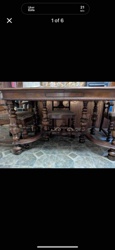
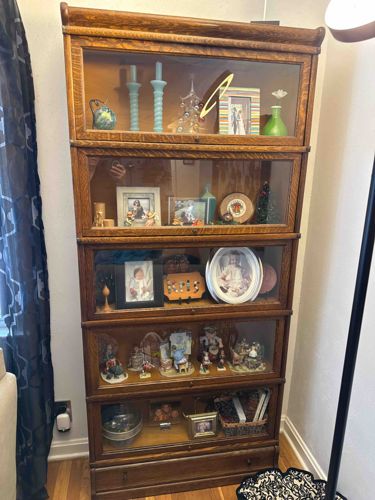
Antique Five-Stack Barrister Bookcase

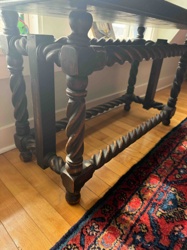
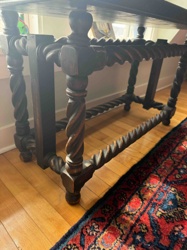
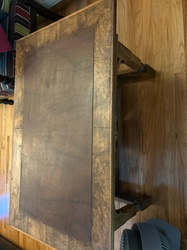
Submitted photo of Antique Five-Stack Barrister Bookcase
Photo submitted by the user — not generated by AI

User's notes

Antique Lawyer s cabinet

These notes were written by the person who submitted this item. Appraiser.AI has not verified them, and the AI's identification and estimate may rely on them.

AI Estimated Value

Not an official valuation

$1,200 - $1,650

AI estimate as of January 27, 2026 · verify with a professional before acting

AI-Generated · Verify before acting

Everything on this page is generated by AI for informational purposes only. AI can make mistakes — the AI may misidentify items or misattribute them (artist, maker, brand, designer, origin, era). This is not an official valuation and should not be used for insurance, sale, tax, estate, legal, or lending purposes — or any decision requiring a certified appraisal. It is not an authoritative claim about any person, brand, or rights holder — do not share or rely on it as a factual statement about a third party. Always consult qualified professionals before making financial decisions.

This analysis also relies on unverified notes provided by the user, which may be incomplete or inaccurate and could affect the result.

Read the full disclaimer

AI Item Analysis

This is a classic late 19th to early 20th-century five-tier sectional barrister bookcase, commonly referred to as a lawyer's cabinet. The piece is constructed from quarter-sawn oak, displaying the characteristic 'tiger oak' medullary rays through a medium golden brown finish. It features a stackable modular design consisting of a decorative crown molding at the top, five individual glazed units, and a base element with an integrated drawer. Each stackable section is equipped with a lift-up, receding glass door designed to slide back into the unit, protecting contents while allowing easy access. The glass appears to be original flat panes held within mitered oak frames. The bottom base unit includes a full-width drawer with two small circular wooden knobs. This style was popularized by manufacturers like Globe-Wernicke or Macey around 1900-1920. The craftsmanship is evident in the precise fit of the interlocking sections. The condition appears good overall with a warm patina; however, minor surface abrasions, localized finish thinning, and typical light scuffing around the base and drawer handle are visible. No significant structural damage or glass cracks are immediately apparent from the visual inspection.
AI Appraisal Report

Based on my examination of this five-tier sectional barrister bookcase, I find it to be a high-quality example of American office furniture from the early 20th century (c. 1900-1915). The use of quarter-sawn oak with prominent 'tiger oak' grain puts this in a higher value bracket than standard birch or mahogany-finished versions. A five-stack configuration is particularly desirable; it provides significant utility while maintaining a grand visual presence. The inclusion of the original base drawer—an optional upgrade at the time of manufacture—adds approximately 15-20% to the overall valuation. The condition appears to be 'good to very good' original state. The presence of original glass is a significant value driver, as modern replacements lack the characteristic waviness and inclusions of period panes. The 'warm patina' suggests the original finish is intact, which is preferred by collectors over stripped or refinished examples. Market demand for Globe-Wernicke and Macey style cabinets remains steady among both antique collectors and interior designers seeking functional home-office storage. However, this appraisal is subject to limitations inherent in photographic inspection. To fully authenticate the piece as a specific maker (e.g., Globe-Wernicke), I would need to physically inspect the interior back panels for manufacturer labels or heat stamps. I would also need to test the mechanism of the receding doors to ensure the metal tracks are not warped or missing teeth. A physical examination would further clarify if the 'finish thinning' is merely surface wear or deeper water damage, and verify that all five sections are a 'matched set' rather than a 'marriage' of components from different units with varying depths or stains.

Keep exploring

More antique furniture / office & library furniture appraisals

Get your items appraised

Instant AI-powered appraisal estimates from a photo

Browse More Appraisals