AI Appraisal Estimate

AI-generated estimates · not official valuations

From the user

What was submitted

Photo and notes provided by the user — not generated by AI

Submitted item photo
Submitted photo · May 27, 2026

User's notes

No additional notes provided.

AI analysis below

AI appraisal

AI analysis & estimate

AI-Generated · Verify before acting

Everything below is generated by AI for informational purposes only. AI can make mistakes — the AI may misidentify items or misattribute them (artist, maker, brand, designer, origin, era). This is not an official valuation and should not be used for insurance, sale, tax, estate, legal, or lending purposes — or any decision requiring a certified appraisal. It is not an authoritative claim about any person, brand, or rights holder — do not share or rely on it as a factual statement about a third party. Always consult qualified professionals before making financial decisions.

Read the full disclaimer

AI Identification

·Not independently authenticated·Verify before acting

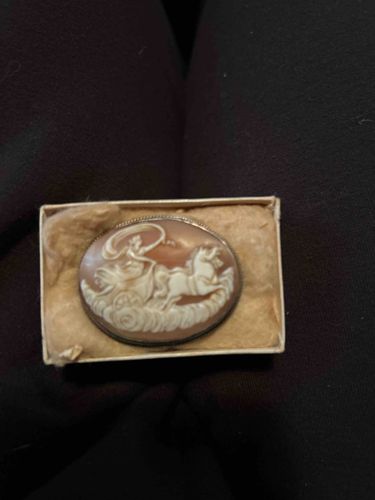
Victorian Era Shell Cameo Brooch Depicting Aurora's Chariot

Antique Jewelry / Cameo Brooches

AI Estimated Value

·Not an official valuation·Verify before acting

$450.00 - $650.00

As of May 27, 2026

AI Item Analysis

·AI can make mistakes·Verify before acting
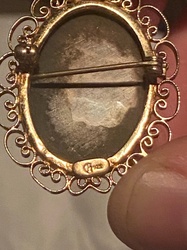
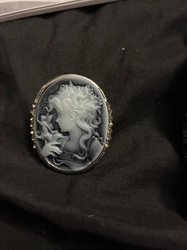
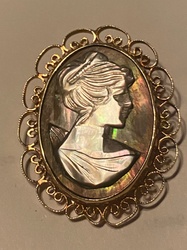
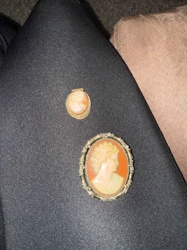
This is a large, oval-shaped shell cameo brooch, likely carved from a sardonyx or carnelian shell, featuring a classic 'Day' or 'Aurora' motif. The carving depicts a figure, potentially the goddess Aurora, driving a horse-drawn chariot (biga) atop stylized clouds. The figure is shown with a flowing sash or veil billowing overhead, while two spirited horses are rendered in high relief. The shell displays a warm, brownish-orange background with the cream-colored foreground layers meticulously carved to create the scene. The cameo is secured in a thin, rope-twist or 'cannetille' style bezel frame, common in the mid-to-late 19th century (c. 1860-1890). Physically, the item appears to be approximately 1.5 to 2 inches in width. The condition shows moderate internal stress lines (crazing) typical of aged natural shell, and there is a visible dark patina on the metal setting, suggesting it may be silver or a low-carat gold alloy. The carving exhibits good craftsmanship, particularly in the musculature of the horses and the fluid drapery of the figure. No maker's marks are visible in the photograph, but the style is characteristic of Italian shell carving destined for the Victorian 'Grand Tour' souvenir market.
AI Appraisal Report

·AI can make mistakes·Verify before acting
I have conducted a visual examination of the Victorian-era shell cameo brooch depicting Aurora’s Chariot. Based on the carving style and the 'cannetille' rope-twist bezel, this piece is a classic example of Italian shell carving intended for the Grand Tour market, dating circa 1860-1880. The motif follows the 'Aurora' pattern—a highly popular Victorian theme based on Guido Reni’s 1614 fresco. The craftsmanship displays high skill, particularly in the three-dimensional rendering of the horses' musculature and the translucent layering of the carnelian shell. The condition is typical for its age. I observed significant internal crazing (stress lines) within the shell; while common, extensive crazing can compromise structural integrity over time. The dark patina on the mount suggests a silver-gilt or low-carat gold content, though the absence of visible hallmarks typically points to a 9k-10k gold setting or silver. Market demand for cameos has softened compared to the early 2000s, but 'Theme' cameos like Aurora remain more desirable than generic female profiles. Comparables at auction for this size and subject matter generally range from $400 to $700. Limitations: This appraisal is based strictly on visual inspection of images. I cannot definitively verify the metal purity without a professional acid or X-ray fluorescence (XRF) test. Furthermore, physical inspection under 10x magnification is required to determine if any stress lines have evolved into terminal cracks. Full authentication would require testing the pin assembly for later replacements and provenance documentation to confirm a specific Italian workshop origin.

Get your items appraised

Instant estimates of your treasures with AI-powered appraisals

Browse More Appraisals