Vintage Cut Glass Fairy Lamp
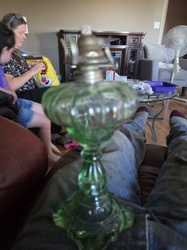
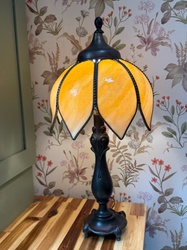
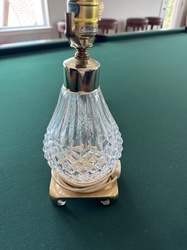
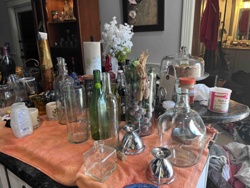
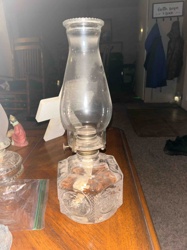
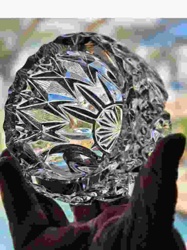
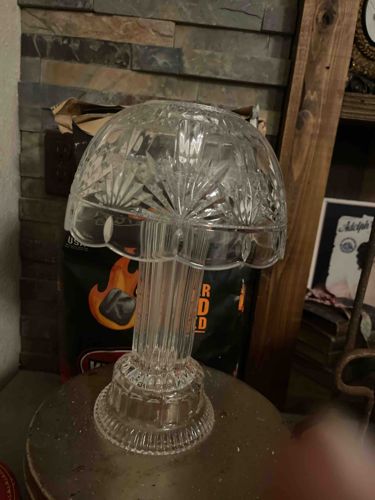
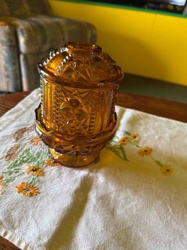
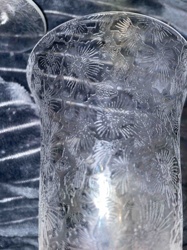
This item is a two-piece vintage fairy lamp, also known as a candle lamp, crafted from heavy pressed or cut lead crystal. The lamp stands approximately 8 to 10 inches tall and consists of a domed shade resting upon a matching pedestal base. The glass is clear with high refractive properties, indicating a quality lead content. The dome features a 'Pinwheel' or 'Starburst' motif with deeply cut radial fans and circular geometric designs, finished with a scalloped bottom edge. The central column is vertically fluted, leading down to a tiered circular base that incorporates both thumbprint cuts and a fine gadrooned or serrated edge along the very bottom. The construction suggests a mid-20th-century origins, likely between the 1950s and 1970s, reminiscent of styles produced by European makers like Hofbauer or American companies during the glass revival era. Condition appears excellent with no visible chips, cracks, or clouding from hard water, maintaining a bright and sparkling clarity. The craftsmanship is evidenced by the precision of the interlocking geometric patterns and the substantial weight suggested by the thick glass walls. There are no immediately visible maker's marks, which is common for such utility crystal pieces.
AI-Generated Appraisal Disclaimer
Estimated Value
$125 - $175
Basic Information
Category
Vintage Glassware and Lighting
Appraised On
January 29, 2026
Estimated Value
$125 - $175
Item Description
This item is a two-piece vintage fairy lamp, also known as a candle lamp, crafted from heavy pressed or cut lead crystal. The lamp stands approximately 8 to 10 inches tall and consists of a domed shade resting upon a matching pedestal base. The glass is clear with high refractive properties, indicating a quality lead content. The dome features a 'Pinwheel' or 'Starburst' motif with deeply cut radial fans and circular geometric designs, finished with a scalloped bottom edge. The central column is vertically fluted, leading down to a tiered circular base that incorporates both thumbprint cuts and a fine gadrooned or serrated edge along the very bottom. The construction suggests a mid-20th-century origins, likely between the 1950s and 1970s, reminiscent of styles produced by European makers like Hofbauer or American companies during the glass revival era. Condition appears excellent with no visible chips, cracks, or clouding from hard water, maintaining a bright and sparkling clarity. The craftsmanship is evidenced by the precision of the interlocking geometric patterns and the substantial weight suggested by the thick glass walls. There are no immediately visible maker's marks, which is common for such utility crystal pieces.
Get Your Items Appraised
Instant estimates of your treasures with AI-powered instant appraisals