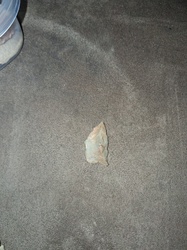
Prehistoric Petrified Wood Lithic Scraper
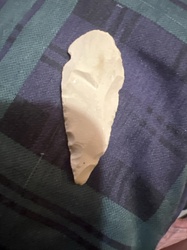
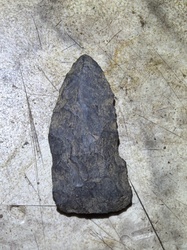
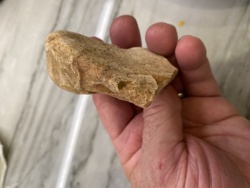
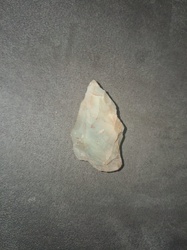
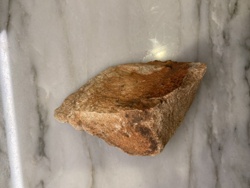
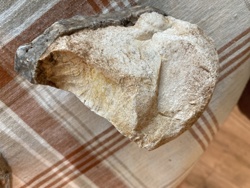
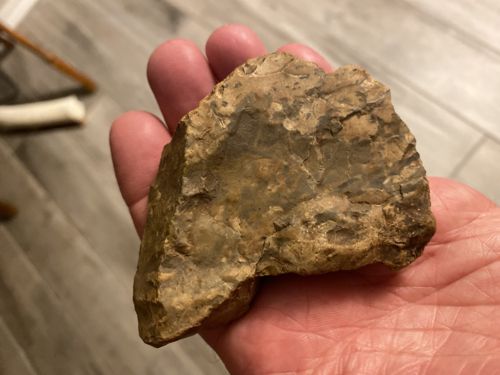
This is a prehistoric lithic tool, specifically a side or end scraper, measuring approximately 2.5 by 2.5 inches. The artifact is fashioned from silicified (petrified) wood, displaying a variegated color palette of ochre, tan, and dark mahogany browns. The material choice is significant as petrified wood's high silica content allows for controlled conchoidal fracturing. The scraper shows clear evidence of purposeful unifacial reduction, where flakes have been systematically removed from one side to create a sharp, durable working edge. The texture is earthy and matte, exhibiting a distinct mineralized patina consistent with long-term environmental exposure. Notable features include prominent hinge fractures and bulb structures from the percussion flaking process. The piece appears to be in its found state, with natural sediment still present in the deeper crevices. There are no modern maker's marks, but the secondary retouching along the top curved margin indicates intentional craftsmanship by a prehistoric knapper. This tool likely dates to the Archaic or Woodland period, though such expedient tools were utilized across a broad chronological spectrum in North American prehistory for tasks like hide processing or woodworking. The overall condition is stable, with the original worked edges remaining discernible despite millennia of burial.
AI-Generated Appraisal Disclaimer
Estimated Value
$45 - $85
Basic Information
Category
Prehistoric Artifacts / Native American Stone Tools
Appraised On
February 18, 2026
Estimated Value
$45 - $85
Additional Details Provided By Owner
User Provided Information
Prehistoric petrified wood lithic scraper tool found in Guthrie OK measuring 2.5"x 2.5 "
Item Description
This is a prehistoric lithic tool, specifically a side or end scraper, measuring approximately 2.5 by 2.5 inches. The artifact is fashioned from silicified (petrified) wood, displaying a variegated color palette of ochre, tan, and dark mahogany browns. The material choice is significant as petrified wood's high silica content allows for controlled conchoidal fracturing. The scraper shows clear evidence of purposeful unifacial reduction, where flakes have been systematically removed from one side to create a sharp, durable working edge. The texture is earthy and matte, exhibiting a distinct mineralized patina consistent with long-term environmental exposure. Notable features include prominent hinge fractures and bulb structures from the percussion flaking process. The piece appears to be in its found state, with natural sediment still present in the deeper crevices. There are no modern maker's marks, but the secondary retouching along the top curved margin indicates intentional craftsmanship by a prehistoric knapper. This tool likely dates to the Archaic or Woodland period, though such expedient tools were utilized across a broad chronological spectrum in North American prehistory for tasks like hide processing or woodworking. The overall condition is stable, with the original worked edges remaining discernible despite millennia of burial.
Get Your Items Appraised
Instant estimates of your treasures with AI-powered instant appraisals