Bronze Spelter Figural Sculpture of a River God on Rock Base
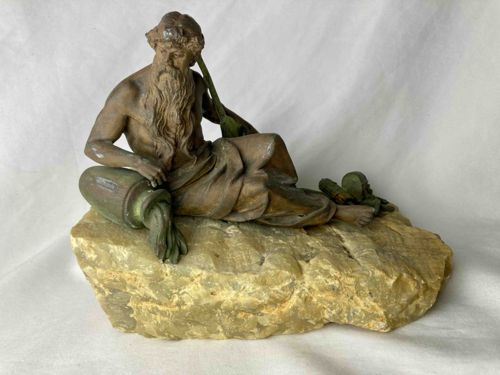
This sculptural piece depicts a classical River God, likely Neptune or Triton, portrayed as a reclining bearded muscular male figure. The figure is cast in what appears to be patinated spelter or bronze with a variegated finish showing shades of brown and verdigris green. He is classically draped with a cloth around his midsection, leaning against an overturned vessel (urn) from which water flows, a traditional iconographic attribute of river deities. The sculpture is mounted atop a large, craggy natural specimen base, potentially quartz or a similar yellowish-tan mineral stone, which adds significant weight and organic texture. In his left hand, he holds a staff or trident remnant. The condition shows visible signs of age and wear including surface scuffing and loss of the metallic finish on the right forearm, forehead, and knee, revealing a silvery base metal underneath which suggests a spelter composition rather than solid bronze. There is a heavy verdigris patina concentrated around the urn and staff. The piece likely dates to the late 19th or early 20th century, following the Beaux-Arts or Neoclassical tradition. The craftsmanship is evidenced in the detailed musculature and the flowing texture of the beard, though the surface degradation suggests it may have been a mass-produced decorative interior piece from the Victorian era.
AI-Generated Appraisal Disclaimer
Estimated Value
$450.00 - $650.00
Basic Information
Category
Collectibles & Fine Art > Sculpture
Appraised On
February 22, 2026
Estimated Value
$450.00 - $650.00
Item Description
This sculptural piece depicts a classical River God, likely Neptune or Triton, portrayed as a reclining bearded muscular male figure. The figure is cast in what appears to be patinated spelter or bronze with a variegated finish showing shades of brown and verdigris green. He is classically draped with a cloth around his midsection, leaning against an overturned vessel (urn) from which water flows, a traditional iconographic attribute of river deities. The sculpture is mounted atop a large, craggy natural specimen base, potentially quartz or a similar yellowish-tan mineral stone, which adds significant weight and organic texture. In his left hand, he holds a staff or trident remnant. The condition shows visible signs of age and wear including surface scuffing and loss of the metallic finish on the right forearm, forehead, and knee, revealing a silvery base metal underneath which suggests a spelter composition rather than solid bronze. There is a heavy verdigris patina concentrated around the urn and staff. The piece likely dates to the late 19th or early 20th century, following the Beaux-Arts or Neoclassical tradition. The craftsmanship is evidenced in the detailed musculature and the flowing texture of the beard, though the surface degradation suggests it may have been a mass-produced decorative interior piece from the Victorian era.
Related Tags
Get Your Items Appraised
Instant estimates of your treasures with AI-powered instant appraisals