AI Appraisal Estimate

AI-generated estimates · not official valuations

From the user

What was submitted

Photo and notes provided by the user — not generated by AI

Submitted item photo
Submitted photo · June 6, 2026

User's notes

No additional notes provided.

AI analysis below

AI appraisal

AI analysis & estimate

AI-Generated · Verify before acting

Everything below is generated by AI for informational purposes only. AI can make mistakes — the AI may misidentify items or misattribute them (artist, maker, brand, designer, origin, era). This is not an official valuation and should not be used for insurance, sale, tax, estate, legal, or lending purposes — or any decision requiring a certified appraisal. It is not an authoritative claim about any person, brand, or rights holder — do not share or rely on it as a factual statement about a third party. Always consult qualified professionals before making financial decisions.

Read the full disclaimer

AI Identification

·Not independently authenticated·Verify before acting

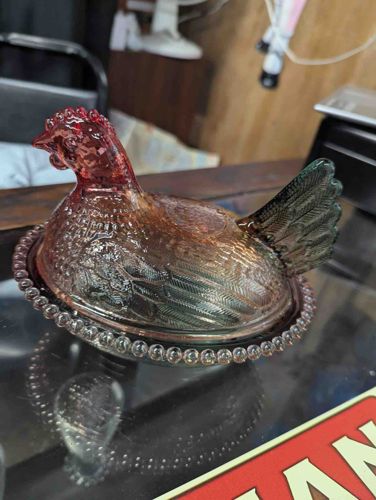
Iridescent Pressed Glass Hen-on-Nest Covered Dish

Decorative Arts/Kitchenware

AI Estimated Value

·Not an official valuation·Verify before acting

$75-125

As of June 6, 2026

AI Item Analysis

·AI can make mistakes·Verify before acting
This item is a pressed glass hen-on-nest covered dish, likely used for butter, candy, or trinkets. The piece is composed of two main sections: a base or 'nest' and a detailed figural 'hen' lid. The glass exhibits iridescence, showcasing a captivating play of colors ranging from shimmering purples and reds in the hen's head and neck to greens and bronzes across its body and tail feathers, indicative of carnival glass or similar iridescent finishes. The hen's body is intricately molded with textured feathers, giving it a realistic appearance, with particularly well-defined tail feathers. The head features a distinct comb and wattle, characteristic of a rooster or a well-developed hen. The base is shallow with a beaded rim, designed to cradle the hen lid securely. The overall construction appears robust, typical of pressed glass items from the late 19th to mid-20th century. There are no immediate visible signs of major damage such as chips or cracks, suggesting good preservation. The iridescence, while attractive, can sometimes obscure minor surface wear. While specific maker's marks are not visible in the image, such dishes were produced by numerous glass manufacturers during the Victorian and early 20th century eras. The design suggests a classic, perhaps American, folk art or novelty pressed glass tradition. The craftsmanship is decent for mass-produced pressed glass, with clear molding and good detail given the material.
AI Appraisal Report

·AI can make mistakes·Verify before acting
I have carefully examined the image of this Iridescent Pressed Glass Hen-on-Nest Covered Dish. Based on visual assessment, the condition appears to be very good with no immediate chips or cracks discernible, which is a significant positive factor. The iridescence is a key feature, indicative of carnival glass, and its multi-colored sheen across the hen’s body and head enhances its decorative appeal. While the details of the molding are good for pressed glass, a definitive maker cannot be identified without a physical examination for marks, as many manufacturers produced similar items. From a market perspective, hen-on-nest dishes are quite common, but iridescent examples, particularly those with good color coverage, command higher prices than clear or opaque counterparts. Current market demand for decorative pressed glass, especially kitchenware, is moderate. These items are not rare, but specific, well-preserved examples with appealing iridescence like this one do maintain a steady collector base. The factors impacting value most are the excellent apparent condition, the attractive and seemingly vibrant iridescence, and the detailed molding. Without an in-person examination, it's impossible to detect hairline cracks, internal fractures, or minute flea bites, all of which would impact value. Furthermore, the precise age and manufacturer cannot be authenticated solely from an image; sometimes, provenance documentation or a close physical inspection of the mold lines and glass characteristics can narrow down the production period and maker.

Get your items appraised

Instant estimates of your treasures with AI-powered appraisals

Browse More Appraisals