AI Appraisal Estimate

AI-generated estimates · not official valuations

From the user

What was submitted

Photo and notes provided by the user — not generated by AI

Submitted item photo
Submitted photo · June 8, 2026

User's notes

No additional notes provided.

AI analysis below

AI appraisal

AI analysis & estimate

AI-Generated · Verify before acting

Everything below is generated by AI for informational purposes only. AI can make mistakes — the AI may misidentify items or misattribute them (artist, maker, brand, designer, origin, era). This is not an official valuation and should not be used for insurance, sale, tax, estate, legal, or lending purposes — or any decision requiring a certified appraisal. It is not an authoritative claim about any person, brand, or rights holder — do not share or rely on it as a factual statement about a third party. Always consult qualified professionals before making financial decisions.

Read the full disclaimer

AI Identification

·Not independently authenticated·Verify before acting

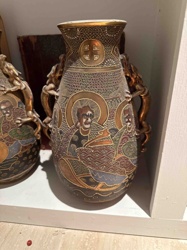
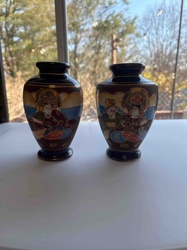
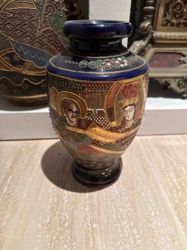
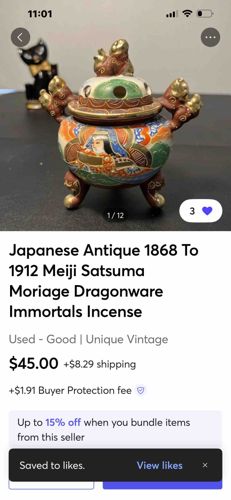
Japanese Satsuma Moriage Koro (Incense Burner)

Asian Antiques - Japanese Ceramics

AI Estimated Value

·Not an official valuation·Verify before acting

$350 - $550

As of June 8, 2026

AI Item Analysis

·AI can make mistakes·Verify before acting
This is a small, tripod Japanese Satsuma koro, or incense burner, dating likely to the late Meiji (1868-1912) or early Taisho period. The vessel is crafted from a cream-colored earthenware with a fine crackle glaze, heavily decorated with 'moriage' (raised slip) and 'dragonware' elements. The body features hand-painted panels depicting Immortals (Arhats or Rakan) in a vibrant palette of cinnabar red, cobalt blue, and forest green, highlighted with generous gold leaf gilding. A raised dragon motif circles the shoulders, with its sculpted head and tail forming the handles of the piece. The removable lid is domed with small ventilation holes and surmounted by a 'shishi' (guardian lion) or dragon-shaped finial. The vessel stands on three cabriole-style feet tipped with gold. The craftsmanship exhibits typical export-style density with high-relief textures. Regarding condition, there is visible rubbing on the gilt highlights especially on the finial and handles, which is common for its age. The painting remains vivid, though fine crazing is present throughout the glaze. No major cracks or professional repairs are visible in the primary image, though slight soot staining may be present inside from historical use.
AI Appraisal Report

·AI can make mistakes·Verify before acting
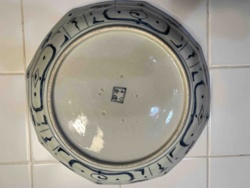
I have examined the digital representations of this Japanese Satsuma Moriage Koro. The item displays characteristic markers of late Meiji to early Taisho period production, specifically tailored for the Western export market. The use of 'moriage' (raised slip) and the 'Arhat' motif are hallmarks of the Yokohama and Kyoto workshops from this era. Based on visual analysis, the craftsmanship is of good quality, featuring dense composition and well-executed figurative work, though it lacks the signature of a master artist like Kinkozan or Yabu Meizan, which would command a much higher premium. The condition appears consistent with a hundred-year-old decorative object; while the presence of 'crazing' is inherent to Satsuma earthenware, the visible rubbing on the gilded 'shishi' finial and handles slightly diminishes the value. Market demand for 'Imperial' style Satsuma remains steady but has corrected significantly from its peak in the late 1990s. Comparables for unsigned, medium-sized dragonware koros typically realize between $300 and $600 at specialized Asian art auctions. Limitations: This appraisal is based solely on photographic evidence. I cannot definitively verify the absence of professional spray repairs to the lid or legs, which are common areas for breakage. A physical inspection under UV light is required to confirm structural integrity. Furthermore, I cannot verify the authenticity of the base marks (if any) or the specific composition of the gilding. To finalize this valuation as a certified appraisal, I would require a tactile examination to assess the weight and 'ring' of the ceramic, along with provenance documentation such as original purchase receipts or family records.

Get your items appraised

Instant estimates of your treasures with AI-powered appraisals

Browse More Appraisals