Dancing Ganesha Bronze Statue
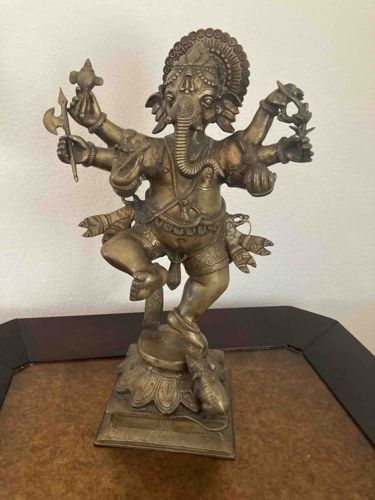
This is a detailed bronze alloy sculpture of the Hindu deity Ganesha in a dancing pose, known as Nritya Ganapati. The figure is cast with eight arms, each holding various symbolic attributes including an axe (parashu), a goad, a broken tusk, and sweets (laddu). The deity is depicted with an elephant head, a curved trunk, and a large belly, wearing ornate jewelry, a sacred thread across the chest, and an elaborate crown with a circular halo or prabhamandala behind the head. The statue stands on one leg in a dynamic rhythmic posture upon a lotus pedestal, which is set on a tiered rectangular base. Beside his foot is the Mushika, his mouse vahana (mount). The material appears to be a heavy bronze or brass with a dark, aged brown patina and visible highlights where the metal has been handled. The craftsmanship shows intricate linework on the dhoti and headpiece, typical of lost-wax casting methods used in Indian metalwork. Dimensions are estimated to be medium-sized, approximately 10 to 14 inches in height. There are no immediate signs of structural damage, though there is surface oxidation and accumulated dust in the crevices consistent with 20th-century origins, likely mid-to-late century. The quality of the casting and level of detail suggests it is a decorative devotional piece rather than a modern mass-produced souvenir.
AI-Generated Appraisal Disclaimer
Estimated Value
$450 - $700
Basic Information
Category
Religious Art and Sculptures
Appraised On
January 26, 2026
Estimated Value
$450 - $700
Item Description
This is a detailed bronze alloy sculpture of the Hindu deity Ganesha in a dancing pose, known as Nritya Ganapati. The figure is cast with eight arms, each holding various symbolic attributes including an axe (parashu), a goad, a broken tusk, and sweets (laddu). The deity is depicted with an elephant head, a curved trunk, and a large belly, wearing ornate jewelry, a sacred thread across the chest, and an elaborate crown with a circular halo or prabhamandala behind the head. The statue stands on one leg in a dynamic rhythmic posture upon a lotus pedestal, which is set on a tiered rectangular base. Beside his foot is the Mushika, his mouse vahana (mount). The material appears to be a heavy bronze or brass with a dark, aged brown patina and visible highlights where the metal has been handled. The craftsmanship shows intricate linework on the dhoti and headpiece, typical of lost-wax casting methods used in Indian metalwork. Dimensions are estimated to be medium-sized, approximately 10 to 14 inches in height. There are no immediate signs of structural damage, though there is surface oxidation and accumulated dust in the crevices consistent with 20th-century origins, likely mid-to-late century. The quality of the casting and level of detail suggests it is a decorative devotional piece rather than a modern mass-produced souvenir.
Related Tags
Get Your Items Appraised
Instant estimates of your treasures with AI-powered instant appraisals