Prehistoric Chert Arrowhead or Flaked Stone Tool
Prehistoric Native American Artifacts

Prehistoric Chert Arrowhead or Flaked Stone Tool

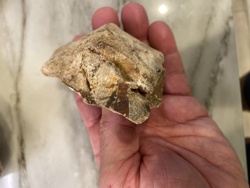
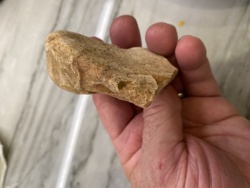
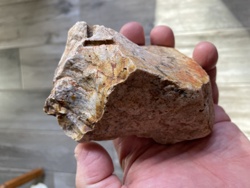
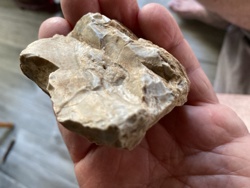
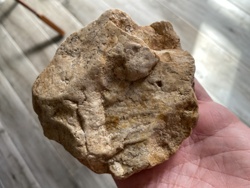
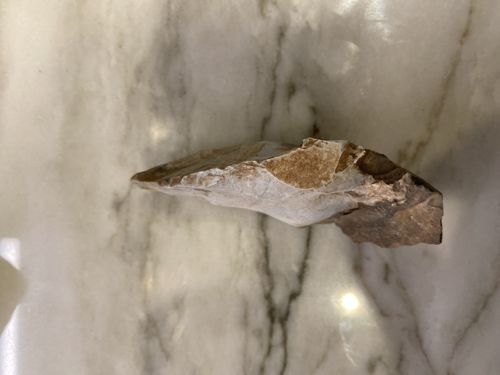
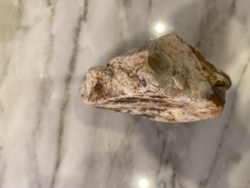
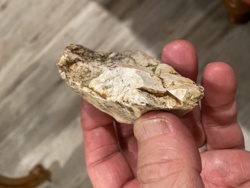
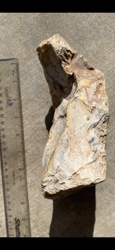
This item is a prehistoric lithic artifact, often referred to as a projectile point or stone knife. Measuring approximately 2.5 inches in length and 1 inch in width, the object is crafted from a high-quality chert or flint material, likely sourced locally to the Oklahoma region (potentially Kay County Chert or similar). The color palette is a varied mix of earthy tones, including tans, greys, and cream-colored hues with visible mineral patination consistent with long-term soil exposure. The construction demonstrates bifacial pressure flaking along the edges to create a sharp, functional blade. The form is somewhat asymmetrical, which may indicate it was used as a hafted knife or a preform rather than a finished arrow tip. There are visible flake scars across the body and a slight curvature to the profile. Condition-wise, the piece shows ancient wear and minor chipping along the margins, though it remains largely intact without significant modern damage. This style of lithic tool is characteristic of North American indigenous craftsmanship, possibly dating to the Woodland or Archaic periods (approx. 1,000 to 5,000 years old). The quality of the knapping suggests a skilled maker, as evidenced by the thin cross-section and controlled edge work.
Estimated Value

$45.00 - $75.00

Basic Information

Category

Prehistoric Native American Artifacts

Appraised On

February 18, 2026

Estimated Value

$45.00 - $75.00

Additional Details Provided By Owner

User Provided Information

Prehistoric knife found in Guthrie OK. 2.5" x 1"

Item Description

This item is a prehistoric lithic artifact, often referred to as a projectile point or stone knife. Measuring approximately 2.5 inches in length and 1 inch in width, the object is crafted from a high-quality chert or flint material, likely sourced locally to the Oklahoma region (potentially Kay County Chert or similar). The color palette is a varied mix of earthy tones, including tans, greys, and cream-colored hues with visible mineral patination consistent with long-term soil exposure. The construction demonstrates bifacial pressure flaking along the edges to create a sharp, functional blade. The form is somewhat asymmetrical, which may indicate it was used as a hafted knife or a preform rather than a finished arrow tip. There are visible flake scars across the body and a slight curvature to the profile. Condition-wise, the piece shows ancient wear and minor chipping along the margins, though it remains largely intact without significant modern damage. This style of lithic tool is characteristic of North American indigenous craftsmanship, possibly dating to the Woodland or Archaic periods (approx. 1,000 to 5,000 years old). The quality of the knapping suggests a skilled maker, as evidenced by the thin cross-section and controlled edge work.
Get Your Items Appraised

Instant estimates of your treasures with AI-powered instant appraisals

Browse More Appraisals