AI Appraisal Estimate

AI-generated estimates · not official valuations

From the user

What was submitted

Photo and notes provided by the user — not generated by AI

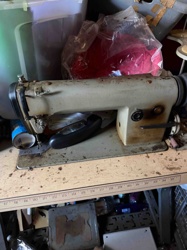
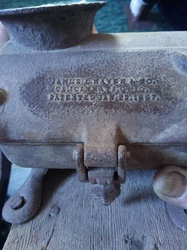
Submitted item photo
Submitted photo · June 12, 2026

User's notes

No additional notes provided.

AI analysis below

AI appraisal

AI analysis & estimate

AI-Generated · Verify before acting

Everything below is generated by AI for informational purposes only. AI can make mistakes — the AI may misidentify items or misattribute them (artist, maker, brand, designer, origin, era). This is not an official valuation and should not be used for insurance, sale, tax, estate, legal, or lending purposes — or any decision requiring a certified appraisal. It is not an authoritative claim about any person, brand, or rights holder — do not share or rely on it as a factual statement about a third party. Always consult qualified professionals before making financial decisions.

Read the full disclaimer

AI Identification

·Not independently authenticated·Verify before acting

Vintage Singer Industrial Sewing Machine

Antique Industrial Machinery / Textile Tools

AI Estimated Value

·Not an official valuation·Verify before acting

$75.00 - $125.00

As of June 12, 2026

AI Item Analysis

·AI can make mistakes·Verify before acting
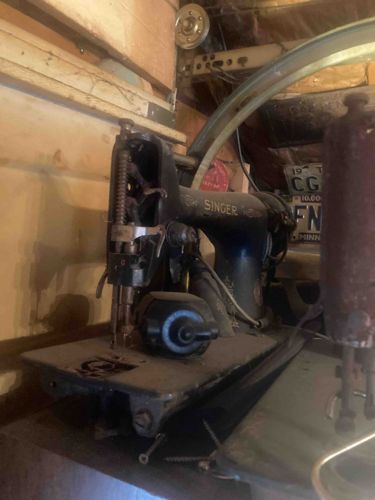
This is a heavy-duty industrial sewing machine manufactured by the Singer Manufacturing Company, likely dating from the early to mid-20th century (circa 1930s-1950s). The machine features a solid cast iron body with a black japanned finish, characteristic of Singer's durable professional-grade equipment. The 'SINGER' name is visible in gold-toned lettering on the arm, alongside remnants of decorative scrollwork decals. The construction is robust, featuring an exposed needle bar assembly with a heavy-duty tension spring and a side-mounted motor unit, suggesting it was designed for high-speed factory use or heavy materials like leather or canvas. The item's condition is poor to fair, showing significant signs of age and long-term storage in a non-climate-controlled environment. There is a thick layer of dust, grime, and environmental debris across all surfaces. Significant oxidation and surface rust are visible on various metallic components, including the needle bar, presser foot assembly, and the throat plate. The japanned finish on the main body is dull and appears to have some chipping or wear. The electrical wiring for the motor shows signs of deterioration, which would require a complete safety inspection and possible rewiring before any attempt to power the unit. The faceplate is missing, exposing the internal mechanical linkage. While the craftsmanship of these machines is legendary for their longevity, this specific unit requires professional restoration to be brought back to functional or display-worthy condition. It retains its original industrial character but bears the heavy patina of a neglected workhorse tool.
AI Appraisal Report

·AI can make mistakes·Verify before acting
I have examined the provided images of this Singer industrial sewing machine. Based on its silhouette and cast-iron architecture, the unit appears to be an authentic mid-century industrial model (likely from the 31 or 15 class variants). While the 'SINGER' branding is genuine, the condition of this specific specimen is significantly compromised. The presence of extensive surface oxidation on the needle bar and throat plate, coupled with the missing faceplate and deteriorated wiring, classifies this as a 'salvage/parts' or 'full restoration' project. In the current market, the demand for industrial Singers is high only for those in turnkey functional condition or rare specific models with full provenance. The heavy-duty nature of this machine is dampened by its poor storage history; the rusted mechanical linkage suggests potential seizing, which significantly lowers its liquidity. Comparable sales for non-functional, rusted industrial heads without their original power tables typically fall under $150. The lack of a faceplate and the level of grime further depress the value toward the lower end of the spectrum. Limitations: A definitive valuation is restricted by the inability to manually cycle the handwheel to check for internal mechanical clearance or timing issues. An in-person inspection is required to determine if the rust is merely superficial or if it has pitted the internal bearings. To verify its specific production year and factory origin, I would need to inspect the serial number located on the machine's base. For full authentication, I recommend a metallurgical check for internal stress fractures and a diagnostic on the motor's winding integrity.

Get your items appraised

Instant estimates of your treasures with AI-powered appraisals

Browse More Appraisals