Mississippian Culture Lithic Tool Core or Scraper
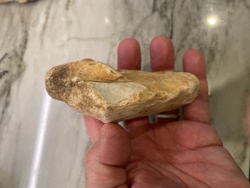
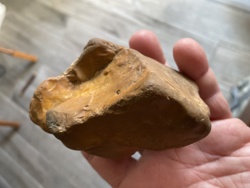
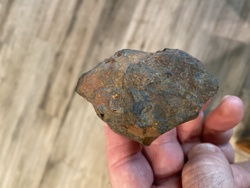
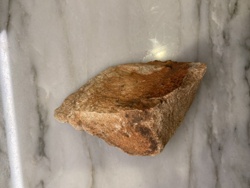
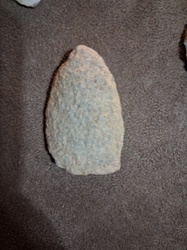
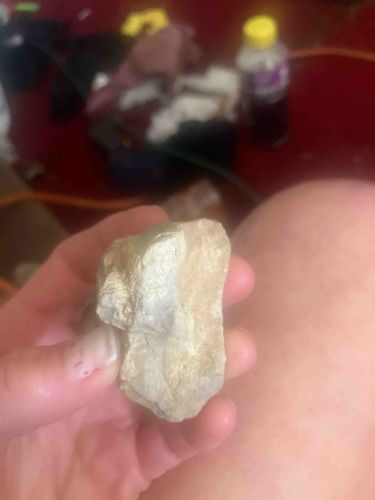
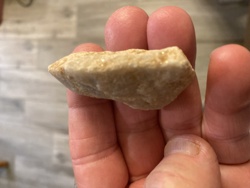
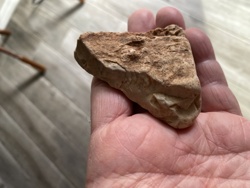
This item is a lithic specimen, likely a core or a primary reduction flake used as a makeshift scraper, consistent with Mississippian culture artifact sites (c. 800–1600 CE). The object is handheld in size, roughly 2-3 inches in length, and appears to be composed of a light-colored chert or flint material. It exhibits a tan to off-white coloration with visible patination on the cortex. The construction shows evidence of percussion flaking, with distinct bulbous impact points and conchoidal fractures where flakes were removed from the parent stone. The surface displays a mix of smooth, weathered cortex and sharper, interior facets created by human modification. As a surface find, it shows significant edge wear and some modern chips or abrasion, likely from agricultural activity or environmental exposure. No formal maker's marks are present, as is standard for pre-Columbian stone tools, but the deliberate removal of flakes indicates human manufacture rather than natural tumbling. The piece serves as a characteristic example of the utilitarian lithic technology used for processing hides, wood, or bone within a Mississippian settlement context.
AI-Generated Appraisal Disclaimer
Estimated Value
$15.00 - $35.00
Basic Information
Category
Native American Artifacts / Lithics
Appraised On
March 24, 2026
Estimated Value
$15.00 - $35.00
Additional Details Provided By Owner
User Provided Information
Found on site with mississippian artifacts
Item Description
This item is a lithic specimen, likely a core or a primary reduction flake used as a makeshift scraper, consistent with Mississippian culture artifact sites (c. 800–1600 CE). The object is handheld in size, roughly 2-3 inches in length, and appears to be composed of a light-colored chert or flint material. It exhibits a tan to off-white coloration with visible patination on the cortex. The construction shows evidence of percussion flaking, with distinct bulbous impact points and conchoidal fractures where flakes were removed from the parent stone. The surface displays a mix of smooth, weathered cortex and sharper, interior facets created by human modification. As a surface find, it shows significant edge wear and some modern chips or abrasion, likely from agricultural activity or environmental exposure. No formal maker's marks are present, as is standard for pre-Columbian stone tools, but the deliberate removal of flakes indicates human manufacture rather than natural tumbling. The piece serves as a characteristic example of the utilitarian lithic technology used for processing hides, wood, or bone within a Mississippian settlement context.
Get Your Items Appraised
Instant estimates of your treasures with AI-powered instant appraisals