Chert Lithic Fragment (Potential Paleo-Indian Scraper)
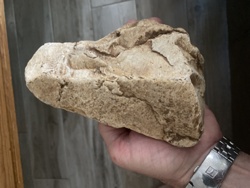
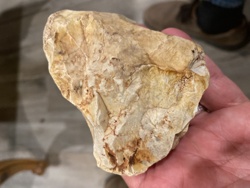
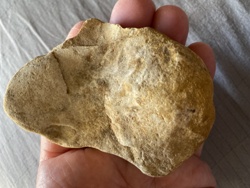
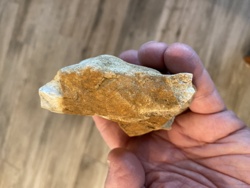
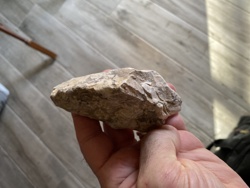
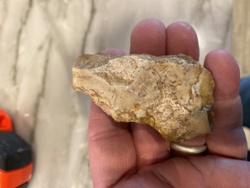
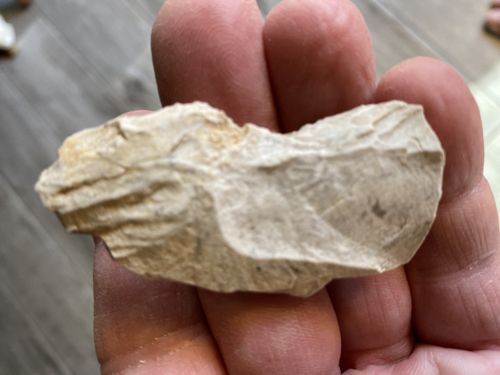
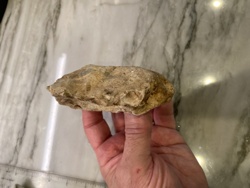
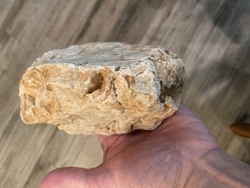
This item is a lithic artifact measuring approximately 2 inches by 1 inch, discovered in Guthrie, Oklahoma. It is composed of chert, characterized by a light tan to off-white hue with a matte, weathered surface texture. The physical structure shows evidence of conchoidal fracturing and percussion flaking, consistent with Stone Age tool manufacturing techniques. While the user identifies this as an 'Indian chief effigy' (portable rock art), from an archaeological perspective, it presents primarily as a functional lithic tool or preform, possibly a scraper utilized for hide processing or woodworking during the Paleo-Indian period. The object features a somewhat elongated, irregular shape with a thicker dorsal side and a tapering edge that may have served as a working surface. There are no visible maker's marks or signatures, as is standard for prehistoric artifacts. The condition shows significant patination and age-related weathering, with some rounding of the sharper ridges, suggesting prolonged environmental exposure. The interpretation of the piece as an effigy is subjective and falls under the category of mimetoliths or portable rock art, where natural stone contours are perceived as intentional representational carvings. The craftsmanship displays deliberate flake removal and a focused selection of durable raw materials common to the Oklahoma region.
AI-Generated Appraisal Disclaimer
Estimated Value
$40-$75
Basic Information
Category
Prehistoric Artifacts / Lithics
Appraised On
February 19, 2026
Estimated Value
$40-$75
Additional Details Provided By Owner
User Provided Information
Paleo Indian chert scraper portable rock art Indian chief effigy found in Guthrie Ok measuring 2" x 1"
Item Description
This item is a lithic artifact measuring approximately 2 inches by 1 inch, discovered in Guthrie, Oklahoma. It is composed of chert, characterized by a light tan to off-white hue with a matte, weathered surface texture. The physical structure shows evidence of conchoidal fracturing and percussion flaking, consistent with Stone Age tool manufacturing techniques. While the user identifies this as an 'Indian chief effigy' (portable rock art), from an archaeological perspective, it presents primarily as a functional lithic tool or preform, possibly a scraper utilized for hide processing or woodworking during the Paleo-Indian period. The object features a somewhat elongated, irregular shape with a thicker dorsal side and a tapering edge that may have served as a working surface. There are no visible maker's marks or signatures, as is standard for prehistoric artifacts. The condition shows significant patination and age-related weathering, with some rounding of the sharper ridges, suggesting prolonged environmental exposure. The interpretation of the piece as an effigy is subjective and falls under the category of mimetoliths or portable rock art, where natural stone contours are perceived as intentional representational carvings. The craftsmanship displays deliberate flake removal and a focused selection of durable raw materials common to the Oklahoma region.
Related Tags
Explore similar items and categories:
Get Your Items Appraised
Instant estimates of your treasures with AI-powered instant appraisals