AI Appraisal Estimate

AI-generated estimates · not official valuations

From the user

What was submitted

Photo and notes provided by the user — not generated by AI

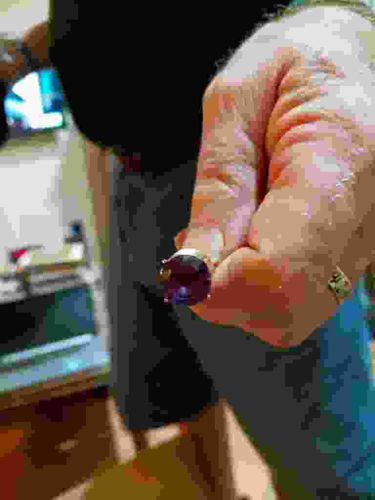
Submitted item photo
Submitted photo · June 8, 2026

User's notes

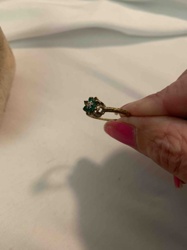
1970's Alexandrite ring

AI analysis below

AI appraisal

AI analysis & estimate

AI-Generated · Verify before acting

Everything below is generated by AI for informational purposes only. AI can make mistakes — the AI may misidentify items or misattribute them (artist, maker, brand, designer, origin, era). This is not an official valuation and should not be used for insurance, sale, tax, estate, legal, or lending purposes — or any decision requiring a certified appraisal. It is not an authoritative claim about any person, brand, or rights holder — do not share or rely on it as a factual statement about a third party. Always consult qualified professionals before making financial decisions.

Note

This analysis also relies on unverified notes provided by the user, which may be incomplete or inaccurate and could affect the result.

Read the full disclaimer

AI Identification

·Not independently authenticated·Verify before acting

Vintage 1970s Alexandrite Solitaire Ring

Fine Jewelry / Vintage Rings

AI Estimated Value

·Not an official valuation·Verify before acting

$450 - $650

As of June 8, 2026

AI Item Analysis

·AI can make mistakes·Verify before acting
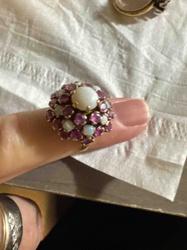
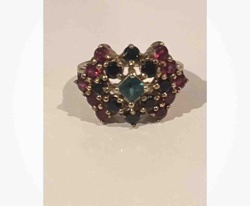
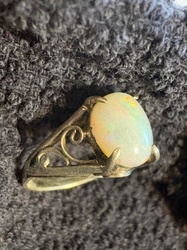
This piece is a vintage 1970s solitaire ring featuring a large, round-cut purple gemstone, identified via context as Alexandrite. The stone demonstrates a strong, saturated violet-purple hue in the current lighting, which is characteristic of the 'raspberry' tones often found in synthetic color-change corundum or spinel popular during the mid-20th century. The gemstone is held in a traditional multi-prong setting, likely crafted from 10k or 14k yellow gold consistent with 1970s production styles. The prongs appear to be substantial, securing the large table of the stone which exhibits a high degree of luster and clarity. Physically, the ring has a classic high-profile mounting that elevates the gemstone to allow maximum light entry through the pavilion facets. The band appears to be a standard polished shank. Given the era and the vibrant purple-to-blue-green shift typical of such stones, it is highly probable the specimen is a lab-created variety, which was frequently sold in high-end tourist markets and department stores during the 70s. The condition appears to be fair to good, with the stone retaining sharp facet edges and no immediate signs of major chipping, though closer inspection for minor 'flea bites' along the girdle is recommended. The setting shows normal signs of age-related patina and light surface scratches consistent with occasional wear.
AI Appraisal Report

·AI can make mistakes·Verify before acting
I have conducted a visual examination of this vintage solitaire ring, dating to approximately the 1970s. The piece features a large, round-cut gemstone exhibiting the saturated violet-purple hue characteristic of the synthetic color-change corundum (alexandrite-like) popular during this era. The stone is set in a high-profile, multi-prong mounting typical of mid-to-late 20th-century craftsmanship, likely composed of 14k yellow gold. Condition-wise, the gemstone maintains sharp facet junctions and excellent luster, suggesting it has been well-maintained. The mounting shows minor surface abrasions and a gentle patina consistent with its age. Market demand for 1970s 'cocktail' style rings remains steady, though value is primarily driven by the gold weight and the decorative appeal rather than the rarity of the gemstone, as lab-created stones from this period are relatively abundant. Crucially, this appraisal is based on photographic evidence. Without a physical inspection, I cannot verify the gold purity via acid testing or a spectrometer. Furthermore, while the visual properties align with synthetic corundum, refractive index (RI) testing and microscopic analysis are required to definitively rule out natural alexandrite—which would increase the value by several magnitudes—or other stimulants. Documentation such as an original sales receipt or a GIA laboratory report would be necessary to elevate this valuation beyond the 'Estate/Decorative' category. For insurance purposes, I recommend a retail replacement value within the stated range, assuming a 14k gold composition.

Get your items appraised

Instant estimates of your treasures with AI-powered appraisals

Browse More Appraisals