These notes were written by the person who submitted this item. Appraiser.AI has not verified them, and the AI's identification and estimate may rely on them.
AI Estimated Value
Not an official valuation
$150-250
AI estimate as of November 1, 2025 · verify with a professional before acting
AI-Generated · Verify before acting
Everything on this page is generated by AI for informational purposes only. AI can make mistakes — the AI may misidentify items or misattribute them (artist, maker, brand, designer, origin, era). This is not an official valuation and should not be used for insurance, sale, tax, estate, legal, or lending purposes — or any decision requiring a certified appraisal. It is not an authoritative claim about any person, brand, or rights holder — do not share or rely on it as a factual statement about a third party. Always consult qualified professionals before making financial decisions.
This analysis also relies on unverified notes provided by the user, which may be incomplete or inaccurate and could affect the result.
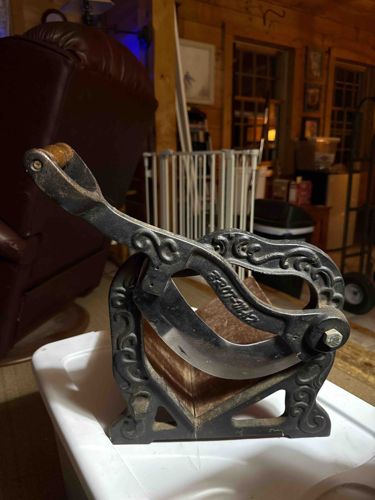
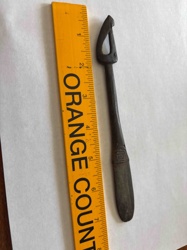
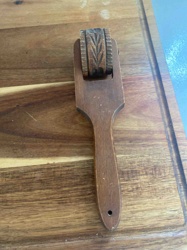
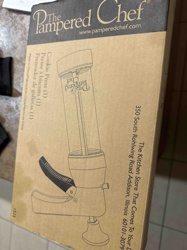
This item is an antique manual bread slicer, featuring a robust construction made primarily of cast iron with some wooden components. The main body of the slicer is dark, likely black or a very dark gray, exhibiting a well-worn patina consistent with age and use. Ornate scrollwork is cast into the iron frame, particularly on the vertical support elements, suggesting a late 19th to early 20th-century design aesthetic. The cutting mechanism consists of a large, crescent-shaped blade, pivoted at one end, which is operated by a handle. The handle appears to have a wooden grip, showing signs of wear and a natural wood grain. The blade itself shows some surface wear and potential darkening, but its edge condition cannot be fully assessed from the image. Integrated into the cast iron frame, the brand name 'BROT-MAX' is clearly visible, providing a direct manufacturing detail and suggesting its German origin ('Brot' means bread in German). There is a wooden block integrated into the base, which would likely serve as the cutting surface or a guide for the bread loaf. The overall condition appears good for its age, with a pleasing aged look but no immediately visible significant damage like cracks or major breaks in the cast iron. The nuts and bolts holding the pivot points are visible and appear original. This piece represents a blend of functional utility and decorative craftsmanship, typical of a period when everyday appliances were often designed with aesthetic appeal in mind. The substantial construction indicates it was built for durability and prolonged use.
AI Appraisal Report
I've carefully examined the images provided for this Antique 'Brot-max' Manual Bread Slicer. The robust cast iron construction, dark patina, and ornate scrollwork strongly suggest a late 19th to early 20th-century origin, a period known for functional yet aesthetically pleasing household items. The 'BROT-MAX' brand name is a clear identifier and, coupled with the German word 'Brot', points to its European manufacturing origin, which often adds to collector interest. The overall condition appears remarkably good for its age, displaying a pleasing aged look consistent with use rather than neglect. There are no immediate visible signs of major damage like cracks or significant breaks in the cast iron, and the wooden components show appropriate wear. The nuts and bolts appear original, maintaining its historical integrity.
Market-wise, antique kitchen tools, especially those combining utility with decorative appeal, have a steady niche following. While not exceptionally rare, these specific European-made slicers like 'Brot-max' are less common than more generic American counterparts. Comparables for similar cast iron manual bread slicers in good, working condition typically range from $120 to $300, depending on brand recognition, ornate detailing, and overall preservation. This piece hits the mid-to-lower end of that range due to its good, but not pristine, condition and the general availability of such items.
The main factors impacting its value are its good displayable condition, the clear branding, and the attractive antique aesthetic. Demand is primarily from collectors of antique kitchenalia, industrial decor enthusiasts, and those seeking unique display pieces. A limiting factor in this appraisal is the reliance solely on images. While the visual assessment is positive, an in-person examination would allow for a definitive assessment of the blade's precise condition (wear, sharpness, rust depth), the stability of all moving parts, and confirmation of any repairs not visible in photographs. Provenance documentation would further solidify its history, though for utilitarian items of this nature, it's rare. Without physical inspection, I cannot fully guarantee the functionality of the cutting mechanism or confirm the absence of hairline cracks or hidden repairs.