Vintage Micron and HP SDRAM Desktop Memory Modules
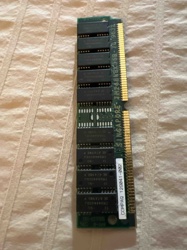
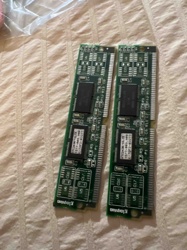
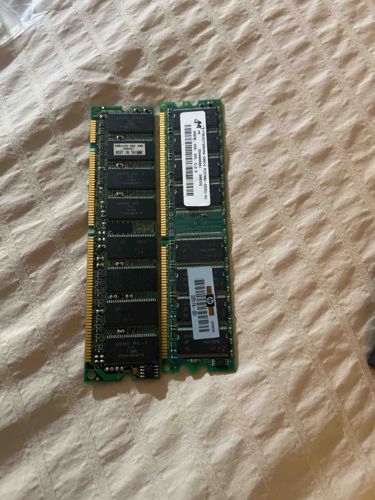
A pair of legacy desktop computer memory modules consisting of green printed circuit boards (PCBs) populated with black integrated circuit chips. The module on the right features a prominent Micron (MT) logo with a white label indicating a 128MB capacity and PC133 speed specification. It also bears an HP inventory label with part number 220114-001, suggesting it was originally pulled from an HP business desktop or server. The module on the left is a similar SDRAM stick with a 'Made in Taiwan' label and exposed black memory chips from various manufacturers. Both units feature standard gold-plated contact fingers at the base for insertion into a motherboard's DIMM slots. These modules date back to the late 1990s to early 2000s, a period characterized by the transition from SIMM to higher-speed DIMM formats. Externally, the units show minor signs of handling and some dust, but the gold contacts appear relatively clean with no significant oxidation or deep scoring. The PCBs are intact with no visible cracks or evidence of thermal damage. While obsolete for modern computing, they represent a specific era of semiconductor manufacturing and system integration by major OEMs like Micron and HP.
AI-Generated Appraisal Disclaimer
Estimated Value
$10.00 - $20.00
Basic Information
Category
Computer Components
Appraised On
December 23, 2025
Estimated Value
$10.00 - $20.00
Item Description
A pair of legacy desktop computer memory modules consisting of green printed circuit boards (PCBs) populated with black integrated circuit chips. The module on the right features a prominent Micron (MT) logo with a white label indicating a 128MB capacity and PC133 speed specification. It also bears an HP inventory label with part number 220114-001, suggesting it was originally pulled from an HP business desktop or server. The module on the left is a similar SDRAM stick with a 'Made in Taiwan' label and exposed black memory chips from various manufacturers. Both units feature standard gold-plated contact fingers at the base for insertion into a motherboard's DIMM slots. These modules date back to the late 1990s to early 2000s, a period characterized by the transition from SIMM to higher-speed DIMM formats. Externally, the units show minor signs of handling and some dust, but the gold contacts appear relatively clean with no significant oxidation or deep scoring. The PCBs are intact with no visible cracks or evidence of thermal damage. While obsolete for modern computing, they represent a specific era of semiconductor manufacturing and system integration by major OEMs like Micron and HP.
Related Tags
Get Your Items Appraised
Instant estimates of your treasures with AI-powered instant appraisals