AI Appraisal Estimate

AI-generated estimates · not official valuations

From the user

What was submitted

Photo and notes provided by the user — not generated by AI

Submitted item photo
Submitted photo · June 28, 2026

User's notes

No additional notes provided.

AI analysis below

AI appraisal

AI analysis & estimate

AI-Generated · Verify before acting

Everything below is generated by AI for informational purposes only. AI can make mistakes — the AI may misidentify items or misattribute them (artist, maker, brand, designer, origin, era). This is not an official valuation and should not be used for insurance, sale, tax, estate, legal, or lending purposes — or any decision requiring a certified appraisal. It is not an authoritative claim about any person, brand, or rights holder — do not share or rely on it as a factual statement about a third party. Always consult qualified professionals before making financial decisions.

Read the full disclaimer

AI Identification

·Not independently authenticated·Verify before acting

Victorian Era Cast Brass Peacock Fireplace Screen

Antique Hearth & Fireplace Accessories

AI Estimated Value

·Not an official valuation·Verify before acting

$450 - $750

As of June 28, 2026

AI Item Analysis

·AI can make mistakes·Verify before acting
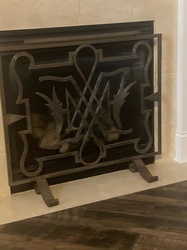
This is a vertical, ornate folding 'peacock' style fireplace screen crafted from cast brass. The object features a central, shield-shaped housing with a tapered profile, topped by a highly decorative finial consisting of scrolling acanthus leaves and mythical dolphin motifs. The centerpiece of the casting depicts a classical figure, likely a nymph or dancer, in a dynamic pose holding a tambourine. The background of this figure is an intricate pierced lattice, which acts as a storage sleeve for multiple perforated brass blades. These blades are designed to fan out from the base pivot to cover the hearth. The overall color is a warm, aged gold typical of polished brass, showing a moderate patina and oxidation in the recessed areas of the casting. The construction is heavy and structural, supported by an ornate tripod base with scrolled feet and geometric relief patterns. While no maker's mark is immediately visible in the image, the Neo-Rococo styling and casting quality suggest a late 19th-century Victorian or Edwardian manufacture. Conditions appear good for its age, though there is visible surface wear, some darkening of the metal, and slight misalignment of the fan blades consistent with mechanical use over time. The craftsmanship is high, featuring deep relief casting and functional mechanical components that characterize high-end hearth furniture from the turn of the century.
AI Appraisal Report

·AI can make mistakes·Verify before acting
Based on my visual examination of this cast brass 'peacock' folding fireplace screen, I have determined it to be a high-quality example of late 19th-century Neo-Rococo hearth furniture. The casting displays significant depth and detail, particularly in the central nymph motif and the dolphin-scrolled finial. The patina is consistent with age, showing authentic oxidation in the crevasses of the ornate tripod base which suggests the piece has not been over-polished or chemically stripped. Condition-wise, the blades appear largely intact, though the slight misalignment noted is common in these mechanical 'fan' styles due to the friction-based pivot pins. Authenticity is supported by the casting's structural weight and the complexity of the pierced lattice. In the current decorative arts market, Victorian hearth accessories remain stable, though values fluctuate based on the luster of the brass and the smoothness of the fan mechanism. Comparables for similar unbranded 'peacock' screens typically hammered at auction between $300 and $600, with retail gallery prices reaching $900 for pristine examples. This appraisal is limited by the lack of physical inspection. I cannot definitively verify the metallurgical composition or check for hidden repairs to the hinges and internal springs. A full authentication would require an in-person search for foundry marks (often located on the underside of the base or inside the housing), an assessment of the weight-to-volume ratio to confirm solid brass versus plated spelter, and provenance documentation. Potential buyers should check for 'Made in Taiwan' or 'India' stamps, which would indicate a 20th-century reproduction and reduce the value significantly.

Get your items appraised

Instant estimates of your treasures with AI-powered appraisals

Browse More Appraisals