T.G.K. (Toki Goshu Kabushiki Kaisha) Ceramics Maker's Mark
Japanese Ceramics & Porcelain

T.G.K. (Toki Goshu Kabushiki Kaisha) Ceramics Maker's Mark

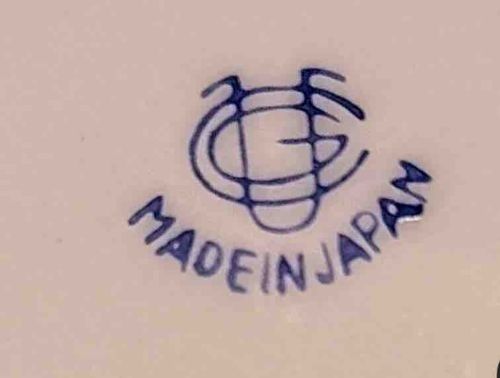
This image displays a blue underglaze backstamp found on a ceramic or porcelain vessel, composed of the interlocking letters 'TGK' contained within a circular flourish, with the words 'MADE IN JAPAN' arched beneath it. The mark belongs to the Toki Goshu Kabushiki Kaisha company, which was active in the early-to-mid 20th century. The blue pigment is characteristic of cobalt oxide used in traditional Japanese ceramics. The substrate appears to be a cream-colored porcelain or fine earthenware with a smooth, glossy glaze. Based on the style of the stamp and the 'Made in Japan' designation, which became mandatory for exports after the McKinley Tariff Act of 1890 and was commonly used between 1921 and 1941 (and again after 1952), this piece likely dates to the late Art Deco period (1930s). The application of the stamp shows slight bleeding or 'blurring' typical of hand-stamping processes of that era. There are no significant cracks or crazing visible in this specific macro shot, indicating a well-preserved surface with a clean glaze finish. The typography is san-serif, reflecting a more modern industrial aesthetic for export wares.
Estimated Value

$65.00 - $110.00

Basic Information

Category

Japanese Ceramics & Porcelain

Appraised On

January 25, 2026

Estimated Value

$65.00 - $110.00

Item Description

This image displays a blue underglaze backstamp found on a ceramic or porcelain vessel, composed of the interlocking letters 'TGK' contained within a circular flourish, with the words 'MADE IN JAPAN' arched beneath it. The mark belongs to the Toki Goshu Kabushiki Kaisha company, which was active in the early-to-mid 20th century. The blue pigment is characteristic of cobalt oxide used in traditional Japanese ceramics. The substrate appears to be a cream-colored porcelain or fine earthenware with a smooth, glossy glaze. Based on the style of the stamp and the 'Made in Japan' designation, which became mandatory for exports after the McKinley Tariff Act of 1890 and was commonly used between 1921 and 1941 (and again after 1952), this piece likely dates to the late Art Deco period (1930s). The application of the stamp shows slight bleeding or 'blurring' typical of hand-stamping processes of that era. There are no significant cracks or crazing visible in this specific macro shot, indicating a well-preserved surface with a clean glaze finish. The typography is san-serif, reflecting a more modern industrial aesthetic for export wares.
Get Your Items Appraised

Instant estimates of your treasures with AI-powered instant appraisals

Browse More Appraisals