AI estimate as of July 24, 2025 · verify with a professional before acting
AI-Generated · Verify before acting
Everything on this page is generated by AI for informational purposes only. AI can make mistakes — the AI may misidentify items or misattribute them (artist, maker, brand, designer, origin, era). This is not an official valuation and should not be used for insurance, sale, tax, estate, legal, or lending purposes — or any decision requiring a certified appraisal. It is not an authoritative claim about any person, brand, or rights holder — do not share or rely on it as a factual statement about a third party. Always consult qualified professionals before making financial decisions.
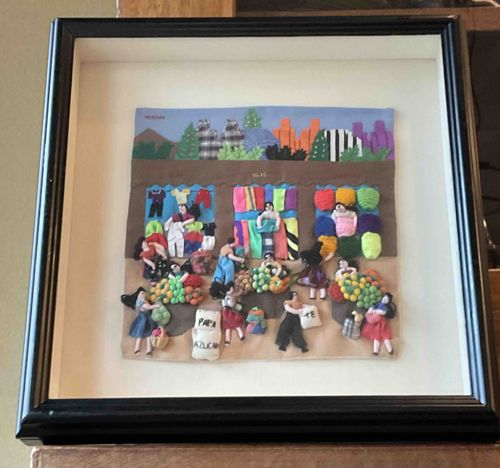
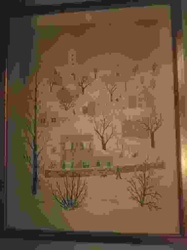
This item is a framed textile artwork, likely a 'arpillera' or a similar form of dimensional folk art, depicting a vibrant market scene. The artwork is created using a variety of textiles, including fabric scraps and possibly yarn, cut and sewn to create a three-dimensional effect. The background features a landscape with hills and buildings, rendered in a stylized manner, with a light blue sky at the top. The mid-ground and foreground are dominated by a busy market scene, showing numerous figures, presumably vendors and shoppers, surrounded by market stalls and goods.
The figures are crafted with notable attention to detail, each composed of small fabric pieces to form their bodies, clothing, and faces. Their clothing exhibits a range of colors and patterns, suggesting traditional attire. Many figures are depicted carrying baskets or bags, or standing beside piles of goods, which appear to be fruits or vegetables, depicted as small, rounded fabric forms in green and yellow. Some figures are standing next to large white bags, one distinctly labeled 'PAPA' (potatoes) and another 'AZUCAR' (sugar), indicating specific market wares. There are also representations of textiles or clothing hanging in stalls.
Physically, the artwork is housed within a black, wooden shadow box frame, allowing for the depth of the textile elements. The frame has a simple, clean design with a slight beveled edge. Inside the frame, the textile piece is set against a light-colored mat board, likely off-white or cream, which provides a clean border and separation from the frame. The overall condition appears to be good, with no visible tears or significant discoloration of the fabric elements. There may be some minor dust accumulation within the shadow box, common for framed textile pieces, but this does not detract from the visual integrity. The colors of the fabrics remain bright and well-preserved. The craftsmanship indicates a folk art tradition, possibly from a Latin American culture, given the 'arpillera' style and the market scene with labeled goods in Spanish. The estimated age is difficult to pinpoint without further information, but it likely dates to the late 20th or early 21st century, consistent with the continued production of such art forms.
AI Appraisal Report
I have examined the provided image of this Framed Textile Arpillera Market Scene. Based on this visual inspection, the piece appears to be in very good condition. The colors remain vibrant, and there are no visible tears or significant staining on the fabric elements. While I note the possibility of minor dust within the shadow box, this is common and does not significantly detract from its visual appeal or structural integrity. The craftsmanship is consistent with traditional arpillera art, likely originating from a Latin American culture, given the style and the Spanish labeling of goods ('PAPA', 'AZUCAR').
Authenticity, based solely on an image, is limited. The piece strongly presents as a genuine arpillera. However, a full authentication would require an in-person examination to assess fabric age, construction techniques, and any artist signatures or labels that might be obscured or not visible in the image. Provenance documentation, such as purchase records or exhibition history, would also significantly enhance authenticity verification.
Market conditions for folk art, particularly arpilleras, are stable. These pieces are appreciated for their narrative quality, intricate handiwork, and cultural significance. Comparables typically range from $150 to $400 for similarly sized and detailed contemporary examples, with historical or renowned artist pieces fetching higher values. This specific piece's detailed scene, with numerous figures and clearly identifiable market goods, adds to its desirability. The quality of the framing also contributes positively. Demand for well-executed textile folk art remains consistent among collectors interested in cultural narratives and handcrafted items.
The primary factors impacting value here are the excellent condition, detailed narrative, and the assumed authenticity of its folk art origin. Without specific knowledge of the artist or exact age, its value remains within the general market for such pieces. While not exceptionally rare, a piece of this detail and condition is desirable.