Limonite-Stained Sedimentary Rock with Fossilized Inclusions
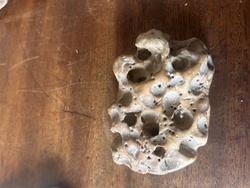
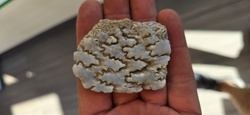
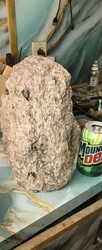
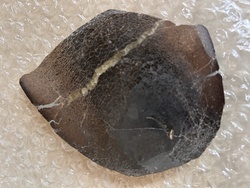
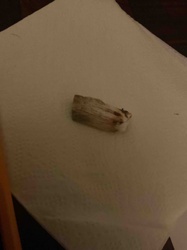
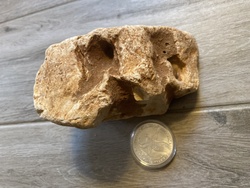
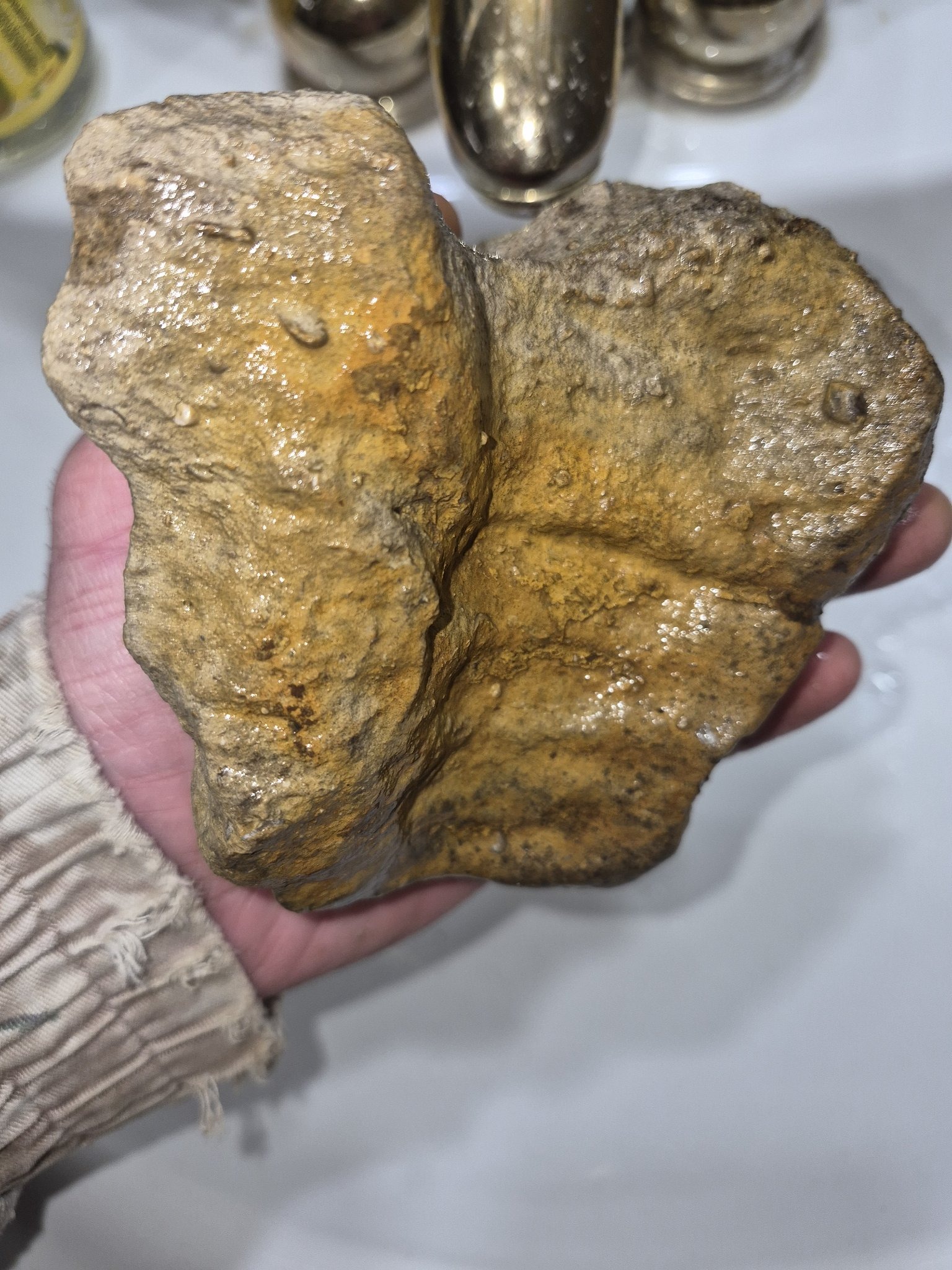
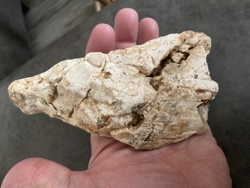
This specimen is a hand-sized, irregularly shaped sedimentary rock, likely a sandstone or limestone matrix, characterized by a heavy ochre-yellow to brownish-tan coloration caused by limonite or iron-oxide staining. The object measures approximately 4 to 5 inches across and fits within the palm of a hand. Its surface is notably rugged and porous, exhibiting a wet or glossy sheen which suggests it has recently been washed or was found in a riparian environment. The piece features a prominent central vertical cleft or indentation, giving it a somewhat heart-shaped or lobed appearance. Closer inspection reveals several small, embedded marine fossil casts or inclusions, possibly brachiopod or crinoid fragments, which are typical of paleozoic sedimentary layers. There is no evidence of human modification, tool marks, or artistic carving; the shape is entirely consistent with natural fluvial erosion and geological weathering. The condition is raw and natural, with no signs of breakage from modern impact, though it displays natural pitting and conglomerate textures characteristic of its formation. This specimen represents a geological artifact of indeterminate age, likely hundreds of millions of years old, originating from a fossil-bearing lithic stratum.
AI-Generated Appraisal Disclaimer
Estimated Value
$15 - $35
Basic Information
Category
Geological Specimens and Fossils
Appraised On
May 9, 2026
Estimated Value
$15 - $35
Item Description
This specimen is a hand-sized, irregularly shaped sedimentary rock, likely a sandstone or limestone matrix, characterized by a heavy ochre-yellow to brownish-tan coloration caused by limonite or iron-oxide staining. The object measures approximately 4 to 5 inches across and fits within the palm of a hand. Its surface is notably rugged and porous, exhibiting a wet or glossy sheen which suggests it has recently been washed or was found in a riparian environment. The piece features a prominent central vertical cleft or indentation, giving it a somewhat heart-shaped or lobed appearance. Closer inspection reveals several small, embedded marine fossil casts or inclusions, possibly brachiopod or crinoid fragments, which are typical of paleozoic sedimentary layers. There is no evidence of human modification, tool marks, or artistic carving; the shape is entirely consistent with natural fluvial erosion and geological weathering. The condition is raw and natural, with no signs of breakage from modern impact, though it displays natural pitting and conglomerate textures characteristic of its formation. This specimen represents a geological artifact of indeterminate age, likely hundreds of millions of years old, originating from a fossil-bearing lithic stratum.
Get Your Items Appraised
Instant estimates of your treasures with AI-powered instant appraisals