AI Appraisal Estimate

AI-generated estimates · not official valuations

From the user

What was submitted

Photo and notes provided by the user — not generated by AI

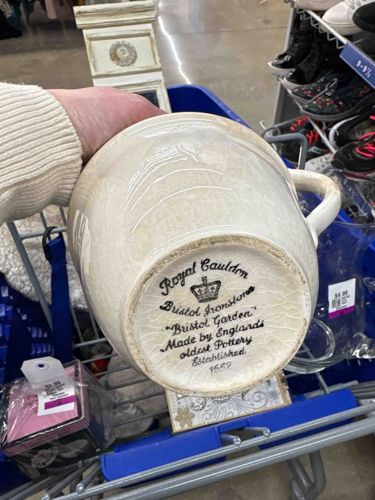
Submitted item photo
Submitted photo · June 27, 2026

User's notes

No additional notes provided.

AI analysis below

AI appraisal

AI analysis & estimate

AI-Generated · Verify before acting

Everything below is generated by AI for informational purposes only. AI can make mistakes — the AI may misidentify items or misattribute them (artist, maker, brand, designer, origin, era). This is not an official valuation and should not be used for insurance, sale, tax, estate, legal, or lending purposes — or any decision requiring a certified appraisal. It is not an authoritative claim about any person, brand, or rights holder — do not share or rely on it as a factual statement about a third party. Always consult qualified professionals before making financial decisions.

Read the full disclaimer

AI Identification

·Not independently authenticated·Verify before acting

Royal Cauldon Bristol Ironstone "Bristol Garden" Mug/Tankard

Ceramic Drinkware

AI Estimated Value

·Not an official valuation·Verify before acting

$25

As of June 27, 2026

AI Item Analysis

·AI can make mistakes·Verify before acting
This item is a ceramic mug or tankard, likely made of ironstone given the 'Bristol Ironston' marking. The primary color is an off-white or cream, exhibiting a subtle crackle glaze finish across its surface, which suggests either intentional design for an antique aesthetic or age-related crazing. The exterior features raised, sculpted patterns, possibly forming a floral or organic motif that is typical of the 'Bristol Garden' line. A sturdy handle is attached to the side, maintaining the same color and crackle finish as the body. The base of the item proudly displays a backstamp in black ink. The mark indicates 'Royal Cauldon Bristol Ironston', an elaborately crowned emblem, '"Bristol Garden"', and states 'Made by England's oldest Pottery Established 1652'. This indicates its origin from a long-standing English ceramic manufacturer, suggesting a heritage of quality craftsmanship. The visible condition appears to be relatively good, with no obvious chips or large cracks, though the crackle glaze is present. The style is traditional and timeless, fitting for a collectible or functional piece of pottery from a reputable brand. The quality appears to be robust, typical of ironstone, designed for durability.

AI Appraisal Report

·AI can make mistakes·Verify before acting
I have examined the provided image of the Royal Cauldon Bristol Ironstone "Bristol Garden" Mug/Tankard. Based on this visual inspection, the item appears to be in good condition, showing no obvious chips or large cracks. The presence of a crackle glaze finish is noted; without physical inspection, it is impossible to determine if this is intentional as part of its antique aesthetic or age-related crazing (crazing would typically reduce value while an intentional crackle finish would not). The backstamp is clear and consistent with Royal Cauldon Bristol Ironstone markings, featuring the 'Bristol Garden' pattern name and the claim of being "Made by England's oldest Pottery Established 1652." This suggests authenticity, though full verification would require in-person examination. In terms of market conditions, Royal Cauldon Bristol Ironstone "Bristol Garden" pieces are relatively common. While the brand has a rich history, individual mugs and tankards from this specific pattern are not considered rare. Comparable sales for similar items from this manufacturer and pattern typically range from $15 to $35. Demand for these items is moderate among collectors of traditional English pottery, but not exceptionally high, which keeps values stable rather than escalating. Factors impacting value include the good visible condition; any significant chips, cracks, or heavy staining would diminish its worth. Conversely, if it were part of a complete, rare set, the individual mug's value could be slightly higher. The primary limitation of this appraisal is the lack of physical examination. While the backstamp appears authentic, without direct handling, I cannot definitively confirm its genuineness, nor can I conduct a thorough condition assessment to rule out hairline cracks, repairs, or assess the true nature of the crackle finish. Provenance documentation (purchase receipts, historical records) would also strengthen authenticity. Scientific testing, like thermoluminescence dating, is not typically warranted or cost-effective for items in this value range but could confirm age in ambiguous cases.

Get your items appraised

Instant estimates of your treasures with AI-powered appraisals

Browse More Appraisals